In today’s fast-paced digital communication, texting abbreviations have become a normal part of everyday conversations on platforms like WhatsApp, Instagram, Snapchat, and TikTok.
One such popular slang term is “IDEK”, which often leaves people confused when they see it in chats or comments.
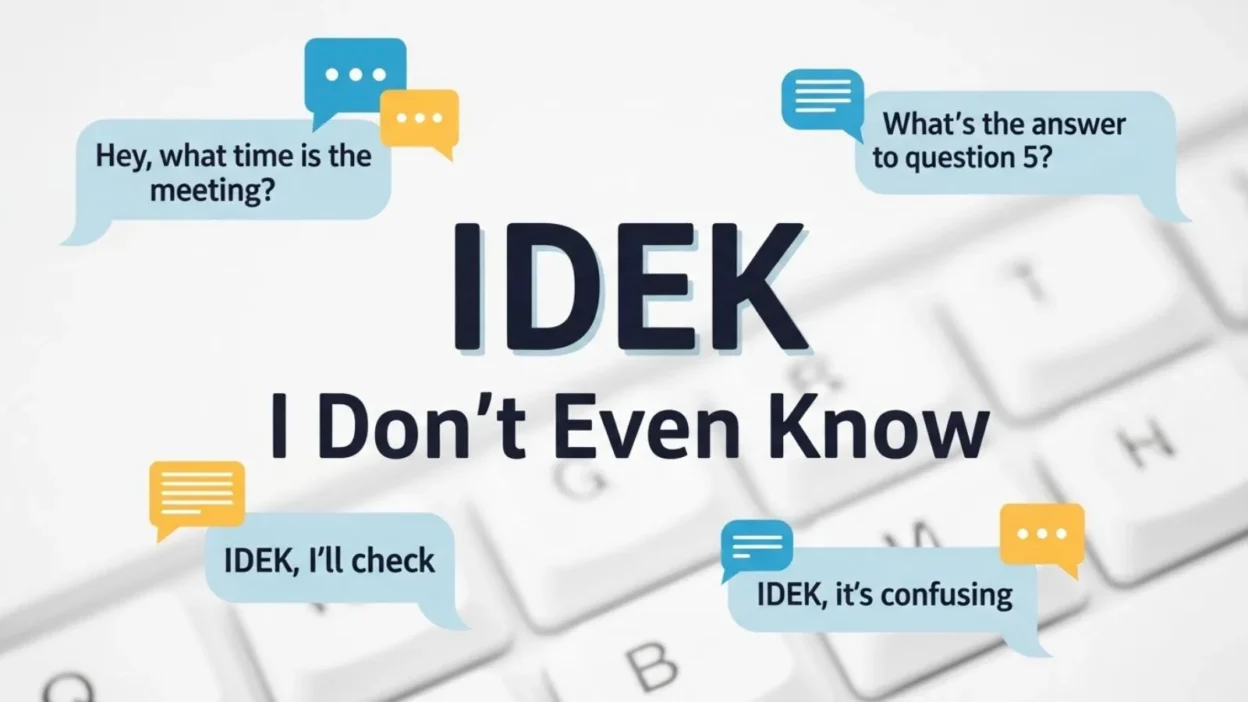
The term IDEK meaning in text stands for “I Don’t Even Know”, and it is commonly used to express confusion, disbelief, or a situation where someone simply has no answer or understanding.
Instead of typing a full sentence, users prefer short forms like IDEK to make conversations quicker and more expressive.
For example,
Someone might reply “IDEK 😭” when they are shocked or unsure how to react. This slang is especially popular among Gen Z users and has become a part of modern internet language in 2026.
Understanding IDEK helps you stay updated with current texting trends and improves your online communication style in a more natural way.
What Does IDEK Stand For? (Full Form Explained)
The abbreviation IDEK meaning in text is very simple once you understand its full form. IDEK stands for “I Don’t Even Know.” It is a commonly used internet slang phrase that people use in casual conversations when they are confused, surprised, or unable to explain something.
To break it down, “I Don’t Even Know” is a stronger version of “I Don’t Know.” The word “Even” adds extra emotion, showing that the person is not just unsure but completely confused, shocked, or overwhelmed by a situation. This is why IDEK is often used in emotional or dramatic conversations rather than formal communication.
For example,
if someone asks a difficult question or something unexpected happens, a person might simply reply:
- “IDEK what just happened 😂”
- “IDEK how to explain this situation”
- “IDEK why she did that”
These examples show how IDEK works as a quick reaction word instead of a full sentence.
In modern texting culture, especially in 2026, IDEK is widely used by Gen Z and social media users because it saves time and expresses emotion more naturally. Instead of writing long explanations, people prefer short and impactful slang like IDEK to keep conversations fast, expressive, and relatable.
Overall, IDEK is not just a random abbreviation—it is a powerful expression of confusion, disbelief, or mental overload in everyday digital communication.
Origin and Evolution of IDEK
The slang term IDEK meaning in text did not appear overnight; it evolved gradually with the rise of digital communication and internet culture. Like many other abbreviations such as IDK, LOL, and OMG, IDEK originated from early online chatrooms, SMS messaging, and instant messaging platforms where users wanted faster and more efficient ways to communicate.
At its core, IDEK comes from the phrase “I Don’t Even Know,” which is an intensified version of “I Don’t Know.” The addition of the word “even” gives it more emotional weight, making it suitable for moments of confusion, surprise, or frustration. As social media platforms like Facebook, Twitter (now X), Instagram, and Snapchat became popular, users started adopting shorter expressions to react quickly in conversations.
Over time, IDEK became especially popular among Gen Z users, who shaped modern internet slang through memes, short videos, and comment culture. Its usage spread rapidly in reaction-based communication, where people needed quick emotional responses instead of full sentences.
By 2026, IDEK has become a well-established part of texting culture. It is often used in humorous, dramatic, or confused situations and is frequently seen in captions, comments, and direct messages. The evolution of IDEK reflects a larger trend in digital language—where communication is becoming shorter, faster, and more expressive.
How IDEK Is Used in Text Conversations
The slang IDEK meaning in text is widely used in everyday digital conversations to express confusion, surprise, or a lack of explanation. People often use IDEK when they are unable to understand a situation or don’t have the right words to respond. Instead of typing long sentences, they simply write “IDEK” to show their reaction quickly and naturally.
In text conversations, IDEK can be used in many different ways depending on the situation. For example, if someone asks a confusing question, a person might reply: “IDEK what you’re talking about.” In another case, if something unexpected happens, they might say: “IDEK how that even happened 😂.” These examples show how IDEK works as a flexible reaction phrase in casual chats.
It is also commonly used when someone feels overwhelmed or shocked. For instance, during gossip, drama, or unexpected news, users often respond with IDEK to show disbelief or confusion without explaining further. This makes the conversation shorter but still emotionally expressive.
Another important aspect of IDEK is its tone. It is usually informal and friendly, often paired with emojis like 😭, 😂, or 😳 to enhance the emotion behind the message. Because of its casual nature, it is mostly used in conversations with friends, social media comments, or group chats.
Overall, IDEK has become a powerful shortcut in modern texting. It helps people react instantly while keeping conversations simple, expressive, and aligned with today’s fast-paced digital communication style.
Real Life Examples of IDEK in Chats
Understanding IDEK meaning in text becomes much easier when you see how it is actually used in real conversations. IDEK is a flexible slang term that can fit into many different situations, especially when people want to express confusion, surprise, or emotional overload without writing long sentences.
Example 1: Confusion
Friend A: “Why did he suddenly leave the group?”
Friend B: “IDEK 🤷♂️”
👉 Here, IDEK shows that the person has no idea what happened.
Example 2: Shock or disbelief
Friend A: “She got 100% in the test without studying!”
Friend B: “IDEK how that’s even possible 😭”
👉 In this case, IDEK expresses surprise and disbelief.
Example 3: Funny reaction
Friend A: “I tried cooking and burned water.”
Friend B: “IDEK what to say 😂”
👉 Here, IDEK is used in a humorous way.
Example 4: Overwhelmed situation
Friend A: “Did you understand that math problem?”
Friend B: “IDEK, it was too hard.”
👉 Shows frustration and confusion.
Example 5: Dramatic response
Friend A: “Why is everyone arguing online again?”
Friend B: “IDEK anymore 😩”
👉 Expresses emotional exhaustion.
These examples show that IDEK is not limited to one meaning—it changes slightly based on tone and context. It is widely used in casual texting, social media comments, and group chats because it saves time while still expressing strong emotions. In modern 2026 digital communication, IDEK has become a natural part of how people react quickly in conversations.
IDEK Meaning on Social Media Platforms
The usage of IDEK meaning in text is not limited to private chats—it is also widely popular across major social media platforms like Snapchat, Instagram, TikTok, and even X (Twitter). Each platform uses IDEK in slightly different ways depending on how users interact and communicate.
On Snapchat, IDEK is commonly used in quick replies and snap captions. Since Snapchat conversations are usually short and casual, users often respond with “IDEK 😭” or “IDEK lol” when reacting to confusing snaps, stories, or questions. It fits perfectly with the fast-paced and informal nature of the app.
On Instagram, IDEK is frequently seen in comments, reels, and DMs. Users often comment IDEK under funny, shocking, or confusing posts. For example, if a reel shows something unbelievable, people might comment “IDEK how this happened 😂” to express surprise or disbelief. It is also used in Instagram stories when reacting to polls or questions.
On TikTok, IDEK has become part of meme culture and viral trends. It appears in captions, comment sections, and reaction videos. Creators often use IDEK to emphasize confusion or humor in trending content. Because TikTok is highly expressive and fast-moving, IDEK fits naturally into its communication style.
Overall, across all platforms, IDEK is used as a quick emotional reaction word. Whether it’s confusion, shock, or humor, it helps users respond instantly without needing long explanations. This makes IDEK a powerful and widely recognized slang term in modern 2026 social media culture.
Difference Between IDEK and IDK
Although both IDEK meaning in text and IDK are used in casual conversations, they are not the same. Many people confuse them, but the difference lies in emotion, intensity, and usage.
IDK stands for “I Don’t Know.” It is a simple and direct way to say that you do not have information or an answer. It is neutral and commonly used in everyday conversations when someone is unsure about something without strong emotions attached.
On the other hand, IDEK stands for “I Don’t Even Know.” The word “even” adds extra emotional weight. This makes IDEK more expressive than IDK. It is used when someone is not just unsure but also confused, shocked, or overwhelmed by a situation.
For example:
- IDK: “IDK where he is.” (simple lack of knowledge)
- IDEK: “IDEK where he went after that 😭” (confusion + emotional reaction)
Another key difference is tone. IDK is more neutral and can be used in both formal and informal situations, while IDEK is strictly informal and mostly used in chats, social media comments, or casual conversations with friends.
In modern texting culture, especially in 2026, IDEK is often used when people want to sound more expressive or dramatic. IDK is for straightforward responses, while IDEK adds personality, emotion, and humor to a message.
In short, IDK is simple knowledge-based uncertainty, while IDEK is emotional and expressive confusion.
Emotional Meaning Behind IDEK
The slang IDEK meaning in text goes beyond just a simple abbreviation—it carries strong emotional expression depending on the context of the conversation. While its full form is “I Don’t Even Know,” the real meaning changes based on how and where it is used in digital communication.
One of the most common emotions behind IDEK is confusion. People use it when they are completely unsure about a situation or do not understand what is happening. In this sense, IDEK shows a mental “blank” moment where the user has no clear answer.
Another important emotion is shock or disbelief. When something unexpected or unbelievable happens, users often reply with IDEK to express that they are mentally struggling to process the situation. For example, surprising news, dramatic events, or confusing updates often trigger this response.
IDEK is also widely used for humor and sarcasm. In memes, jokes, or funny conversations, it helps exaggerate reactions in a playful way. For instance, someone might say “IDEK what I just watched 😂” after seeing a ridiculous video online.
In some cases, IDEK reflects frustration or emotional overload. When things become too complicated or chaotic, people use IDEK to show that they are mentally exhausted or unable to respond properly.
Overall, IDEK is not just a slang word—it is a flexible emotional expression. It helps users communicate feelings instantly without typing long explanations, making it a powerful part of modern internet language and everyday texting culture in 2026.
Why IDEK Became Popular in 2026 Texting Culture
The rise of IDEK meaning in text reflects how modern communication has evolved in the digital age. In 2026, people prefer fast, short, and expressive ways of chatting, and IDEK fits perfectly into this trend. Instead of writing long explanations like “I don’t even know what to say about this,” users simply type IDEK to save time while still showing emotion.
One major reason for its popularity is the influence of social media platforms such as TikTok, Instagram, Snapchat, and X (Twitter). These platforms are built on quick reactions, comments, and short-form content. IDEK works well in all these environments because it is short, relatable, and emotionally expressive.
Another reason is the rise of Gen Z communication style. Gen Z users prefer slang, memes, and abbreviations that make conversations feel casual and fun. IDEK became part of this culture because it expresses confusion, surprise, and humor in just four letters.
Memes and viral trends also played a big role in spreading IDEK. Many users began using it in captions, comment sections, and reaction videos, which helped it reach a global audience very quickly.
Additionally, the growing use of mobile messaging apps has encouraged people to type less and express more. IDEK perfectly matches this need by combining speed and emotion in one simple term.
Overall, IDEK became popular because it is simple, expressive, and perfectly suited for fast-paced digital communication. It represents how language continues to evolve in the online world of 2026.
When You Should Use IDEK (and When You Shouldn’t)
Understanding IDEK meaning in text is not just about knowing its definition, but also knowing the right context to use it. Like many internet slang terms, IDEK is best suited for informal and casual communication, and using it in the wrong situation can lead to confusion or a lack of professionalism.
You should use IDEK in casual conversations with friends, family, or people you are comfortable with. It works perfectly in situations where you want to express confusion, surprise, or emotional overload without writing a long sentence. For example, in group chats, social media comments, or reactions to memes and videos, IDEK is a natural and effective choice.
It is especially common in fast-paced conversations where quick responses are expected. In these cases, IDEK helps you react instantly while still showing emotion and personality.
However, there are situations where you should avoid using IDEK. It is not appropriate for formal communication, such as emails, job-related messages, school assignments, or professional discussions. Using slang in these contexts may make your message seem unprofessional or unclear.
Another thing to consider is context sensitivity. If the conversation is serious or emotional, using IDEK might seem careless or dismissive. In such cases, it is better to use full and respectful sentences.
In summary, IDEK is a great tool for informal texting, but it should be used wisely. Knowing when to use it—and when not to—helps you communicate more effectively in both social and professional environments.
Other Similar Internet Slang Words
To fully understand IDEK meaning in text, it helps to compare it with other popular internet slang terms that are commonly used in digital conversations. These abbreviations are part of modern online language and are widely used across WhatsApp, Instagram, Snapchat, TikTok, and other platforms.
One of the most similar terms is IDK (I Don’t Know). It is simpler and more neutral compared to IDEK. While IDK only shows lack of knowledge, IDEK adds stronger emotion like confusion or shock.
Another common slang word is NGL (Not Gonna Lie), which is used when someone wants to express honesty or a personal opinion. It is often used before giving a real or surprising statement.
TBF (To Be Fair) is another frequently used abbreviation. People use it when they want to present a balanced opinion or justify something in a conversation.
SMH (Shaking My Head) is used to show disappointment, disbelief, or frustration, especially in response to something silly or annoying.
Other widely used slang includes LOL (Laugh Out Loud), OMG (Oh My God), and BRB (Be Right Back). These terms have become part of everyday texting culture and are often combined with expressions like IDEK for more emotional impact.
All these slang words, including IDEK, show how internet language has evolved to become faster, shorter, and more expressive. They help users communicate feelings instantly without writing long sentences, making digital conversations more dynamic and relatable in 2026.
Common Mistakes People Make Using IDEK
Even though IDEK meaning in text is simple, many users still make mistakes when using it in conversations. These mistakes usually happen because people misunderstand its tone, context, or level of formality.
One common mistake is using IDEK in formal communication. Some people accidentally use it in emails, school assignments, or professional chats. This can make the message look unprofessional because IDEK is purely informal slang meant for casual texting only.
Another mistake is overusing IDEK in every message. While it is a useful expression, using it too frequently can make conversations feel repetitive or unclear. It is better to use it only when it truly fits the situation, such as confusion, surprise, or emotional reactions.
Some users also confuse IDEK with IDK (I Don’t Know). Although they look similar, they are not identical. IDEK carries stronger emotion, while IDK is more neutral. Mixing them up can change the meaning of a message.
Another issue is misinterpreting tone. Depending on context, IDEK can sound funny, frustrated, or even dismissive. Without emojis or proper context, the message might be misunderstood by the receiver.
Lastly, some users use IDEK in serious conversations where clarity is needed. In emotional or important discussions, slang like IDEK may seem careless or inappropriate.
In conclusion, IDEK is a powerful slang term, but it should be used carefully. Understanding its correct usage helps avoid confusion and ensures your messages remain clear, appropriate, and effective in different types of digital communication.
Impact of Slang Like IDEK on Modern Language
The rise of IDEK meaning in text reflects a bigger shift in how language is used in the digital era. Internet slang like IDEK is not just a trend—it is actively shaping modern communication by making it faster, shorter, and more expressive.
One major impact is the shortening of language. Instead of writing full sentences, people now use abbreviations like IDEK, IDK, LOL, and OMG to communicate quickly. This change is driven by the need for speed in messaging apps and social media platforms where conversations happen instantly.
Another impact is the emotional expression in text-based communication. Normally, written language can feel flat or emotionless, but slang like IDEK adds tone, personality, and feeling. It helps users express confusion, surprise, or frustration in a simple and relatable way.
Internet slang has also created a global digital language. People from different countries and cultures now understand and use terms like IDEK, even if English is not their first language. This shows how online communication is breaking language barriers.
However, there is also a downside. Overuse of slang may affect formal writing skills, especially among students who rely too heavily on abbreviations. It can sometimes reduce clarity in professional or academic contexts if used incorrectly.
Overall, IDEK and similar slang terms represent the evolution of language in the digital world. They make communication more efficient and expressive while also showing how technology continues to influence the way people write and interact in 2026.
FAQs About IDEK Meaning in Text
Q1: What does IDEK mean in chat?
IDEK stands for “I Don’t Even Know.” It is used in casual conversations to express confusion, surprise, or lack of understanding about something.
Q2: Is IDEK rude or casual?
IDEK is generally casual, not rude. However, its tone depends on context. In friendly chats, it sounds natural, but in serious conversations it may seem careless or dismissive.
Q3: Can IDEK be used in formal messages?
No, IDEK should not be used in formal communication such as emails, office messages, or academic writing. It is only suitable for informal texting and social media interactions.
Q4: What is the difference between IDEK and IDK?
IDK means “I Don’t Know” and is neutral, while IDEK means “I Don’t Even Know” and shows stronger emotion like confusion, shock, or frustration.
Q5: Is IDEK still popular in 2026?
Yes, IDEK remains popular in 2026, especially among Gen Z users on platforms like TikTok, Instagram, and Snapchat where quick reactions are common.
Q6: Where is IDEK mostly used?
It is mostly used in chats, comment sections, memes, and casual online conversations.
Conclusion:
In conclusion, the IDEK meaning in text is a simple but powerful slang expression that stands for “I Don’t Even Know.”
It is widely used in modern digital communication to show confusion, surprise, frustration, or emotional overload in a quick and expressive way.
Instead of writing long explanations, people use IDEK to react instantly in chats, social media comments, and meme conversations.
As internet culture continues to grow in 2026, slang terms like IDEK have become an important part of everyday language, especially among Gen Z users.
It reflects how communication is becoming faster, shorter, and more emotional at the same time.

Jonathan Bishopson is the punmaster-in-chief at ThinkPun.com, where wordplay meets wit and every phrase gets a clever twist. Known for turning ordinary language into laugh-out-loud lines, Jonathan crafts puns that make readers groan, grin, and think twice. When he’s not busy bending words, he’s probably plotting his next “pun-derful” masterpiece or proving that humor really is the best re-word.