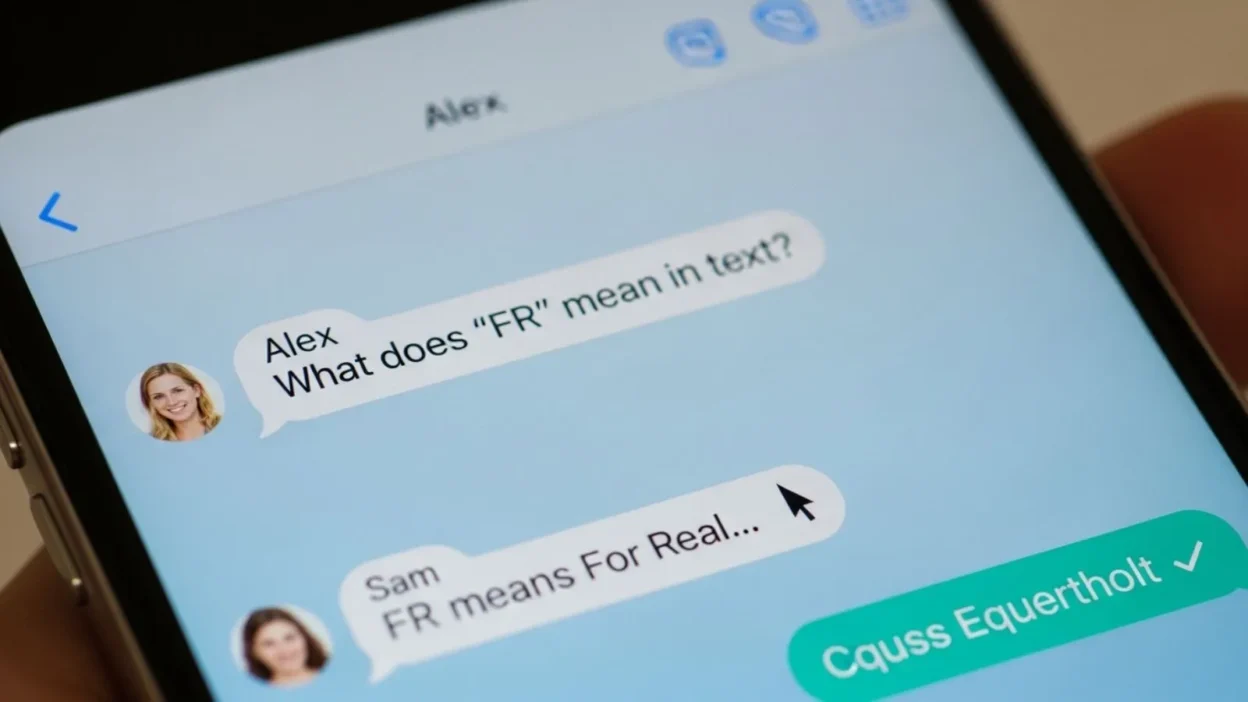
The abbreviation “FR” is one of the most commonly used slang terms in modern texting culture. It stands for “For Real”, and it is used to express honesty, agreement, or emphasis in a conversation.
When someone types “FR,” they are usually trying to show that they are being serious or completely agree with what is being said.
For example,
If a friend says, “That exam was so hard,” and you reply “FR,” it means you strongly agree with them.
In today’s digital communication especially on platforms like Snapchat, TikTok, Instagram, WhatsApp, and Discord short forms like FR have become extremely popular.
People prefer quick expressions instead of long sentences, and FR fits perfectly into fast-paced chatting.
FR is also used to add emotional weight to a message. It can show surprise (“FR? That’s baffling!”), agreement (“That movie was good, FR”), or even strong confirmation (“I’m coming tomorrow, FR”).
However, it is important to remember that FR is informal slang. It is mostly used in casual conversations with friends and should be avoided in professional or formal writing.
Origin and Evolution of FR Slang
The slang term “FR” (For Real) did not appear suddenly; it evolved gradually from early internet and texting culture. In the early days of online messaging—such as MSN Messenger, IRC chatrooms, and early SMS texting—people began shortening common phrases to save time and characters. “For real” was often used in conversations to show agreement or emphasize truth, and over time it naturally got shortened to “FR” for faster communication.
As social media platforms like Facebook, Twitter (now X), Snapchat, and Instagram grew, short forms became even more important. Users wanted quick reactions, and abbreviations like FR became part of everyday digital language. The rise of Gen Z internet culture further boosted its popularity, especially through memes, short videos, and comment sections where fast, expressive replies are preferred.
Platforms like TikTok and Snapchat played a major role in making FR mainstream. In TikTok comments, users often respond with “FR 😭” to show strong agreement or emotional reaction. Similarly, Snapchat conversations use FR as a quick way to confirm feelings or reactions without typing long sentences.
Over time, FR has moved beyond just simple agreement. It is now used to express seriousness, emotional emphasis, sarcasm, or even humor depending on context. This flexibility is one reason why it has remained relevant in 2026 digital communication trends.
Different Meanings of FR in Context
Although “FR” most commonly means “For Real,” its exact meaning can slightly change depending on the context of the conversation. Understanding how it is used in different situations is important if you want to avoid confusion in digital communication.
In most cases, FR is used to show agreement or confirmation. For example, when someone says, “That test was really difficult,” replying “FR” means you fully agree with them. In this sense, it works like saying “exactly” or “I agree.”
FR can also be used to express seriousness or truthfulness. If someone says, “I’m not joking, I’m leaving today, FR,” it adds emphasis that the statement is genuine and not a joke. This usage makes the message feel more honest and direct.
In some conversations, FR is used as a reaction word. For instance, “FR? That’s unbelievable!” shows surprise or shock. Here, FR helps make the response more emotional and expressive.
In rare cases, FR can even be used in a sarcastic tone, depending on how the sentence is structured or the emojis used. For example, “Oh FR? I totally believe that 🙄” may indicate disbelief rather than agreement.
Because of these variations, FR is considered a flexible slang term in modern texting culture. Its meaning is not fixed in one direction; instead, it adapts based on tone, situation, and platform. This is one of the reasons FR remains so widely used across Snapchat, TikTok, WhatsApp, and other social media platforms in 2026.
How to Use FR in Text Messages (With Examples)
Using “FR” (For Real) in text messages is simple, but using it correctly depends on the tone and situation of your conversation. It is mainly used in casual chats to show agreement, seriousness, or emotional reaction. Because it is short and expressive, it fits perfectly into fast-paced messaging on platforms like WhatsApp, Snapchat, Instagram, and TikTok.
One of the most common uses of FR is for agreement. When someone shares an opinion or statement, you can reply with “FR” to show you fully agree.
For example:
- “This weather is too hot.” → “FR.”
Another common use is for emphasis or seriousness. If you want to make your statement stronger, you can add FR at the end:
- “I’m so tired today, FR.”
- “That movie was amazing, FR.”
FR is also used as a reaction word to show surprise or disbelief:
- “I just got free tickets.” → “FR?!”
Sometimes, people combine FR with emojis to make it more expressive, especially in Gen Z conversations:
- “That’s confusing FR 😭”
- “You really did that FR 💀”
However, FR should only be used in informal conversations. It is not suitable for professional emails, academic writing, or formal communication.
Overall, FR makes texting faster, more emotional, and more natural. It helps users express real feelings in just two letters, which is why it has become such a popular slang term in modern digital culture.
FR Meaning on Snapchat, TikTok, Instagram & WhatsApp
The slang term “FR” (For Real) is widely used across almost all major social media and messaging platforms, but its style and tone can slightly change depending on where it is used. In 2026 digital communication, platforms like Snapchat, TikTok, Instagram, and WhatsApp have made FR a normal part of everyday texting language.
On Snapchat, FR is often used in quick, casual conversations between friends. Since Snapchat focuses on fast replies and short messages, users frequently send “FR” to agree with something or react instantly without typing long sentences. For example, if someone shares a story like “I didn’t sleep all night,” a reply of “FR” shows understanding and agreement.
On TikTok, FR has become extremely popular in the comment section. Users often comment “FR 😭” or “FR tho” to strongly agree with relatable videos. It is commonly used in viral content reactions, memes, and emotional posts where users want to express realness or honesty.
On Instagram, FR is seen in DMs, captions, and comment replies. It is often used to emphasize feelings, such as “This outfit is fire, FR” or “Life is hard, FR.”
On WhatsApp, FR is mostly used in personal chats with friends and family. It helps make conversations shorter and more expressive while still keeping the meaning clear.
Overall, FR has become a universal slang term across social platforms. Its simplicity, emotional tone, and quick usage make it perfect for modern digital communication where people prefer fast and expressive language over long sentences.
FR vs Similar Slang Words
In modern internet slang, “FR” (For Real) is often compared with other popular expressions like “No Cap,” “NGL,” and “For real tho.” These terms may seem similar, but each one has slightly different usage, tone, and emotional impact in conversation.
The phrase “No Cap” is commonly used to mean “no lie” or “I’m being completely honest.” While FR also shows honesty or agreement, No Cap is often used more strongly to emphasize truthfulness. For example, “That was the best match ever, no cap” feels more intense than simply saying “FR.”
Another similar slang is “NGL (Not Gonna Lie).” This is usually used before sharing an honest opinion or confession. For example, “NGL, that movie was boring.” Unlike FR, which is often a short reaction or agreement, NGL usually introduces a full statement.
The phrase “For real tho” is basically a longer version of FR. It carries a similar meaning but is more expressive and slightly more conversational. For example, “That’s baffling , for real tho” feels more emotional and natural in spoken or typed conversations.
Compared to all these, FR is the shortest and most versatile option. It can stand alone as a reply, reaction, or emphasis word without needing a full sentence.
Because of its simplicity, FR is widely preferred in fast chats on platforms like Snapchat, TikTok, and WhatsApp. It fits perfectly into modern texting culture where users value speed, clarity, and emotional expression in just a few characters.
Why FR Became So Popular in Modern Internet Culture
The popularity of “FR” (For Real) is closely linked to the way digital communication has changed over the last decade. In today’s fast-moving online world, people prefer short, expressive, and easy-to-type words instead of long sentences. FR perfectly fits this need, which is one of the main reasons it became so widely used.
One major factor behind its growth is the rise of Gen Z internet culture. Younger users on platforms like TikTok, Snapchat, and Instagram have created a communication style based on speed, humor, and emotional expression. FR allows users to react instantly without overthinking or typing long responses. This makes conversations feel more natural and engaging.
Another reason is the influence of memes and viral content. On TikTok especially, FR is often used in comment sections under relatable or emotional videos. Phrases like “FR 😭” or “FR tho” quickly spread because users copy and reuse trending expressions.
The growth of mobile-first communication also played a big role. Since most people now chat on smartphones, shorter words are more convenient. FR is quick to type, easy to understand, and works in almost any casual situation.
Additionally, FR has become popular because it is flexible in tone. It can show agreement, surprise, seriousness, or even sarcasm depending on context. This adaptability makes it useful in many different conversations.
Overall, FR became popular because it matches modern digital behavior—fast, emotional, and simple communication that reflects how people interact in today’s online culture.
When NOT to Use FR
Even though “FR (For Real)” is a popular and flexible slang term, it is not suitable for every type of communication. Knowing when not to use FR is just as important as knowing how to use it correctly, especially if you want to maintain the right tone in different situations.
The most important rule is to avoid using FR in formal communication. This includes emails, job applications, business messages, or academic writing. In these contexts, slang words can make your message look unprofessional or careless. For example, writing “I agree FR” in a workplace email would not be appropriate.
FR should also be avoided in serious or sensitive conversations. If someone is discussing emotional issues, personal problems, or important life situations, using slang like FR might come across as disrespectful or too casual. In such cases, full and thoughtful responses are better.
It is also not recommended in educational settings, such as assignments, essays, or reports. Teachers and academic institutions expect proper language, and slang abbreviations do not meet those standards.
Another mistake is using FR in formal public communication, such as announcements or official social media posts from brands or organizations. These require clear and professional wording.
Lastly, overusing FR in every sentence can make conversations feel repetitive and less meaningful. While it is useful for quick reactions, balance is important.
In summary, FR is best reserved for casual chats with friends, social media interactions, and informal online conversations. Using it wisely ensures your communication stays clear, appropriate, and effective in every situation.
Common Mistakes People Make with FR
Even though “FR (For Real)” is simple and widely used, many people still make mistakes when using it in text conversations. These mistakes usually come from misunderstanding its tone, overusing it, or using it in the wrong context.
One of the most common mistakes is overusing FR in every message. Some users add “FR” after almost every sentence, which can make the conversation sound repetitive and unnatural. While FR is useful for emphasis, using it too much reduces its impact and makes messages less expressive.
Another mistake is misreading the tone of FR. Since FR can express agreement, seriousness, or even sarcasm, beginners sometimes misunderstand the intent behind it. For example, “FR?” can mean surprise, but it might also be sarcastic depending on emojis or context. Without understanding tone, communication can become confusing.
People also mistakenly use FR in formal or professional situations, which is inappropriate. Sending FR in emails, school assignments, or workplace chats can make the message look unprofessional and careless.
Another issue is confusing FR with other slang terms like “No Cap” or “NGL.” While they are similar, each has a different usage and emotional tone, and mixing them incorrectly can change the meaning of a sentence.
Lastly, some users use FR without understanding context, which leads to awkward or unclear messages in conversations.
In short, FR is a powerful slang tool, but it should be used carefully. Understanding its tone, context, and limitations helps you communicate more clearly and naturally in modern digital conversations.
Related Internet Slang You Should Know
To fully understand “FR (For Real)”, it helps to also know other popular internet slang terms that are commonly used in the same type of digital conversations. These expressions are widely used on platforms like Snapchat, TikTok, Instagram, WhatsApp, and Discord, especially among Gen Z users.
One of the most common slang terms is “NGL” (Not Gonna Lie). It is used when someone wants to share an honest opinion or confession. For example, “NGL, that was a bad decision.” Unlike FR, which is often a short reaction, NGL usually introduces a full statement.
Another popular phrase is “IDC” (I Don’t Care), used to show lack of interest or indifference. It is often used in casual arguments or relaxed conversations.
“IMO” (In My Opinion) and “IMHO” (In My Humble Opinion) are also common, especially when someone is sharing a personal viewpoint while sounding polite or respectful.
The slang “Bet” is used to show agreement or confirmation, similar to saying “okay” or “sure.” For example, “We meeting at 5?” → “Bet.”
“Lit” is another widely used term that means something exciting, fun, or amazing.
For example,
That party was lit.
Then there is “Sus” (Suspicious), which became extremely popular through gaming and meme culture, especially from Among Us.
These slang terms, along with FR, show how modern communication is evolving into a faster, more expressive language. Understanding them helps you stay updated with online trends and communicate more naturally in digital spaces.
FAQs About FR Meaning in Text
What does FR mean in chat?
In chat conversations, FR means “For Real.” It is used to show agreement, seriousness, or strong emotional reaction. For example, if someone says, “That exam was difficult,” replying “FR” means you completely agree with them.
Is FR slang or formal language?
FR is informal slang, not formal language. It is commonly used in casual texting, social media comments, and online chats, but it should not be used in professional emails, academic writing, or official communication.
Can FR mean anything else?
In most online conversations, FR almost always means “For Real.” However, in rare technical or niche contexts, abbreviations can have different meanings. Still, in texting culture, “For Real” is the widely accepted definition.
Is FR still used in 2026?
Yes, FR is still very popular in 2026 digital communication. It remains widely used on platforms like TikTok, Snapchat, Instagram, and WhatsApp, especially among Gen Z users who prefer short and expressive slang.
Why do people use FR instead of full words?
People use FR because it is fast, simple, and expressive. It helps users respond quickly without typing full sentences, making conversations more natural and efficient in online chats.
Is FR the same as “No Cap”?
Not exactly. Both express honesty, but “No Cap” strongly emphasizes truth, while FR is more flexible and can also show agreement, surprise, or emotional reaction.
Conclusion
In conclusion, “FR” (For Real) has become one of the most widely used slang terms in modern digital communication.
It is simple, expressive, and fits perfectly into fast-paced texting culture on platforms like Snapchat, TikTok, Instagram, and WhatsApp.
If it is used to show agreement, emphasize honesty, or react emotionally, FR helps people communicate quickly without writing long sentences.
As internet language continues to evolve, slang like FR reflects how users prefer short and meaningful expressions in everyday conversations.
It is especially popular among Gen Z, who shape much of today’s online communication trends through memes, comments, and viral content.