In today’s digital world, texting slang and short forms have become a normal part of everyday communication.
If you are chatting on WhatsApp, scrolling through social media, or reading comments on platforms like Instagram or X (Twitter), you may have seen the abbreviation “FWIW” and wondered what it actually means.
This small set of letters is widely used in online conversations, yet many people are still unsure about its real purpose and context.
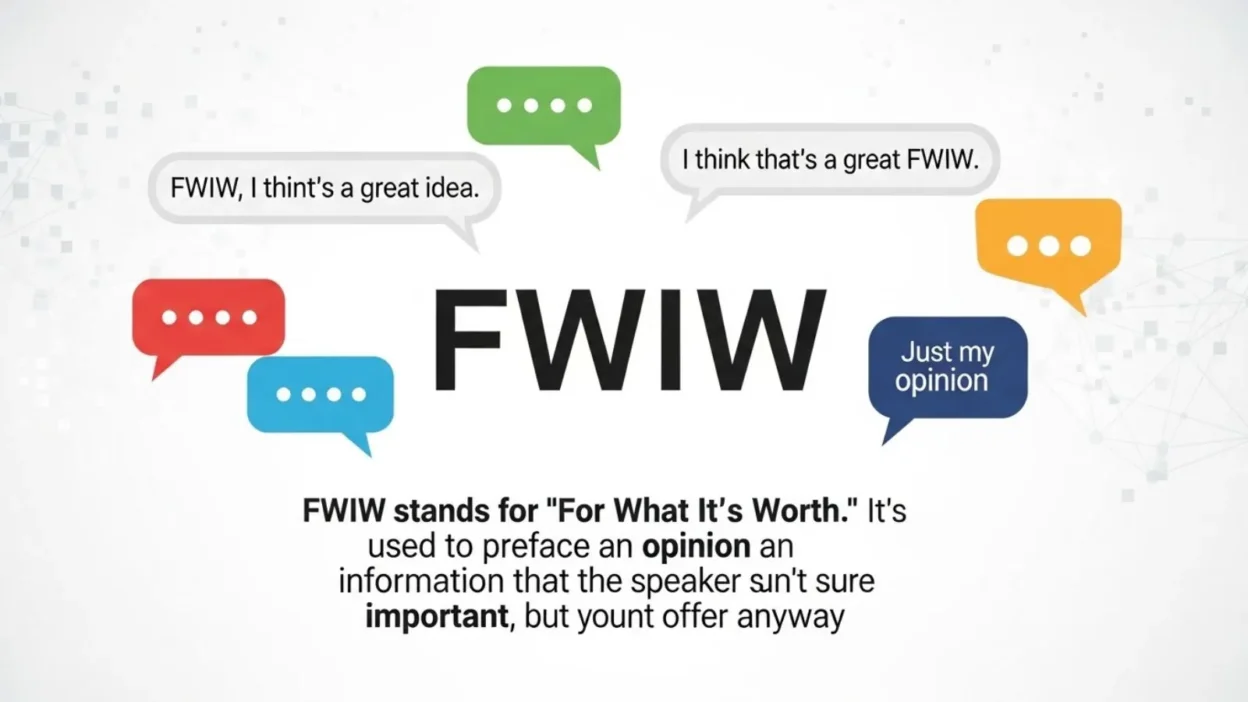
FWIW stands for “For What It’s Worth” and is commonly used when someone wants to share an opinion, suggestion, or piece of information without sounding too strong or forceful.
It adds a soft tone to a statement and is often used to politely express thoughts.
In this article, we will explore the full meaning of FWIW, how it is used in real conversations, its tone, examples, and why it remains popular in modern texting culture.
What Does FWIW Mean in Text? (Full Explanation)
The abbreviation FWIW stands for “For What It’s Worth.” It is a commonly used expression in texting, emails, and online conversations when someone wants to share an opinion, suggestion, or piece of information in a polite and non-forceful way. Unlike direct statements that sound firm or demanding, FWIW softens the message and shows that the speaker is simply offering their viewpoint, not insisting that others must agree.
In simple terms, when someone says FWIW, they are basically saying, “This is my opinion, but you can take it or leave it.” It is often used to add a helpful comment, give advice, or express disagreement in a respectful manner. For example, if a friend is planning something and you say, “FWIW, I think the earlier option worked better,” you are gently sharing your thought without sounding rude or pushy.
FWIW is popular because it helps maintain a friendly and balanced tone in conversations. It reduces the chances of misunderstanding, especially in text messages where tone is often unclear. People use it in casual chats, professional emails, and even social media discussions to sound more diplomatic.
Another important thing to understand is that FWIW does not carry a strong emotional weight. It is neutral and depends heavily on context. Sometimes it can be supportive, other times slightly critical, but always delivered in a soft and respectful way. This flexibility is what makes FWIW a useful part of modern digital communication.
Origin and Evolution of FWIW
The abbreviation FWIW (For What It’s Worth) did not start as internet slang. Its roots go back to traditional English usage, where the phrase “for what it’s worth” was commonly used in spoken and written language to introduce an opinion that might not carry strong authority or importance. It was a polite way of saying, “This is just my view.”
With the rise of email communication in the late 20th century, especially in professional and academic environments, FWIW became a convenient shorthand. People began using it in long email threads to quickly add suggestions or personal thoughts without sounding too forceful. As digital communication expanded, the abbreviation naturally shifted into online forums, chat rooms, and eventually social media platforms.
In the 2000s and 2010s, platforms like Reddit, Facebook, Twitter (now X), and messaging apps like WhatsApp played a major role in making FWIW widely recognized. Its popularity grew because it fit perfectly into fast-paced digital conversations where users preferred short, clear expressions.
Today, in 2026, FWIW is considered a standard piece of internet slang. It is used across different generations and contexts—from casual texting among friends to semi-formal workplace communication. Despite new slang constantly emerging, FWIW has remained relevant because of its simplicity and usefulness in softening statements.
Its evolution shows how language adapts to technology. What once was a full phrase used in formal speech is now a compact abbreviation that helps people communicate opinions more politely and efficiently in the digital age.
How FWIW Is Used in Real Conversations
The abbreviation FWIW is widely used in everyday digital communication because it helps people express opinions in a soft, respectful, and non-confrontational way. It is not used to give strong commands or strict advice, but rather to gently share a viewpoint that may or may not be considered by the listener.
One of the most common uses of FWIW is when someone wants to offer a personal opinion. For example, in a group discussion, a person might say, “FWIW, I think this design looks cleaner.” This shows they are simply sharing their thoughts without trying to force agreement.
Another important use is in giving suggestions or advice politely. Instead of saying something directly, which might sound harsh, FWIW helps soften the message. For instance, “FWIW, you might want to double-check your settings before submitting.” This makes the advice sound friendly and helpful.
FWIW is also used when someone wants to add extra information that could be useful. In such cases, it acts like a side note. For example, “FWIW, the store closes earlier on weekends.” Here, the speaker is just sharing helpful context.
Additionally, it can be used to disagree politely. Instead of directly opposing someone, a person might say, “FWIW, I had a different experience with that app.” This keeps the conversation respectful and balanced.
Overall, FWIW plays an important role in maintaining tone in conversations. It helps prevent misunderstandings and ensures that communication remains calm, polite, and open-minded in both casual chats and professional discussions.
FWIW Meaning in Different Contexts
The meaning of FWIW (For What It’s Worth) stays the same across platforms, but its tone and impact can change depending on the context in which it is used. Understanding these differences is important for using it correctly in conversations.
In casual conversations, such as WhatsApp chats or texting with friends, FWIW is often used to share personal opinions or light suggestions. It keeps the tone friendly and relaxed. For example, friends discussing plans might say, “FWIW, I think going in the evening would be better.” Here, it simply adds a soft suggestion.
In social media discussions, especially on platforms like X (Twitter), Facebook, or Instagram comments, FWIW is commonly used when people share viewpoints in debates or discussions. It helps users express opinions without sounding aggressive. For instance, “FWIW, this update actually improved the app for me.”
In professional or workplace communication, FWIW is used more carefully. It can appear in emails or messages when someone wants to give input without sounding too direct or authoritative. For example, “FWIW, I believe we should review the report once more before final submission.”
In online forums and communities, such as Reddit, FWIW is often used to add personal experience or perspective. It signals that the statement is subjective and not a final truth.
Across all these contexts, the key function of FWIW remains the same: it softens communication. However, users should always be mindful of tone, as the same abbreviation can feel casual, professional, or opinionated depending on where and how it is used.
Examples of FWIW in Text Messages
Understanding FWIW (For What It’s Worth) becomes much easier when you see it used in real conversations. It is a flexible expression that can appear in different tones depending on the situation, from friendly chats to professional communication.
Example 1: Casual conversation
Friend A: “I think we should watch the new action movie tonight.”
Friend B: “FWIW, the comedy one has better reviews.”
👉 Here, FWIW is used to gently share a suggestion without forcing an opinion.
Example 2: Giving advice
Friend A: “I’m thinking of buying this cheap phone online.”
Friend B: “FWIW, I had a bad experience with that seller before.”
👉 In this case, it is used to offer helpful information based on experience.
Example 3: Social media discussion
User 1: “This app update ruined everything.”
User 2: “FWIW, it actually fixed several bugs for me.”
👉 It shows a different perspective without sounding rude or confrontational.
Example 4: Professional email
“FWIW, I believe we should include more data in the final report for clarity.”
👉 Here, it is used in a workplace setting to softly suggest an improvement.
Tone and Intent Behind FWIW
The abbreviation FWIW (For What It’s Worth) is not just about its literal meaning—it is more about the tone and intent behind the message. In digital communication, where emotions and facial expressions are missing, tone plays a very important role, and FWIW helps shape that tone in a softer and more respectful way.
One of the main intentions behind using FWIW is to reduce directness. Instead of sounding strict or absolute, it allows the speaker to present their opinion as something optional or personal. For example, saying “FWIW, I think this approach could work better” feels much less forceful than simply saying “This is wrong.”
Another key intent is to show humility in conversation. When someone uses FWIW, they are basically acknowledging that their opinion is not the only correct one. This makes discussions more open and less argumentative, especially in group chats or online debates.
FWIW also helps in maintaining politeness during disagreement. Instead of directly opposing someone, it softens the impact. This is especially useful in social media discussions where conversations can easily become heated.
In terms of emotional tone, FWIW is usually neutral or lightly suggestive. It is not aggressive, emotional, or authoritative. Instead, it sits in the middle—offering a balanced way to contribute thoughts without dominating the conversation.
Overall, the intent behind FWIW is simple: to communicate ideas in a way that respects others’ opinions while still allowing personal input. This makes it a valuable expression in modern texting culture where tone clarity is often missing.
Is FWIW Formal or Informal?
The abbreviation FWIW (For What It’s Worth) sits in a flexible space between formal and informal communication. It is not strictly slang, but it is also not fully formal in the traditional sense. Its acceptability depends on where and how it is used.
In informal settings, such as texting friends, group chats, or social media conversations, FWIW is very common. People use it casually to share opinions, give suggestions, or add comments without sounding too serious. In these environments, it fits naturally because the tone of conversation is relaxed and conversational.
In semi-formal communication, such as workplace emails or team discussions, FWIW can still be appropriate when used carefully. For example, it may appear in sentences like, “FWIW, I think we should revisit this section before final approval.” Here, it helps soften the suggestion and make it sound respectful rather than demanding. However, it should be used thoughtfully, depending on company culture and audience.
In highly formal writing, such as legal documents, official reports, academic papers, or government communication, FWIW is generally not recommended. These contexts require clear, direct, and fully spelled-out language without abbreviations. Using slang-like expressions in such settings may reduce professionalism.
Overall, FWIW is best described as informal to semi-formal. Its strength lies in its ability to make communication sound polite, balanced, and less rigid. Because of this, it is widely accepted in digital communication but should be avoided in very formal contexts where clarity and professionalism are the priority.
Common Mistakes People Make When Using FWIW
Although FWIW (For What It’s Worth) is a simple abbreviation, many people still misuse it or misunderstand how it affects tone in conversation. Knowing these common mistakes can help you use it more effectively and avoid confusion.
One of the biggest mistakes is assuming FWIW makes a statement stronger or more important. In reality, it does the opposite—it softens the message. For example, saying “FWIW, this is the best solution” does not mean absolute certainty. It actually signals that the speaker is offering a personal opinion, not a final truth.
Another common error is overusing FWIW in every message. When used too frequently, it can make communication sound uncertain or repetitive. Instead of improving clarity, it may weaken the impact of your message.
Some users also misinterpret the tone of FWIW. Depending on context, it can sound neutral, supportive, or slightly disagreeing. Without understanding this, readers may think the speaker is being dismissive or passive-aggressive, even when that is not the intention.
A further mistake is using FWIW in the wrong context, especially in highly formal or official communication where abbreviations are not suitable. In such cases, it is better to write out full sentences clearly.
Lastly, some people use FWIW without adding meaningful value to the conversation. Since it is meant to introduce a helpful or thoughtful point, using it without purpose can make the message feel unnecessary.
Overall, FWIW is most effective when used sparingly, clearly, and in the right context to support polite and balanced communication.
Why FWIW Is Still Popular in 2026
Even in 2026, FWIW (For What It’s Worth) remains a widely used expression in digital communication because it fits perfectly into the fast, flexible style of modern conversations. As texting, social media, and online discussions continue to dominate how people communicate, short forms like FWIW help users express themselves quickly while maintaining clarity and tone.
One major reason for its continued popularity is its ability to soften opinions in conversations. In a world where online discussions can easily become heated, FWIW allows people to share thoughts without sounding aggressive or confrontational. This makes it especially useful in debates, comment sections, and group chats where different opinions are common.
Another reason is the growing need for efficient communication. People prefer short, meaningful expressions instead of long explanations. FWIW fits this need perfectly by delivering a polite message in just four letters while still carrying context and tone.
FWIW also remains popular because it is versatile across platforms. Whether it’s WhatsApp, Instagram, X (Twitter), Reddit, or even professional emails, it can be used in multiple settings with slight adjustments in tone. This adaptability keeps it relevant across different age groups and communication styles.
Additionally, internet culture continues to value expressions that are simple, neutral, and widely understood. Unlike newer slang that may fade quickly, FWIW has stayed consistent for years because its meaning is clear and timeless.
Overall, FWIW is still popular in 2026 because it balances speed, politeness, and clarity—three essential elements of modern digital communication.
FAQs About FWIW Meaning in Text
1. What does FWIW stand for in text?
FWIW stands for “For What It’s Worth.” It is used to introduce an opinion, suggestion, or piece of information in a polite and non-forceful way.
2. Is FWIW rude or offensive?
No, FWIW is not rude. In fact, it is usually used to soften statements and make communication more respectful. However, tone depends on context, so it can sometimes be misunderstood if not used carefully.
3. Can I use FWIW in professional emails?
Yes, FWIW can be used in semi-formal or workplace emails, especially when offering suggestions or opinions. However, it should be avoided in very formal documents or official reports.
4. What is the main purpose of using FWIW?
The main purpose of FWIW is to share an opinion without sounding too direct or authoritative. It helps keep conversations polite and balanced.
5. Is FWIW still used in 2026?
Yes, FWIW is still commonly used in 2026 across texting apps, social media platforms, and online discussions because of its simplicity and usefulness.
6. What are similar abbreviations to FWIW?
Some similar expressions include IMO (In My Opinion), IMHO (In My Humble Opinion), TBH (To Be Honest), and FYI (For Your Information).
7. How do you pronounce FWIW?
It is usually read as “for what it’s worth” instead of spelling out each letter.
Conclusion
In conclusion, FWIW (For What It’s Worth) is a simple but powerful abbreviation that plays an important role in modern digital communication.
It allows people to share opinions, suggestions, or extra information in a polite and non-forceful way. Instead of sounding strict or absolute, FWIW helps soften statements and keeps conversations balanced and respectful.
From casual texting with friends to professional emails and social media discussions, FWIW is widely used because of its flexibility and neutral tone.
It can be used to agree, disagree, or simply add helpful input without creating conflict. This makes it especially useful in today’s fast-paced online world where tone can easily be misunderstood.
Even in 2026, FWIW remains relevant because it is short, clear, and effective. However, like any abbreviation, it should be used in the right context to avoid confusion or misinterpretation.