
Testosterone is a crucial hormone that plays a key role in both men’s and women’s health, influencing energy, mood, muscle mass, bone density, and sexual function.
Understanding how testosterone levels change with age is essential for maintaining overall well-being and identifying potential health concerns early.
While men experience higher testosterone levels than women, both sexes see natural fluctuations throughout life, often declining gradually after early adulthood.
A clear testosterone levels by age chart provides a quick reference to determine what is considered normal at different stages of life.
Monitoring these levels can help identify signs of low or high testosterone, guide lifestyle choices, and inform discussions with healthcare providers.
In this article, we will explore typical testosterone ranges by age, explain the factors that affect these levels, and offer guidance on maintaining healthy hormone balance for optimal health and vitality.
What is Testosterone?
Testosterone is a vital hormone primarily produced in the testes in men and the ovaries in women, with small amounts also made by the adrenal glands. It belongs to a group of hormones called androgens and plays a crucial role in sexual development, reproduction, and overall health. In men, testosterone is responsible for the development of male characteristics such as deep voice, facial and body hair, and muscle mass. In women, it helps maintain bone density, muscle strength, and libido, even though levels are much lower than in men.
There are two main types of testosterone in the body: total testosterone, which measures all circulating testosterone, and free testosterone, which represents the active hormone available for use by the body. Both are important for assessing hormone health, and deviations from normal ranges can indicate potential health issues.
Testosterone levels naturally fluctuate throughout life. In men, levels typically peak during late adolescence and early adulthood, then gradually decline by about 1% per year after age 30. Women also experience changes, especially during menopause, when testosterone production decreases along with estrogen.
Understanding testosterone’s role is essential because it impacts more than just physical traits. It affects mood, energy, cognitive function, and overall quality of life. By tracking testosterone levels and knowing what is normal for your age, you can take proactive steps to maintain optimal hormone balance and prevent potential health problems.
Testosterone Levels by Age Normal Ranges
Testosterone levels naturally change as we age, and understanding these ranges can help identify potential hormonal imbalances. For adult men, total testosterone is typically measured in nanograms per deciliter (ng/dL). While values can vary slightly by laboratory, general reference ranges provide a useful guideline.
| Age (Men) | Total Testosterone (ng/dL) |
|---|---|
| 20–29 | 300–1,000 |
| 30–39 | 300–950 |
| 40–49 | 300–900 |
| 50–59 | 250–850 |
| 60–69 | 200–800 |
| 70+ | 200–700 |
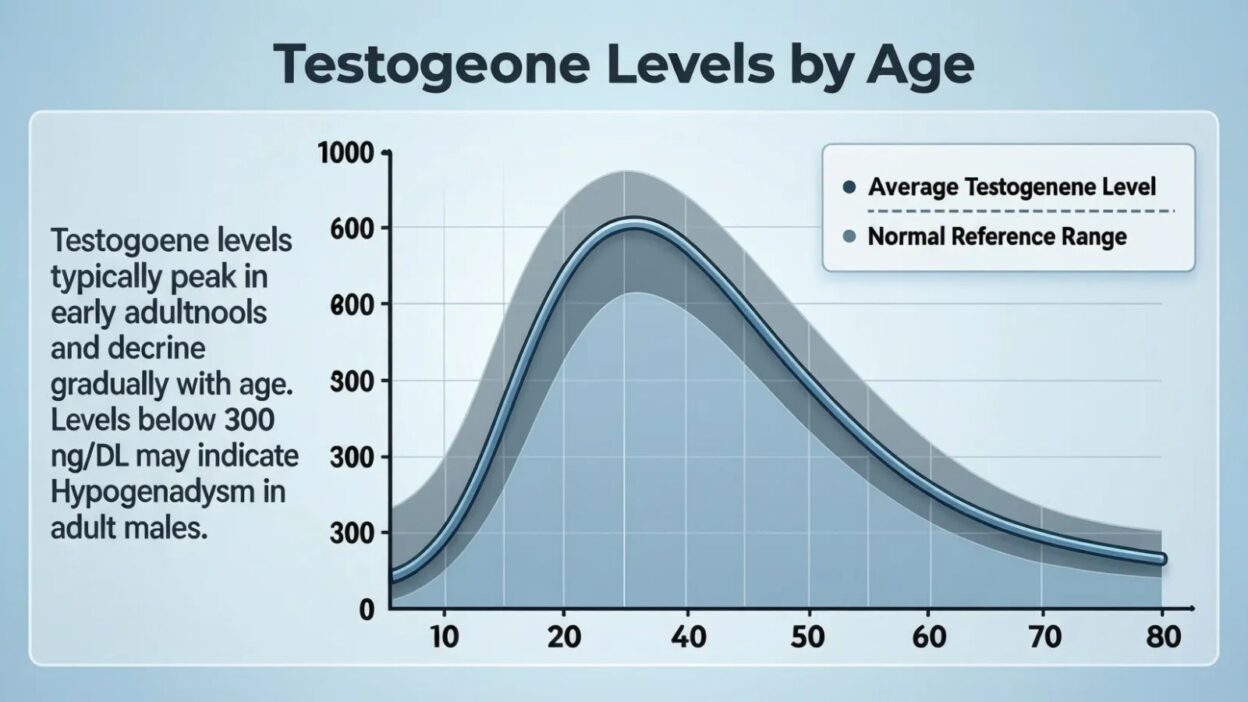
As shown in the chart, testosterone peaks in early adulthood and gradually declines with age, typically around 1% per year after 30. Free testosterone, which represents the active hormone available for the body, follows a similar trend but is usually lower in older adults.
For women, total testosterone levels are much lower, generally ranging from 15–70 ng/dL, with slight declines during midlife and more pronounced reductions after menopause.
It’s important to remember that individual variations are normal. Factors such as genetics, lifestyle, stress, sleep, and underlying health conditions can influence testosterone levels. A single test may not provide a full picture, so repeated measurements and consultation with a healthcare professional are recommended if symptoms of low or high testosterone appear.
By referring to a testosterone levels by age chart, both people of all genders can better understand where they stand and take steps to maintain optimal hormone health throughout life.
Testosterone Levels in Women by Age
Although testosterone is often associated with men, it is also an essential hormone in women, influencing libido, muscle strength, bone density, mood, and overall energy. Women produce testosterone primarily in the ovaries and adrenal glands, but the levels are much lower than in men. Typical total testosterone levels for women range from 15 to 70 ng/dL, depending on age and health.
Testosterone levels in women follow a natural pattern throughout life. During the reproductive years, levels remain relatively stable, supporting sexual health and metabolic function. Around the late 30s and 40s, a gradual decline begins, often accelerating during menopause as ovarian function decreases. This decline can contribute to symptoms such as fatigue, decreased muscle mass, reduced libido, and mood changes.
It’s important to note that women can also experience abnormally high testosterone levels, often caused by conditions such as polycystic ovary syndrome (PCOS), certain medications, or adrenal disorders. High testosterone in women may lead to symptoms like irregular periods, acne, excessive hair growth, and scalp hair thinning.
Monitoring testosterone levels in women can provide valuable insights into overall health. Blood tests measuring total and free testosterone help evaluate hormonal balance, especially if symptoms arise. Lifestyle choices such as regular exercise, balanced nutrition, stress management, and adequate sleep can support healthy testosterone levels.
By understanding how testosterone changes in women across different life stages, it becomes easier to address hormonal imbalances early, improve quality of life, and maintain optimal health well into later years.
Signs of Low Testosterone
Low testosterone, also known as hypogonadism, can affect both people of all genders and often develops gradually with age. Recognizing the symptoms early is essential for maintaining overall health and well-being.
In men, common signs of low testosterone include fatigue, reduced muscle mass and strength, increased body fat, and decreased bone density. Sexual health is often affected, leading to lower libido, fewer spontaneous erections, and difficulty with fertility. Mood changes such as irritability, depression, or lack of motivation are also frequently reported. Low testosterone can contribute to cognitive difficulties, including problems with memory and concentration.
Women with low testosterone may experience decreased libido, fatigue, loss of muscle tone, and reduced bone density, along with mood swings or depression. Since testosterone levels in women are naturally lower, symptoms may be subtle and easily overlooked, making hormonal evaluation important when unexplained changes occur.
Other common signs of low testosterone in both sexes include sleep disturbances, reduced endurance, and a general sense of low vitality. Chronic low levels may increase the risk of health problems such as osteoporosis, cardiovascular issues, and metabolic syndrome.
It’s important to note that these symptoms can overlap with other medical conditions, so testing is critical for an accurate diagnosis. Blood tests measuring total and free testosterone provide a clear picture of hormone levels. Early detection allows for timely lifestyle adjustments, targeted therapies, or medical intervention to restore healthy testosterone balance and improve quality of life.
Causes of Testosterone Decline
Testosterone naturally declines with age, but several additional factors can accelerate this process in both people of all genders. Understanding the causes helps in taking preventive measures and maintaining optimal hormone levels.
1. Aging: Testosterone levels peak in early adulthood and gradually decrease by about 1% per year after age 30. This decline is a normal part of aging, affecting energy, muscle mass, and libido over time.
2. Lifestyle Factors: Poor diet, lack of exercise, chronic stress, and insufficient sleep can all lower testosterone production. Excessive alcohol consumption, smoking, and obesity are also associated with reduced hormone levels. Maintaining a healthy lifestyle is key to supporting testosterone naturally.
3. Medical Conditions: Certain health issues contribute to low testosterone. Men with hypogonadism, diabetes, obesity, or chronic illnesses may experience significant hormone reductions. In women, conditions like polycystic ovary syndrome (PCOS), adrenal disorders, or premature ovarian insufficiency can disrupt testosterone balance.
4. Medications and Substances: Long-term use of corticosteroids, opioids, and some antidepressants may suppress testosterone production. Exposure to endocrine-disrupting chemicals in plastics and personal care products can also impact hormone levels.
5. Stress and Mental Health: Chronic stress increases cortisol, a hormone that negatively affects testosterone. Anxiety, depression, and other mental health conditions can further exacerbate hormone imbalances.
By identifying the underlying causes of testosterone decline, individuals can take proactive steps—through lifestyle changes, medical evaluation, or targeted therapies—to maintain healthy hormone levels and support overall well-being.
High Testosterone Levels What to Watch For
While much attention is given to low testosterone, abnormally high testosterone can also pose health risks for both people of all genders. Elevated testosterone levels are less common but can result from medical conditions, medications, or excessive supplementation.
In men, high testosterone is often linked to testosterone replacement therapy (TRT) misuse, anabolic steroid use, or rare endocrine disorders. Symptoms may include aggressive behavior, acne, oily skin, excessive body hair, hair loss on the scalp, and enlarged prostate, which can lead to urinary problems. Over time, elevated testosterone may also increase the risk of cardiovascular issues and negatively impact fertility by reducing sperm production.
Women with high testosterone levels may experience hirsutism (excess facial or body hair), deepening of the voice, acne, irregular menstrual cycles, and hair thinning on the scalp. The most common medical cause in women is polycystic ovary syndrome (PCOS), but adrenal disorders and certain medications can also elevate testosterone.
It’s important to recognize that high testosterone levels do not always produce obvious symptoms, so blood testing is essential for diagnosis. Lifestyle factors, such as excessive use of supplements claiming to boost testosterone, can contribute to abnormally high levels.
Early identification allows for interventions that restore hormone balance safely. Treatment may involve adjusting medications, managing underlying conditions, or modifying lifestyle habits. Monitoring testosterone levels with regular testing is key to preventing long-term complications associated with elevated hormones.
How to Test Your Testosterone Levels
Testing testosterone levels is the most reliable way to determine whether your hormone balance is healthy. Blood tests are commonly used to measure both total testosterone, which accounts for all circulating testosterone, and free testosterone, the fraction that is active and available for the body’s tissues. Both measurements provide important insights into overall hormonal health.
For accurate results, it’s recommended to have your blood drawn in the morning, typically between 7 a.m. and 10 a.m., when testosterone levels are at their highest. Depending on symptoms and initial results, your healthcare provider may suggest repeating the test to confirm consistency, as testosterone levels naturally fluctuate throughout the day.
Testing frequency varies based on age, sex, and symptoms. Men experiencing fatigue, low libido, or muscle loss may need testing, especially after age 30 when levels typically begin to decline. Women may require evaluation if they notice changes in libido, menstrual cycles, or signs of hormonal imbalance.
Lab results are interpreted in reference to age-specific ranges, often presented in nanograms per deciliter (ng/dL). Doctors consider factors like sex, age, health status, and medication use before diagnosing low or high testosterone.
Besides blood tests, additional evaluations—such as luteinizing hormone (LH) levels, prolactin, and imaging studies—may be recommended if an underlying condition is suspected.
By testing testosterone levels accurately, you gain a clear understanding of your hormonal status, allowing for informed decisions regarding lifestyle adjustments, supplementation, or medical treatment to maintain optimal hormone balance and overall health.
How to Maintain Healthy Testosterone Levels
Maintaining healthy testosterone levels is essential for energy, muscle mass, mood, and overall well-being. While age-related declines are natural, lifestyle choices and medical strategies can help preserve optimal hormone levels.
1. Regular Exercise:
Strength training and high-intensity interval training (HIIT) have been shown to boost testosterone naturally. Resistance exercises, such as weightlifting or bodyweight workouts, are particularly effective in stimulating hormone production.
2. Balanced Nutrition:
A diet rich in lean proteins, healthy fats, and micronutrients like zinc and vitamin D supports testosterone synthesis. Foods such as eggs, fatty fish, nuts, and leafy greens can aid hormone balance. Avoid excessive processed foods, sugars, and alcohol, which can negatively impact testosterone.
3. Adequate Sleep:
Poor sleep lowers testosterone, especially deep REM sleep. Adults should aim for 7–9 hours of quality sleep per night to support hormone regulation.
4. Stress Management:
Chronic stress elevates cortisol, which suppresses testosterone. Practices like meditation, yoga, and mindfulness can reduce stress and improve hormonal balance.
5. Weight Management:
Maintaining a healthy body weight helps prevent excess fat that can convert testosterone to estrogen, particularly in men. Regular physical activity and a nutrient-rich diet are key strategies.
6. Medical Approaches:
In cases of clinically low testosterone, testosterone replacement therapy (TRT) may be considered under medical supervision. Supplements claiming to boost testosterone should be used cautiously, as evidence is limited.
FAQs About Testosterone Levels by Age
1. What is a normal testosterone level at different ages?
In men, total testosterone peaks in the 20s and gradually declines after 30. Normal ranges are approximately 300–1,000 ng/dL in young adults and 200–700 ng/dL in men over 70. Women typically have 15–70 ng/dL, with gradual decreases during midlife and after menopause.
2. Can testosterone levels be increased naturally?
Yes. Regular exercise, a balanced diet rich in healthy fats and proteins, adequate sleep, stress management, and maintaining a healthy weight can all support natural testosterone production.
3. How often should testosterone be tested?
Men experiencing symptoms such as fatigue, low libido, or muscle loss may test after age 30. Women with hormonal imbalance symptoms may also require testing. Repeat testing may be necessary to confirm results, as testosterone levels fluctuate throughout the day.
4. What is the difference between total and free testosterone?
Total testosterone measures all testosterone in the blood, while free testosterone represents the hormone actively available for the body to use. Both are important for evaluating hormone health.
5. Are testosterone supplements safe?
Supplements may help only if there is a diagnosed deficiency. Over-the-counter boosters are often unregulated and may not be effective. Medical guidance is recommended before using any supplement.
6. What are the signs of low or high testosterone?
Low testosterone can cause fatigue, low libido, mood changes, and muscle loss. High testosterone may result in acne, aggressive behavior, hair growth in unusual areas, and fertility issues.
Addressing these FAQs helps readers understand their hormone levels, recognize symptoms, and make informed decisions regarding lifestyle or medical interventions.
Conclusion:
Understanding testosterone levels by age is crucial for maintaining overall health and well-being.
Testosterone plays a vital role in both people of all genders, affecting energy, mood, muscle mass, bone health, sexual function, and cognitive performance.
While levels naturally fluctuate throughout life, monitoring them can help identify potential imbalances early and guide proactive interventions.
For men, testosterone typically peaks in the 20s and gradually declines by about 1% per year after age 30.
Women have lower baseline levels, which gradually decrease with age, particularly during menopause.
Using a testosterone levels by age chart allows individuals to quickly assess whether their hormone levels fall within the normal range for their age and sex.
Symptoms such as fatigue, low libido, muscle loss, mood changes, or excessive hair growth can indicate low or high testosterone.
Lifestyle factors including exercise, nutrition, sleep, stress management, and maintaining a healthy weight play a significant role in supporting healthy hormone levels.
In some cases, medical evaluation and treatment, such as testosterone replacement therapy, may be necessary to restore balance safely.
Regular monitoring, combined with informed lifestyle and medical decisions, empowers individuals to optimize their testosterone levels and overall health.
By understanding the natural trends, causes of decline, and ways to maintain hormone balance, both people of all genders can take meaningful steps toward long-term vitality, improved quality of life, and better physical and mental well-being.