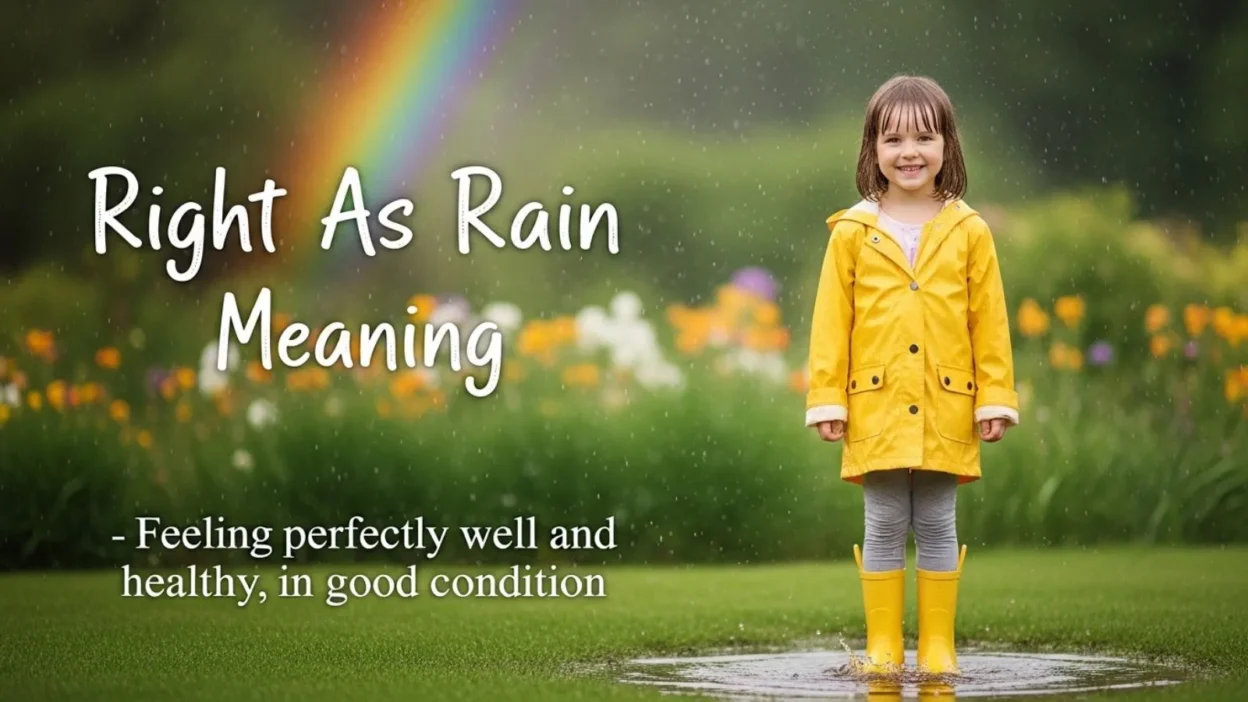
Have you ever heard someone say, “I’m feeling right as rain” and wondered what it really means? The phrase “right as rain” is a popular English idiom that might sound confusing at first, especially if you take it literally.
In reality, it’s a cheerful way to express that someone is perfectly fine, healthy, or in excellent condition. People often use it to reassure others after recovering from an illness, injury, or a stressful situation, or simply to indicate that everything is going smoothly.
Understanding idioms like “right as rain” is essential for anyone learning English, as they make your speech sound more natural and native like.
In this article, we will explore the meaning, origin, usage examples, and fun facts about this charming phrase. By the end, you’ll be able to confidently use “right as rain” in conversations, writing, and even impress your friends with your idiomatic flair.
What Does “Right as Rain” Mean?
The idiom “right as rain” is commonly used to describe someone who is completely well, healthy, or in perfect condition. It’s a reassuring phrase that signals everything is fine, whether physically, mentally, or in terms of circumstances. For example, if a friend has been sick and then recovers, you might say, “Glad to see you’re right as rain!” This instantly conveys that they are fully recovered without sounding formal or clinical.
While the literal words suggest a connection to rain, the meaning is purely figurative. Here, “right” implies correctness or wellness, and “rain” symbolizes something natural and refreshing, giving the phrase a positive, comforting tone.
People also use it beyond health. For instance, after fixing a problem at work or resolving a minor conflict, you could say, “Everything’s right as rain now,” meaning the situation is back to normal.
The beauty of “right as rain” is its simplicity and versatility. It’s friendly, easy to remember, and works in both casual conversations and informal writing. Knowing this idiom allows English learners to express reassurance or satisfaction naturally.
Origin and History of “Right as Rain”
The idiom “right as rain” has been part of the English language for centuries, though its exact origins are a little mysterious. The earliest recorded use dates back to the 18th century, when writers and poets began using it in literature to describe someone or something as perfectly fine. The phrase combines the word “right,” meaning correct, proper, or in good condition, with “rain,” which in this context symbolizes freshness, naturalness, or renewal.
Some language historians suggest that rain was historically seen as a positive force, essential for crops, life, and well-being. By connecting “right” with “rain,” the phrase conveys a sense of natural perfection and wholesome recovery. Unlike phrases that suggest illness or misfortune, “right as rain” carries an inherently positive and reassuring tone.
Over time, it became widely used in both Britain and the United States, appearing in novels, newspapers, and everyday conversations. Interestingly, while many English idioms fade or change meaning over centuries, “right as rain” has remained remarkably consistent in its meaning and usage.
Today, it’s a friendly, casual expression used in spoken English, writing, and even in popular media. Whether you’re reassuring a friend after they’ve been ill or commenting that a problem has been resolved, “right as rain” remains a timeless way to say everything is perfectly fine.
How to Use “Right as Rain” in Sentences
Using the idiom “right as rain” is simple, but knowing the proper context ensures your sentences sound natural. The phrase is primarily used to indicate that someone or something is perfectly fine, healthy, or back to normal. It’s casual and friendly, making it suitable for conversations with friends, family, or colleagues in informal settings.
For example:
If someone was unwell and has now recovered, you could say:
- “You had a rough week, but you look right as rain today!”
- “Don’t worry about the flu, she’s right as rain now.”
The idiom can also apply to situations or objects, not just people. For instance:
- “After fixing the car, it’s right as rain again.”
- “The garden survived the storm and is right as rain.”
When using this idiom, place it after the subject, usually following “is” or “feel(s).”
For example:
- Correct: “He’s right as rain after the surgery.”
- Incorrect: “Right as rain, he is the surgery after.”
It’s worth noting that “right as rain” is informal, so it’s generally best to avoid it in highly formal writing, like academic papers or legal documents. Instead, it shines in conversations, blogs, social media captions, and lighthearted writing.
Synonyms and Similar Idioms
If you enjoy using idioms like “right as rain,” you’ll be pleased to know there are several synonyms and similar expressions in English that convey the same idea of being perfectly fine or in good condition. Using these can add variety to your conversations and writing.
One common synonym is “fit as a fiddle.” This phrase emphasizes physical health and energy. For example: “After his recovery, he’s fit as a fiddle.” Similarly, “good as new” is often used for objects or situations rather than people: “The repaired laptop is good as new.”
Other idioms include “in tip-top shape” and “sound as a bell.” Both can describe either people or things in excellent condition. For instance: “The boat is in tip-top shape for our trip.”
While all these idioms convey wellness or perfection, there are subtle differences. “Right as rain” has a friendly, reassuring tone, making it ideal for casual conversation. “Fit as a fiddle” is more energetic and lively, while “good as new” often focuses on restoration or repair.
Using these idioms interchangeably can make your English more colorful and natural, but it’s important to match the idiom to the context. Whether you’re talking about a person, a situation, or an object, choosing the right phrase ensures your meaning is clear and your speech sounds fluent.
Examples from Literature, Movies, and Pop Culture
The idiom “right as rain” has appeared in various forms of literature, movies, and pop culture, reflecting its enduring popularity in English. Writers and filmmakers often use it to convey reassurance, recovery, or normalcy in a casual, relatable way.
In literature, you might encounter it in classic novels or modern stories. For example, a character recovering from an illness could have a line like, “Don’t worry, I’m right as rain now,” signaling that they are fully healthy and everything is back to normal. This simple phrase helps the reader instantly understand the character’s state without lengthy explanations.
Movies and TV shows frequently use “right as rain” in dialogue for natural, conversational English. For instance, a character in a British drama might say, “After a good night’s sleep, I feel right as rain,” which sounds friendly and authentic. Similarly, in casual comedy films, it’s often used to lighten the mood and reassure others that there’s no problem.
Even in music and pop culture, the phrase pops up occasionally, either in lyrics or interviews, because it evokes a sense of comfort and positivity. Its charm lies in its simplicity and versatility, making it easy to understand for both native speakers and English learners.
Common Mistakes and Misunderstandings
1. Taking it literally:
Some learners assume the phrase has to do with actual rain or weather. For example, saying, “It’s raining, so I’m right as rain” would be incorrect. The idiom is figurative, meaning perfectly fine or healthy, and doesn’t refer to literal rain at all.
2. Using it in overly formal writing:
Because “right as rain” is casual, it’s best avoided in academic papers, legal documents, or formal reports.
For instance:
The patient is right as rain after the operation” might be too informal for a medical report. Instead, use “fully recovered” or “in good health” in formal contexts.
3. Incorrect sentence placement:
The idiom usually follows the subject and a linking verb like is, feels, or looks. Incorrect placement can make the sentence awkward:
- Incorrect: “Right as rain, he is the surgery after.”
- Correct: “He is right as rain after the surgery.”
4. Confusing it with other rain idioms:
Phrases like “raining cats and dogs” or “save for a rainy day” have very different meanings. Using them interchangeably can confuse listeners.
Fun Facts About “Right as Rain”
1. Rain has positive symbolism:
In English literature and culture, rain isn’t always seen as gloomy. Historically, rain was a symbol of renewal, growth, and life, which helps explain why being “right as rain” suggests everything is naturally fine and healthy. Unlike stormy or destructive weather, rain in this idiom is comforting and positive.
2. It has remained consistent over centuries:
Many idioms change meaning over time, but “right as rain” has maintained its original sense since the 18th century. Its stability makes it a reliable expression for learners and native speakers alike.
3. Popular in music and media:
Although subtle, the phrase occasionally appears in song lyrics, interviews, and dialogue in films and TV shows. Its friendly and reassuring tone makes it suitable for casual, relatable communication.
4. Part of a larger family of health idioms:
“Right as rain” belongs to a group of idioms related to health, wellbeing, and perfection, alongside phrases like “fit as a fiddle” and “sound as a bell.” Knowing these idioms can make your English sound richer and more idiomatic.
5. Easy to remember:
Because it’s short, rhyming, and cheerful, “right as rain” is one of the easiest idioms to recall. The rhyme between right and rain helps learners remember its positive meaning.
Why Learning Idioms Like “Right as Rain” Matters
Learning idioms like “right as rain” is an essential part of mastering English, because idioms are deeply woven into everyday conversations, literature, movies, and media. Using idioms correctly not only improves your fluency but also helps you sound more natural and confident when speaking.
Idioms often convey meaning more vividly than literal expressions. For example, saying “She’s right as rain” is more casual and expressive than saying “She is healthy now.” It adds personality to your speech and can help you connect with native speakers on a more informal, friendly level.
Moreover, idioms like “right as rain” give learners insight into cultural nuances. Understanding why rain is associated with wellness and positivity, for instance, provides a glimpse into historical and cultural perspectives in English-speaking countries. This cultural knowledge makes your language use more authentic.
In addition, using idioms correctly can enhance writing and social interactions. Blogs, emails, casual stories, and social media posts become more engaging when sprinkled with idiomatic expressions. They can also make storytelling livelier, helping you convey emotions or states in a relatable way.
Finally, practicing idioms encourages learners to think figuratively rather than literally, which is crucial for advanced English comprehension. By mastering expressions like “right as rain,” you equip yourself with tools that make your English sound polished, natural, and culturally aware.
Frequently Asked Questions (FAQ) About “Right as Rain”
1. What does “right as rain” mean?
“Right as rain” is an English idiom that means perfectly fine, healthy, or in excellent condition. It’s often used to reassure someone after illness, stress, or any situation that has been resolved.
2. Where does the phrase “right as rain” come from?
The phrase originated in the 18th century. “Right” means correct or in good condition, and “rain” symbolizes freshness and natural wellness. Over time, it became a common idiom in both British and American English.
3. Can I use “right as rain” in formal writing?
No, it’s informal and best suited for conversations, casual writing, blogs, or storytelling. For formal writing, use alternatives like “fully recovered” or “in excellent condition.”
4. How do I use “right as rain” in a sentence?
The idiom usually follows a subject and a linking verb such as is, feels, or looks. Example: “After the surgery, he’s right as rain.”
5. Are there similar idioms to “right as rain”?
Yes! Common synonyms include “fit as a fiddle,” “good as new,” “in tip-top shape,” and “sound as a bell.” Each has a slightly different tone or context but conveys a similar meaning.
6. Can “right as rain” refer to things other than people?
Absolutely! You can use it for objects or situations. Example: “The repaired car is right as rain.”
Conclusion
The idiom “right as rain” is a simple yet powerful way to express that someone or something is perfectly fine, healthy, or in excellent condition.
Its cheerful tone, long history, and versatility make it a favorite in everyday English, appearing in conversations, literature, movies, and media. Understanding its meaning, origin, and correct usage allows learners to sound more natural and fluent in both spoken and written English.
By practicing this idiom, along with its synonyms like “fit as a fiddle” or “good as new,” you can add variety and color to your language. Remember, it’s casual and friendly, so it works best in informal settings, conversations, or storytelling.
Next time someone asks about your health, or a situation returns to normal, you can confidently say: “I’m right as rain!” Using idioms like this not only shows mastery of English but also adds personality and charm to your communication.

Jonathan Bishopson is the punmaster-in-chief at ThinkPun.com, where wordplay meets wit and every phrase gets a clever twist. Known for turning ordinary language into laugh-out-loud lines, Jonathan crafts puns that make readers groan, grin, and think twice. When he’s not busy bending words, he’s probably plotting his next “pun-derful” masterpiece or proving that humor really is the best re-word.