Your resting heart rate (RHR) is more than just a number—it’s a window into your overall heart health.
Measured in beats per minute (BPM) when your body is at rest, RHR reflects how efficiently your heart pumps blood throughout your body.
Interestingly, what’s considered normal can vary widely depending on your age, fitness level, and lifestyle.
For example, children naturally have higher resting heart rates than adults, while athletes often have lower RHR due to stronger cardiovascular conditioning.
Monitoring your resting heart rate can help you detect potential health issues early, track fitness progress, and make informed lifestyle changes to improve your heart health.
In this comprehensive guide, we’ll explore resting heart rate by age, provide a clear chart of normal ranges, explain the factors that influence RHR, and share tips for maintaining a healthy heartbeat throughout your life.
What is Resting Heart Rate?
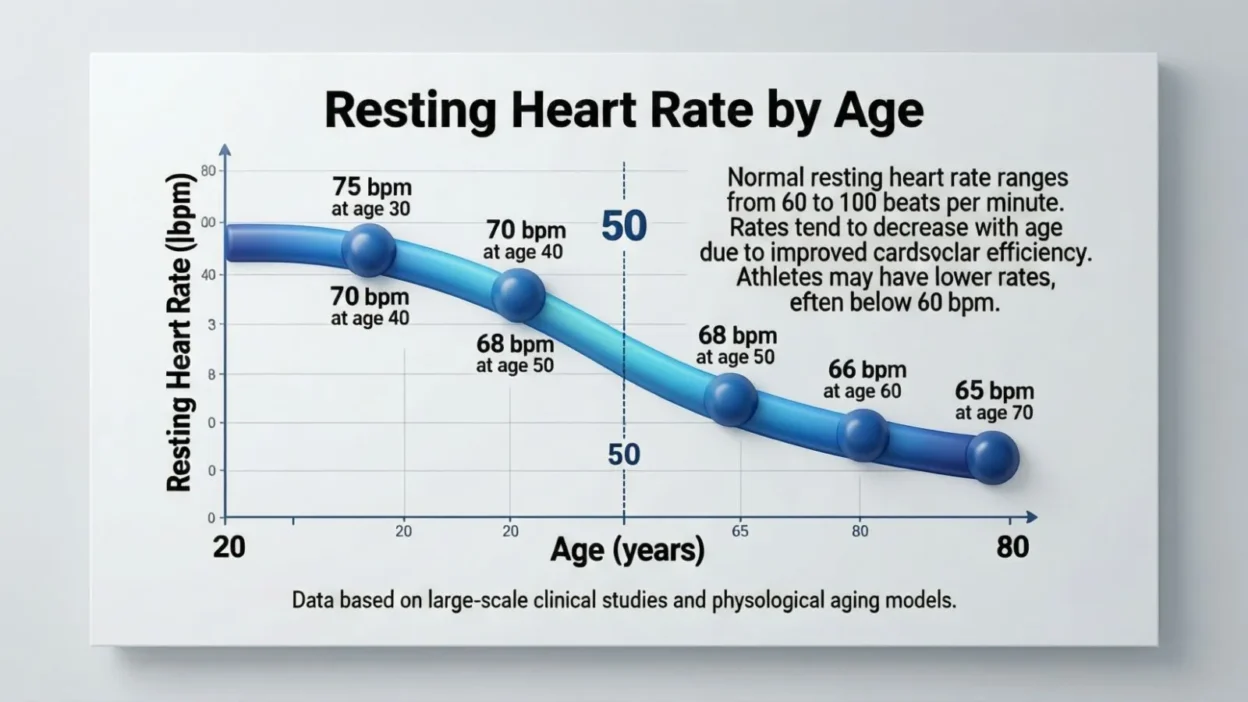
Your resting heart rate (RHR) is the number of times your heart beats per minute when your body is completely at rest. It serves as a key indicator of your cardiovascular health and overall fitness. For most adults, a normal resting heart rate ranges from 60 to 100 beats per minute (BPM). However, athletes or highly active individuals may have a lower RHR, sometimes as low as 40–60 BPM, because their hearts are more efficient at pumping blood.
RHR is influenced by how hard your heart has to work to circulate blood. When you are relaxed, your heart doesn’t need to beat as frequently, resulting in a lower resting rate. Conversely, stress, anxiety, caffeine, or certain medications can temporarily increase your heart rate, even while at rest.
Measuring your RHR is simple but should be done under the right conditions—ideally in the morning after a full night’s sleep and before any physical activity or caffeine consumption. Regularly tracking your RHR can reveal trends over time, helping you identify improvements in fitness or detect early warning signs of cardiovascular issues.
Understanding what a healthy RHR looks like for your age and activity level is crucial. In the following sections, we’ll break down resting heart rate by age, from infants to older adults, and explain how lifestyle, fitness, and health factors can influence this vital number.
Factors That Affect Resting Heart Rate
Your resting heart rate (RHR) is not a fixed number—it changes based on a variety of factors, from age and fitness level to lifestyle choices and medical conditions. Understanding these influences can help you interpret your RHR more accurately.
1. Age:
As we grow older, RHR naturally changes. Infants and children typically have higher heart rates than adults, while older adults may experience slight increases or decreases depending on overall health.
2. Physical Fitness:
Athletes and individuals with strong cardiovascular conditioning often have lower RHR because their hearts pump more efficiently. Conversely, sedentary individuals may have higher RHR due to less efficient heart function.
3. Stress and Emotions:
Stress, anxiety, and even excitement can trigger the release of adrenaline, temporarily raising heart rate. Chronic stress can lead to a consistently higher RHR over time.
4. Lifestyle Factors:
Poor sleep, dehydration, excessive caffeine or alcohol, and smoking can all elevate RHR. Adequate rest, hydration, and a balanced diet support a healthy heart rate.
5. Medications and Health Conditions:
Certain medications, such as beta-blockers or stimulants, directly impact heart rate. Medical conditions like hyperthyroidism, anemia, or heart disease can also alter RHR.
6. Genetics:
Your family history plays a role in your natural heart rate, influencing what is normal for you.
Resting Heart Rate by Age: Infants to Teenagers
Resting heart rate varies significantly in children and teenagers because their hearts are smaller and beat faster to circulate blood efficiently. Understanding these normal ranges is crucial for parents, caregivers, and healthcare providers.
Infants and Newborns:
Newborns (0–1 month) typically have a resting heart rate between 70 and 190 BPM, which is quite high due to their small heart size and rapid metabolism. By the time infants reach 1–11 months, the rate usually slows slightly to 80–160 BPM.
Toddlers and Young Children:
Children aged 1–3 years often have a resting heart rate between 80 and 130 BPM, while those aged 4–10 years average 70–120 BPM. These higher rates compared to adults are normal and reflect their growing, active bodies.
Teenagers:
During adolescence (11–17 years), the resting heart rate begins to resemble adult patterns, ranging from 60 to 100 BPM. Hormonal changes, growth spurts, and increased physical activity can influence heart rate during these years. Teen athletes may have a lower RHR due to better cardiovascular fitness.
Resting Heart Rate in Adults
For adults, the typical resting heart rate ranges from 60 to 100 beats per minute (BPM). However, what’s considered “normal” can vary depending on age, fitness level, lifestyle, and health conditions. Understanding your resting heart rate is an important step toward monitoring cardiovascular health.
Sedentary Adults:
Adults who are less physically active often have a resting heart rate closer to the upper end of the normal range, around 80–100 BPM. This is because a heart that isn’t regularly exercised must beat more frequently to circulate blood efficiently.
Physically Active Adults:
Individuals who engage in regular exercise, particularly cardiovascular training, often have lower resting heart rates, sometimes 40–60 BPM. This occurs because exercise strengthens the heart, allowing it to pump a greater volume of blood with each beat, reducing the need for frequent beats.
Age-Related Changes:
As adults age, slight increases in resting heart rate may occur due to reduced elasticity of blood vessels and changes in heart function. Women tend to have slightly higher resting heart rates than men at the same age.
Lifestyle Factors:
Stress, sleep quality, caffeine, alcohol, and smoking can all influence RHR. Maintaining healthy habits can help keep your heart rate within a normal range.
Resting Heart Rate in Older Adults
As we age, our resting heart rate (RHR) can change due to natural physiological shifts, lifestyle factors, and underlying health conditions. For most healthy older adults, the normal RHR remains within 60 to 100 beats per minute (BPM), though slight variations are common.
Age-Related Changes:
With age, the heart’s walls may thicken, and arteries can become stiffer, which may slightly alter heart rate. Some older adults may notice a modest increase in RHR, while others, especially those who are physically active, may maintain lower rates.
Impact of Fitness:
Regular exercise continues to play a key role in heart efficiency. Older adults who engage in cardiovascular activities, strength training, or even daily walking often have lower resting heart rates, reflecting a stronger and more efficient heart.
Medical Conditions and Medications:
Older adults are more likely to take medications or have conditions that affect heart rate, including thyroid disorders, high blood pressure, or heart disease. Certain medications, such as beta-blockers, can lower RHR, while others may raise it.
Monitoring Importance:
Tracking resting heart rate in older age can help detect early warning signs of heart disease or other health issues. Sudden increases or decreases in RHR, especially when accompanied by symptoms like dizziness, fatigue, or shortness of breath, should prompt medical evaluation.
How to Measure Your Resting Heart Rate Accurately
Measuring your resting heart rate (RHR) is simple, but accuracy depends on timing, method, and consistency. For reliable results, it’s important to follow proper steps.
Manual Measurement:
The most common method is to check your pulse at the wrist (radial artery) or neck (carotid artery). Place your index and middle fingers on the artery, apply gentle pressure, and count the number of beats for 60 seconds. Alternatively, you can count for 30 seconds and multiply by two.
Using Devices:
Fitness trackers, smartwatches, and chest strap monitors can provide continuous and convenient heart rate monitoring. Ensure your device is properly fitted and calibrated for more accurate readings.
Best Time to Measure:
The ideal time to check your resting heart rate is first thing in the morning, right after waking and before getting out of bed. Your body is fully rested, and external influences like caffeine, exercise, or stress are minimal.
Tips for Accuracy:
- Sit or lie down calmly for a few minutes before measuring.
- Avoid caffeine, nicotine, or intense activity immediately before checking your heart rate.
- Record readings consistently at the same time each day to track trends.
Tracking Trends:
A single reading provides limited insight. Monitoring RHR over days or weeks can reveal patterns and help assess changes in fitness, stress levels, or health.
By following these steps, you can accurately measure your resting heart rate and use the information to guide fitness routines, lifestyle choices, and overall heart health management.
Resting Heart Rate Chart by Age
A clear understanding of resting heart rate (RHR) ranges by age can help you determine whether your heart is healthy and functioning efficiently. While individual variations exist, the following ranges provide a useful guideline:
Infants and Children:
- Newborns (0–1 month): 70–190 BPM
- Infants (1–11 months): 80–160 BPM
- Toddlers (1–3 years): 80–130 BPM
- Children (4–10 years): 70–120 BPM
Teenagers (11–17 years):
- Typical range: 60–100 BPM
- Teen athletes may have lower rates due to enhanced cardiovascular fitness.
Adults (18–59 years):
- Normal range: 60–100 BPM
- Highly active adults or athletes may have RHR as low as 40–60 BPM.
Older Adults (60+ years):
- Typical range: 60–100 BPM
- Slight increases or decreases are common, influenced by lifestyle, fitness, and health conditions.
Using the Chart:
These ranges are guidelines rather than strict rules. Your RHR may fluctuate depending on stress, sleep, caffeine intake, and physical activity. Consistently tracking your RHR over time provides more insight than a single reading.
By comparing your heart rate to these ranges, you can better assess your cardiovascular health. If your RHR consistently falls outside these ranges, especially with symptoms such as dizziness, palpitations, or fatigue, it may be a sign to consult a healthcare professional.
Maintaining awareness of your RHR by age helps you make informed lifestyle decisions, improve fitness, and monitor overall heart health.
How to Improve Your Resting Heart Rate
Improving your resting heart rate (RHR) is an important step toward better cardiovascular health, increased energy, and overall well-being. While some factors affecting RHR, like age or genetics, cannot be changed, several lifestyle habits and fitness strategies can help lower or maintain a healthy heart rate.
1. Regular Exercise:
Cardiovascular activities such as walking, jogging, cycling, swimming, or aerobics strengthen the heart, allowing it to pump blood more efficiently. Over time, this can lower your RHR. High-intensity interval training (HIIT) and strength training also contribute to heart efficiency.
2. Manage Stress:
Chronic stress elevates heart rate through increased adrenaline. Practices like meditation, deep breathing, yoga, and mindfulness help calm the nervous system and reduce resting heart rate.
3. Healthy Diet:
A diet rich in fruits, vegetables, whole grains, lean proteins, and healthy fats supports heart health. Limiting processed foods, sugar, and excessive caffeine can help maintain a steady RHR.
4. Adequate Sleep:
Consistently getting 7–9 hours of quality sleep each night allows the heart to rest and recover, supporting a lower resting heart rate.
5. Avoid Harmful Habits:
Smoking, excessive alcohol, and dehydration can all elevate RHR. Reducing or eliminating these habits promotes a healthier heartbeat.
6. Track Your Progress:
Regularly monitoring your RHR allows you to see improvements over time and adjust habits accordingly.
When to See a Doctor
While resting heart rate (RHR) naturally varies among individuals, consistently abnormal readings can signal underlying health issues. It’s important to recognize when your RHR may require medical attention.
High Resting Heart Rate:
Adults with a resting heart rate consistently above 100 BPM (a condition called tachycardia) may be at increased risk for heart disease, high blood pressure, or thyroid disorders. Symptoms such as dizziness, shortness of breath, chest pain, or palpitations accompanying a high RHR are particularly concerning and warrant prompt medical evaluation.
Low Resting Heart Rate:
A resting heart rate below 50 BPM in non-athletes (bradycardia) can indicate problems with heart rhythm, electrolyte imbalances, or other cardiovascular conditions. If low RHR is accompanied by fatigue, fainting, or weakness, consulting a healthcare provider is essential.
Sudden Changes:
Even if your RHR falls within a normal range, sudden increases or decreases over a short period may reflect stress, illness, dehydration, or medication effects. Monitoring these changes over time can help detect issues early.
Other Considerations:
Older adults, individuals with chronic conditions, or those taking medications that affect heart rate should pay particular attention to RHR trends. Keeping a log of daily measurements can provide valuable information for doctors.
Key Takeaway:
While a single high or low reading isn’t always dangerous, persistent abnormal RHR or associated symptoms should not be ignored. Regular monitoring and timely medical consultation help ensure your heart remains healthy and functioning optimally.
FAQs About Resting Heart Rate
1. What is considered a dangerous resting heart rate?
A resting heart rate consistently above 100 BPM (tachycardia) or below 50 BPM (bradycardia) in non-athletes may be concerning. If accompanied by dizziness, shortness of breath, or chest pain, it is important to seek medical attention.
2. Can resting heart rate predict heart disease?
While RHR alone cannot diagnose heart disease, a consistently high or irregular RHR can indicate potential cardiovascular problems. Monitoring RHR alongside other health indicators, like blood pressure and cholesterol, can help assess heart health risk.
3. Why do athletes have lower resting heart rates?
Athletes often have RHRs as low as 40–60 BPM due to improved cardiovascular efficiency. Their hearts pump more blood with each beat, requiring fewer beats to circulate blood at rest.
4. How often should I check my resting heart rate?
Daily measurement, ideally in the morning after waking, provides the most accurate insight into trends over time. Keeping a log helps track changes related to fitness, stress, or health conditions.
5. Does stress affect resting heart rate?
Yes, stress triggers adrenaline release, temporarily increasing heart rate. Chronic stress may lead to consistently higher RHR, making stress management an important part of heart health.
6. Can lifestyle changes improve resting heart rate?
Absolutely. Regular exercise, balanced diet, quality sleep, hydration, and stress reduction can all lower RHR and improve heart efficiency over time.
Conclusion:
Your resting heart rate (RHR) is more than just a number—it’s a key indicator of your overall cardiovascular health.
From infancy through older adulthood, normal RHR varies based on age, activity level, and fitness, making it important to understand what’s typical for your stage of life.
Infants and children naturally have higher heart rates, while adults and older people usually fall within the 60–100 BPM range. Athletes or highly active individuals often have lower resting heart rates due to improved heart efficiency, reflecting the benefits of regular exercise.
Monitoring your RHR consistently provides valuable insights into your health. Sudden changes, unusually high or low readings, or persistent irregularities may indicate underlying medical conditions, stress, or lifestyle factors that need attention.
By keeping track of your heart rate, you can detect trends early and take proactive steps to maintain heart health.
Fortunately, there are numerous ways to improve or maintain a healthy resting heart rate.
Regular cardiovascular exercise, stress management, adequate sleep, proper hydration, and a balanced diet can all strengthen the heart and support lower resting heart rates.
Avoiding harmful habits such as smoking, excessive alcohol intake, and chronic stress further contributes to cardiovascular wellness.
Ultimately, knowing your resting heart rate by age empowers you to make informed lifestyle choices, monitor your fitness progress, and safeguard your heart for years to come.
Combining awareness with healthy habits ensures your heart works efficiently and remains resilient throughout life.