
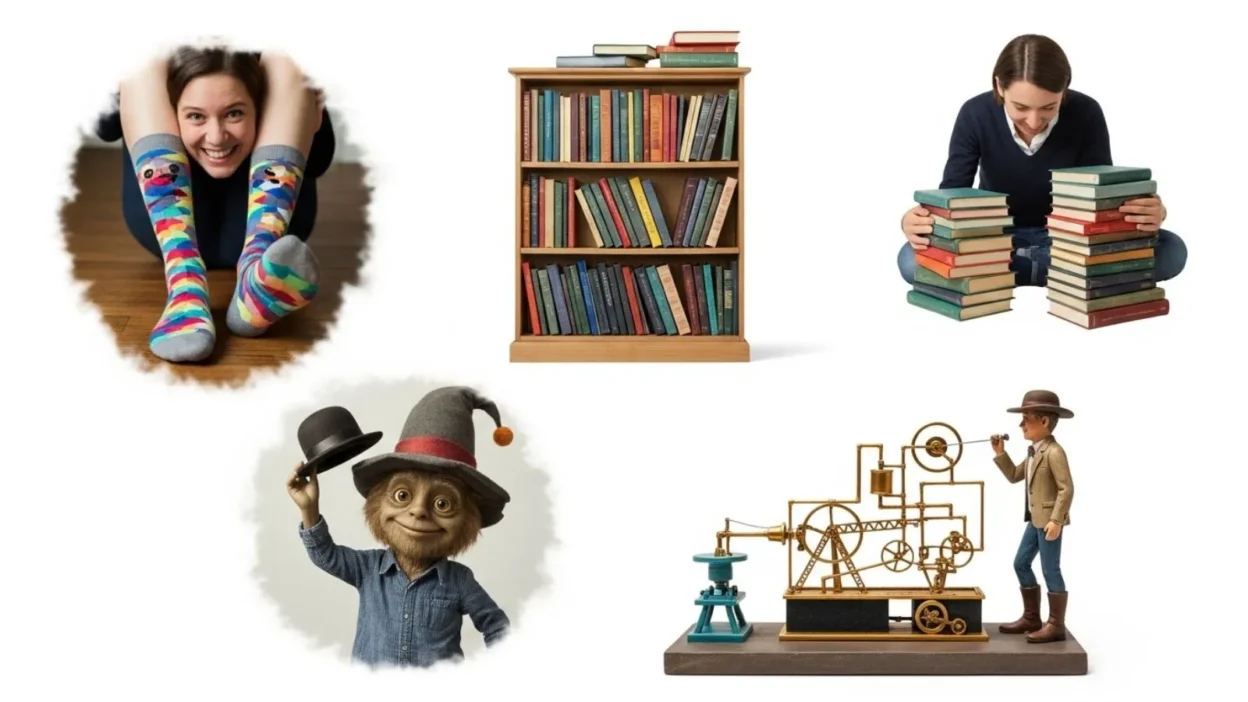
Everyone has something a little unusual about them these small, distinctive traits are known as “quirks.” Quirks refer to unique habits, behaviors, or personality characteristics that make a person different from others.
They can be as simple as always organizing things in a specific order, talking to oneself while thinking, or having a funny way of reacting in certain situations.
Although quirks may seem odd at first, they are usually harmless and are an important part of human individuality. In fact, quirks often make people more interesting, relatable, and memorable in social interactions.
From a psychological point of view, quirks are linked to personality development and behavioral patterns shaped by experiences, environment, and thinking style.
Understanding the meaning of quirks helps us appreciate diversity in human behavior and accept that everyone expresses themselves differently. In this article, we will explore the full meaning of quirks, their types, examples, and importance in daily life.
What Does Quirks Mean? (Full Explanation)
The word “quirks” refers to unusual, distinctive, or slightly odd behaviors, habits, or personality traits that make a person or thing unique. In simple terms, quirks are the small things people do that are different from normal or expected behavior. According to dictionary meaning, a quirk is a peculiar way of acting, thinking, or reacting that stands out from standard patterns. These can be physical habits, speech patterns, emotional reactions, or even ways of organizing daily life.
The origin of the word “quirk” is believed to come from Middle English, where it was used to describe a sudden twist or turn. Over time, its meaning evolved to represent something unexpected or unconventional in human behavior. Today, the word is commonly used in everyday language to describe personality differences in a light and non-negative way.
It is important to understand that quirks are not the same as habits or disorders. A habit is something repeated regularly, while a quirk is more about uniqueness in behavior. Similarly, quirks are not usually harmful or clinical conditions—they are simply part of a person’s individuality. For example, someone may always tap their fingers while thinking or prefer arranging books by color instead of size.
Quirks are often what make people interesting and memorable. They reflect personality depth and can even add charm to social interactions. Instead of being judged, quirks should be understood as natural variations in human behavior that make everyone different in their own special way.
Types of Quirks in Human Behavior
Quirks can appear in many different forms depending on a person’s personality, thinking style, and environment. Understanding the types of quirks helps us see how diverse human behavior can be in everyday life.
One common type is behavioral quirks, which include small physical actions or habits people repeat without much thought. For example, someone may tap their foot while sitting, bite their nails when nervous, or always check the door twice before leaving. These actions often happen automatically and become part of a person’s natural behavior pattern.
Another type is personality quirks, which are linked to how a person thinks, feels, or reacts. Some individuals may be extremely talkative in certain situations, while others prefer silence even in groups. Some people are overly organized, while others are naturally messy but still comfortable in their own system.
There are also cognitive quirks, which relate to how the mind processes information. This can include overthinking small situations, forgetting names easily but remembering faces, or having unusual ways of solving problems. These quirks reflect different thinking patterns rather than mistakes.
Lastly, social quirks involve how a person behaves in social settings. This may include unique communication styles, awkward humor, or difficulty making eye contact while talking.
All these types of quirks show that human behavior is not uniform. Instead, it is shaped by individual experiences and personality traits. These differences make people unique and add variety to human interaction in daily life.
Real-Life Examples of Quirks
Quirks are easy to notice in everyday life because almost everyone has some form of unique behavior that sets them apart. These small habits and traits often appear naturally and become part of a person’s identity over time.
For example, in daily routines, some people have the quirk of waking up at the same exact time every day, even without an alarm. Others may insist on arranging their clothes in a specific order or eating food in a particular sequence, such as finishing vegetables before rice or vice versa. These behaviors may seem unusual to others but feel completely normal to the person doing them.
In school or workplace settings, quirks are also very common. A student might always sit in the same seat in class, while a worker may prefer organizing files in a very specific way that no one else follows. Some people have the habit of doodling while thinking or shaking their leg when they are focused or nervous.
Socially, quirks can be even more noticeable. A person might have a unique laugh, a very expressive way of talking, or a habit of using certain phrases repeatedly. In friendships and relationships, these quirks often become memorable traits that make a person stand out.
Cultural differences also influence quirks. What is considered normal in one culture may seem unusual in another. This shows that quirks are not only personal but also shaped by environment and upbringing.
Psychological Perspective of Quirks
From a psychological point of view, quirks are closely connected to human personality and behavior patterns. Psychologists often see quirks as natural expressions of how the brain processes thoughts, emotions, and experiences. They are not considered abnormal in most cases, but rather variations in normal human behavior that help define individuality.
Quirks are often shaped by a combination of genetics, environment, and learning experiences. For example, a person who grew up in a highly organized environment may develop a habit of arranging things in a very specific way. Similarly, someone who has experienced stress or anxiety may develop small repetitive behaviors like tapping fingers or biting nails as a coping mechanism.
In personality psychology, quirks are sometimes linked to traits such as introversion, extroversion, openness, or unstable tendencies. However, not every quirk is deeply psychological—many are simply harmless habits formed over time. Psychologists also believe that quirks can help people express their identity and feel more comfortable in their own way of behaving.
Another important aspect is that quirks are part of behavioral diversity, meaning no two people think or react exactly the same way. This diversity is what makes human interaction rich and complex. In some cases, quirks may even help in creativity, problem-solving, and unique thinking styles.
Overall, psychology views quirks as normal and meaningful parts of personality rather than flaws. They help explain why people behave differently in similar situations and highlight the uniqueness of every individual.
Are Quirks Normal or Abnormal?
Quirks are generally considered a normal and natural part of human behavior. In most cases, they are harmless habits, reactions, or personality traits that simply make a person unique. Everyone has some form of quirks, whether they notice them or not. These small behaviors are part of what makes human personality diverse and interesting.
In psychology, quirks are usually placed within the range of normal behavior as long as they do not interfere with daily life, relationships, or functioning. For example, always arranging books in a certain order or speaking in a unique style is completely normal if it does not cause problems in social or professional situations. Such behaviors are simply expressions of individuality.
However, there are situations where certain repetitive behaviors may overlap with anxiety, stress, or other psychological conditions. The key difference is impact. If a behavior becomes uncontrollable, distressing, or starts affecting a person’s daily routine, then it may require attention from a professional. But most quirks do not reach this level and remain harmless personal traits.
Society sometimes misinterprets quirks as “weird” or “abnormal,” especially when they are different from common social norms. In reality, human behavior exists on a wide spectrum, and what is unusual in one culture or group may be completely normal in another.
Overall, quirks are a healthy part of personality diversity. They should not be judged harshly but understood as natural differences that make each person unique. Accepting quirks helps build a more open-minded and inclusive view of human behavior.
Positive Side of Having Quirks
Quirks are often seen as small odd behaviors, but they actually have many positive effects on personality and social life. One of the biggest benefits of having quirks is that they make a person unique. In a world where many people try to act the same, quirks help individuals stand out and show their true identity. These unique traits often become the qualities that others remember most.
Another positive aspect is that quirks can enhance personality charm. People who have harmless and interesting quirks are often seen as more authentic and relatable. For example, someone who has a funny way of expressing themselves or a unique habit in conversation may leave a lasting impression on others.
Quirks can also support creativity and original thinking. Many creative individuals, such as artists, writers, and innovators, have unusual thinking patterns or behaviors that help them see the world differently. These differences in thought can lead to new ideas and unique solutions to problems.
In addition, quirks play a role in building self-identity and confidence. When people accept their own quirks, they become more comfortable with who they are instead of trying to fit into strict social expectations. This self-acceptance can improve mental well-being and reduce stress caused by comparison with others.
Quirks can also strengthen social connections. Friends and family often find these traits endearing, and they become part of shared memories and relationships.
Negative Perception of Quirks
Although quirks are a natural part of human personality, they are not always understood positively by society. In many cases, people misinterpret unusual behaviors as strange, inappropriate, or distracting. This negative perception often comes from a lack of understanding that everyone has different personality traits and ways of expressing themselves.
One common issue is social misunderstanding. A behavior that seems normal to one person may appear odd to another. For example, someone who prefers to stay quiet in group conversations or avoids eye contact may be judged as rude or unfriendly, even if it is simply their natural quirk. Such misunderstandings can sometimes create distance in friendships or workplace relationships.
In professional settings, quirks may also be seen as unprofessional if they are very noticeable or unusual. For instance, repeated nervous habits like tapping, fidgeting, or talking to oneself while thinking may distract others or lead to unfair judgments about a person’s confidence or capability.
Another challenge is social pressure to conform. Many people feel forced to hide their quirks in order to fit into society’s expectations. This can reduce self-expression and make individuals feel less authentic. Over time, suppressing natural behaviors may also affect confidence and comfort in social situations.
However, it is important to remember that most quirks are harmless. The problem is not the quirk itself, but how others perceive it. With better awareness and acceptance, society can reduce judgment and create a more understanding environment where individuality is respected instead of criticized.
Difference Between Quirks, Habits, and Disorders
Quirks, habits, and disorders are often confused with one another, but they are actually very different in meaning, purpose, and impact on a person’s life. Understanding these differences helps in correctly identifying human behavior.
A quirk is a unique or unusual behavior that makes a person different from others. It is usually harmless and part of personality expression. For example, someone may always prefer drinking tea in a specific cup or have a funny way of laughing. Quirks do not usually interfere with daily life or cause distress.
A habit, on the other hand, is a repeated action that is learned over time and often done automatically. Habits can be good or bad. For instance, brushing teeth every morning is a good habit, while biting nails is a bad habit. Unlike quirks, habits are more routine-based and not necessarily linked to personality uniqueness.
A psychological disorder is a medical condition that affects a person’s thoughts, emotions, or behavior in a way that causes significant distress or difficulty in daily functioning. Disorders often require professional diagnosis and treatment. Examples include anxiety disorders, OCD, or depression. Unlike quirks, disorders can negatively impact a person’s quality of life.
The key difference lies in impact and severity. Quirks are harmless and personal, habits are repeated behaviors, and disorders are clinically significant conditions that may need treatment.
By clearly understanding these differences, we can avoid misunderstanding normal human quirks as problems and instead recognize them as part of natural personality diversity.
Why Do People Develop Quirks?
People develop quirks for many different reasons, and most of them are completely natural. Quirks are shaped by a combination of brain activity, personal experiences, environment, and emotional responses. Every individual grows up in a unique situation, which influences how they think and behave in daily life.
One major reason is childhood environment. The habits, routines, and behaviors a person is exposed to at a young age often become part of their personality. For example, a child who grows up in a very organized household may develop a habit of arranging things in a specific order, which can turn into a lifelong quirk.
Another important factor is brain wiring and personality traits. Every person’s brain processes information differently. Some people are naturally more detail-oriented, while others are more spontaneous. These differences can lead to unique behavioral patterns that appear as quirks.
Emotional experiences also play a big role. People sometimes develop small behaviors as coping mechanisms for stress, anxiety, or excitement. For instance, tapping fingers, biting lips, or repeating phrases can become comforting actions in certain situations.
In addition, social influence and culture shape behavior. The environment a person lives in can encourage or discourage certain habits, which may later become personal quirks.
Overall, quirks are not random—they are formed through a mix of life experiences and psychological factors. They reflect how a person adapts to their surroundings and expresses individuality in everyday life.
Can Quirks Change Over Time?
Quirks are not always permanent; they can change, evolve, or even disappear over time depending on a person’s life experiences and personal growth. Since quirks are linked to behavior and personality, they are influenced by changes in environment, habits, and mindset.
One important factor is age and maturity. As people grow older, they often become more self-aware and may naturally adjust certain behaviors. For example, a childhood quirk like biting nails or repeating words might reduce as a person learns better coping mechanisms or becomes more conscious of their habits.
Life experiences also play a major role. New environments such as school, university, or workplace can shape how a person behaves. If a quirk is considered inappropriate or distracting in a professional setting, a person may gradually learn to control or modify it.
In some cases, quirks change due to stress or emotional shifts. When people experience major life events, their behavior patterns can shift, leading to new quirks or the fading of old ones. Similarly, positive experiences like improved confidence or mental well-being can reduce nervous habits.
However, some quirks remain stable throughout life because they are deeply connected to personality traits. These long-term quirks often become part of a person’s identity and are not easily changed.
Overall, quirks are flexible and adaptable. While some may stay for life, others naturally change with time, experience, and personal development. This shows that human behavior is dynamic and constantly evolving.
How to Accept Your Own Quirks
Accepting your own quirks is an important step toward building confidence and developing a healthy self-image. Everyone has unique behaviors or habits, and learning to embrace them helps you feel more comfortable with who you are. Instead of seeing quirks as flaws, they should be viewed as natural parts of your personality that make you different from others.
The first step in acceptance is self-awareness. This means noticing your behaviors without judging them. When you understand your quirks clearly, you can decide whether they are harmless traits or something you simply want to manage better in certain situations.
Another important step is self-acceptance. Many people try to hide their quirks because they fear being judged. However, accepting that no one is perfect helps reduce this pressure. Your quirks are part of your individuality, and they often make you more relatable and authentic to others.
It also helps to reframe your thinking. Instead of calling a behavior “weird,” you can see it as “unique.” This small shift in mindset can improve your confidence and reduce self-consciousness in social situations.
Surrounding yourself with supportive people is also important. Friends and family who understand your quirks can make you feel more comfortable expressing your true self without fear of criticism.
Overall, accepting your quirks leads to better emotional well-being and stronger self-identity. When you stop trying to hide who you are, you become more confident, genuine, and at peace with yourself in everyday life.
How to Understand Other People’s Quirks
Understanding other people’s quirks is an important skill that helps build stronger relationships and a more accepting attitude toward human differences. Since everyone has unique behaviors and habits, learning to recognize and respect these differences can improve communication and reduce misunderstandings.
The first step is practicing empathy. This means trying to see things from another person’s perspective instead of immediately judging their behavior. A quirk that seems unusual to you may feel completely normal or comforting to someone else. When you understand this, it becomes easier to accept differences.
Another important aspect is avoiding quick judgments. People often label unusual behavior as “strange” or “awkward” without understanding the reason behind it. However, many quirks are simply harmless habits or personality traits that do not affect others negatively.
Good communication also plays a key role. If you are unsure about someone’s behavior, talking to them in a respectful way can help you understand their personality better. This builds trust and reduces confusion in relationships.
It is also helpful to respect boundaries. Even if someone has behaviors you do not fully understand, accepting them without criticism creates a more comfortable and supportive environment.
In friendships, workplaces, and families, understanding quirks can strengthen connections and improve teamwork. Instead of focusing on differences, appreciating individuality allows people to work and live together more peacefully.
Quirks in Pop Culture and Media
Quirks are widely used in pop culture and media because they make characters more interesting, realistic, and memorable. In movies, TV shows, and literature, writers often give characters unique habits or behaviors to help them stand out and connect with the audience on a deeper level. These quirks make characters feel more human and relatable.
For example, many famous fictional characters are known specifically for their quirks. Some may have unusual speech patterns, while others may have repetitive habits like organizing objects in a specific way or using catchphrases repeatedly. These small traits help define their personality and make them easily recognizable.
In television shows, quirky characters are often used for humor and entertainment. Their unusual behavior adds comedy and lightness to scenes, making the story more engaging. At the same time, serious characters with subtle quirks are used to show depth, emotional complexity, or intelligence.
In books and novels, authors use quirks to help readers visualize characters more clearly. A small habit or behavior can make a character feel more real and believable, even in fictional worlds.
Pop culture also reflects real-life behavior by showing that everyone has unique traits. This helps audiences relate to characters because they see similarities with their own quirks or those of people around them.
FAQs About Quirks Meaning
1. What is the simple meaning of quirks?
Quirks are small, unusual, or unique behaviors, habits, or personality traits that make a person different from others. They are usually harmless and part of individual identity.
2. Are quirks normal in humans?
Yes, quirks are completely normal. Almost everyone has some kind of unique behavior that reflects their personality, thinking style, or habits formed over time.
3. What is the difference between quirks and habits?
Quirks are unique personality traits or unusual behaviors, while habits are repeated actions learned over time. Habits can be good or bad, but quirks mainly reflect individuality.
4. Can quirks be good or bad?
Quirks are generally neutral. Many quirks are positive because they make a person interesting and unique, but some may be misunderstood or considered distracting in certain situations.
5. Why do people have quirks?
People develop quirks due to a mix of childhood experiences, personality traits, brain patterns, and environmental influences. They often form naturally over time.
6. Do quirks change with time?
Yes, some quirks can change or fade as a person grows, matures, or enters new environments. However, some deeply rooted quirks may stay for life.
7. Are quirks a psychological problem?
No, most quirks are not psychological problems. They are normal variations in behavior. Only if a behavior causes serious distress or disruption might it need professional attention.
Conclusion
Quirks are an essential part of human personality that make every individual unique and different from others. They include small habits, behaviors, or traits that may seem unusual but are usually harmless and natural.
From psychological and social perspectives, quirks reflect how a person thinks, reacts, and interacts with the world around them. They are shaped by experiences, environment, and personal development, making them an important part of identity.
While some people may misunderstand quirks as odd or unnecessary, they actually add diversity and depth to human behavior.
Quirks can improve creativity, strengthen personality, and even make social interactions more interesting. However, understanding and acceptance are key to appreciating them fully.
Instead of judging differences, we should recognize quirks as normal variations in human nature. Ultimately, quirks remind us that no two people are the same, and it is these small differences that make life more colorful, meaningful, and uniquely human.