Your heart rate is one of the simplest yet most powerful indicators of your overall health.
Whether you’re checking your pulse during exercise or noticing your resting heart rate first thing in the morning, understanding what’s normal can help you identify potential health concerns early.
However, a “normal” heart rate isn’t the same for everyone—it changes significantly with age, activity level, and overall fitness.
From newborns with naturally fast heartbeats to older adults whose heart rates tend to slow over time, each stage of life has its own healthy range.
Knowing the normal heart rate by age can help you better interpret your numbers and decide when a change might be worth discussing with a healthcare provider.
In this guide, we’ll break down normal heart rate ranges for every age group, explain the factors that influence heart rate, and show you when a high or low heart rate could signal a problem—so you can take informed steps toward better heart health.
Understanding Heart Rate Basics
Heart rate refers to the number of times your heart beats in one minute, commonly measured in beats per minute (bpm). Each heartbeat pumps oxygen-rich blood throughout the body, supporting vital organs and muscles. Because the heart responds quickly to physical and emotional demands, heart rate can change from moment to moment.
One of the most important measurements is your resting heart rate, which is your heart rate when your body is completely at rest. This is typically measured after waking up in the morning, before getting out of bed. Resting heart rate provides valuable insight into your cardiovascular fitness and overall heart health. Generally, a lower resting heart rate indicates a more efficient heart function, especially in physically active individuals.
In contrast, active heart rate refers to how fast your heart beats during physical activity, stress, or illness. Exercise, for example, increases heart rate to deliver more oxygen to working muscles. This increase is normal and expected. Maximum heart rate, often estimated using the formula 220 minus your age, represents the highest rate your heart can safely reach during intense activity.
Heart rate is considered a key health indicator because unusual patterns—such as a consistently high or unusually low resting heart rate—may signal underlying issues. Factors such as dehydration, fever, stress, medications, and fitness level can all influence readings. Understanding these basics is essential before comparing your numbers to normal heart rate ranges by age, as context plays a crucial role in determining what’s healthy for you.
What Is Considered a Normal Heart Rate?
A normal heart rate is the number of times your heart beats per minute while your body is at rest, but what’s considered “normal” can vary from person to person. For most healthy adults, a normal resting heart rate typically falls between 60 and 100 beats per minute (bpm). This range is widely used by healthcare professionals as a general guideline, not a strict rule.
A resting heart rate closer to the lower end of the range often indicates good cardiovascular fitness. People who exercise regularly—especially endurance athletes—may have resting heart rates as low as 40–60 bpm without any health concerns. Their hearts pump blood more efficiently, requiring fewer beats to circulate oxygen throughout the body. On the other hand, a resting heart rate consistently near or above 100 bpm may be linked to stress, dehydration, illness, or underlying medical conditions.
It’s also important to distinguish between a normal heart rate and an optimal heart rate. While a value may fall within the normal range, individual factors such as age, activity level, medications, and overall health determine what is ideal for each person. For example, a heart rate of 65 bpm might be optimal for one adult but too low or too high for another depending on symptoms and lifestyle.
Temporary changes in heart rate are common and usually harmless. Emotional stress, caffeine intake, lack of sleep, or a recent workout can all raise heart rate temporarily. Understanding these variations helps prevent unnecessary concern and allows for more accurate comparisons when reviewing normal heart rate ranges by age.
Normal Heart Rate by Age
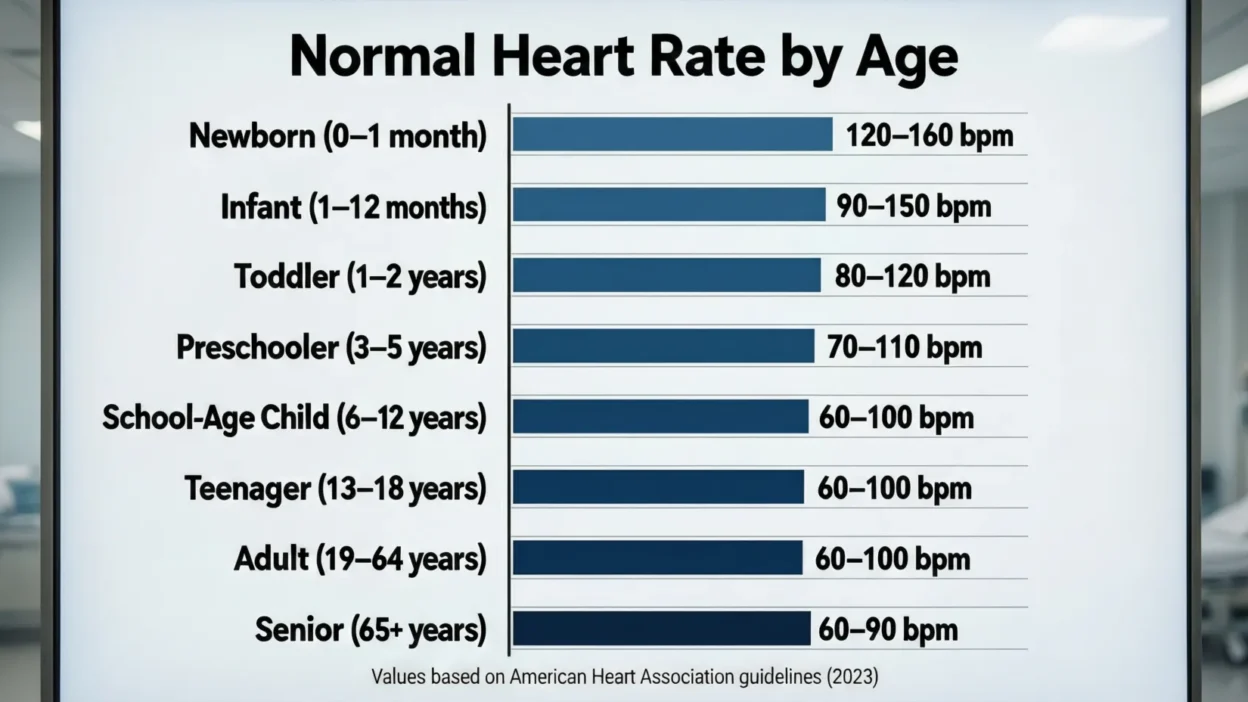
Heart rate naturally changes throughout life as the heart grows, develops, and adapts to the body’s needs. Infants and young children have faster heart rates because their hearts are smaller and must beat more often to circulate blood efficiently. As the body matures, heart rate gradually slows and stabilizes during adulthood, with slight changes occurring again later in life.
Newborns (0–1 month) typically have resting heart rates ranging from 100 to 160 bpm. This rapid pace supports rapid growth and high metabolic demands.
Infants (1–12 months) generally have heart rates between 90 and 150 bpm, which gradually slow as they grow.
Toddlers and young children (1–5 years) usually fall within 80 to 140 bpm, with activity and emotions causing noticeable fluctuations.
Children aged 6–12 years tend to have resting heart rates between 70 and 120 bpm as their cardiovascular systems continue to mature.
During adolescence, heart rate begins to resemble adult patterns. Teenagers (13–18 years) often have resting heart rates ranging from 60 to 100 bpm, depending on fitness level and hormonal changes.
For adults (18–60 years), a normal resting heart rate typically remains within 60 to 100 bpm, with physically active individuals often falling below the average.
In older adults (60+ years), resting heart rate may remain similar to younger adults, though certain age-related changes and medications can influence readings.
These ranges serve as general guidelines. Individual health, fitness, and symptoms should always be considered when interpreting heart rate by age.
Normal Heart Rate Chart by Age
A heart rate chart by age provides a quick and convenient way to compare your resting heart rate with typical ranges for your age group. These charts are commonly used by healthcare professionals as general reference tools and can help you better understand whether your heart rate falls within a healthy range. However, it’s important to remember that charts offer guidelines—not diagnoses.
A standard heart rate chart lists age groups alongside corresponding resting heart rate ranges, usually measured in beats per minute (bpm). When using a chart, your heart rate should be measured while you are completely at rest, ideally first thing in the morning before standing up. Measuring after exercise, stress, caffeine intake, or illness can lead to misleading results.
Many people mistakenly assume that being outside the listed range automatically indicates a problem. In reality, individual factors such as physical fitness, medications, and overall health play a significant role. For example, endurance athletes often have resting heart rates well below the average range without any negative health effects. Similarly, temporary increases due to anxiety, dehydration, or poor sleep are usually harmless.
Heart rate charts are most useful for identifying patterns over time rather than one-time readings. A gradual increase or decrease in your usual resting heart rate may signal changes in fitness, stress levels, or health status. Tracking these trends can help you recognize when something feels “off” and decide whether further evaluation is needed.
Used correctly, a normal heart rate chart by age can be a valuable self-monitoring tool that supports heart health awareness and informed conversations with healthcare providers.
Factors That Affect Heart Rate at Any Age
Heart rate is influenced by many factors beyond age alone, which explains why two people of the same age can have very different resting heart rates. Understanding these influences helps you interpret your numbers more accurately and avoid unnecessary concern.
Physical fitness plays a major role. People who exercise regularly—especially those who engage in aerobic or endurance training—often have lower resting heart rates because their hearts pump blood more efficiently. In contrast, a sedentary lifestyle may be associated with a higher resting heart rate over time.
Emotional and psychological factors such as stress, anxiety, excitement, or fear can temporarily raise heart rate. This response is part of the body’s natural “fight-or-flight” mechanism and usually resolves once the stressor is removed.
Medications and substances also affect heart rate. Stimulants like caffeine and nicotine can increase heart rate, while certain medications, including beta-blockers, may lower it. Alcohol and recreational drugs can cause irregular or elevated heart rates as well.
Body temperature and hydration are additional influences. Fever, dehydration, and exposure to heat can cause the heart to beat faster as the body works to regulate temperature and circulation.
Finally, underlying health conditions can significantly impact heart rate. Thyroid disorders, anemia, infections, heart disease, and hormonal changes may all cause abnormal readings. Because of these variables, heart rate should always be evaluated in context, not in isolation, when comparing it to normal heart rate ranges by age.
High vs. Low Heart Rate: What Do They Mean?
Heart rate readings that fall outside the normal range may indicate temporary changes or underlying health conditions, depending on the situation. A high heart rate, known as tachycardia, is generally defined as a resting heart rate consistently above 100 beats per minute in adults. Common causes include stress, anxiety, dehydration, fever, excessive caffeine intake, and physical deconditioning. In many cases, tachycardia is short-lived and resolves once the trigger is removed. However, a persistently high resting heart rate may signal heart rhythm disorders, thyroid problems, or other medical conditions that require evaluation.
A low heart rate, called bradycardia, is typically defined as a resting heart rate below 60 beats per minute in adults. For physically active individuals and athletes, a low resting heart rate is often normal and reflects efficient heart function. In these cases, bradycardia usually does not cause symptoms and is not a health concern.
Problems may arise when a low heart rate is accompanied by symptoms such as dizziness, fatigue, shortness of breath, confusion, or fainting. This can occur if the heart is not pumping enough blood to meet the body’s needs. Causes may include aging-related changes in the heart, medication side effects, or electrical conduction issues.
It’s important to focus not just on the number but also on how you feel. Temporary fluctuations are common, but ongoing patterns outside normal heart rate ranges by age—especially when paired with symptoms—should be discussed with a healthcare provider to determine whether treatment or monitoring is necessary.
When Is Heart Rate a Cause for Concern?
While heart rate naturally fluctuates throughout the day, certain patterns and symptoms may indicate a more serious issue. A heart rate becomes a cause for concern when it is consistently outside normal ranges for your age and accompanied by noticeable symptoms. These warning signs should not be ignored, especially if they appear suddenly or worsen over time.
Common symptoms that may signal a problem include dizziness, lightheadedness, shortness of breath, chest pain, fatigue, confusion, or fainting. A rapid heart rate at rest that does not improve with relaxation, hydration, or rest may indicate an underlying condition such as an arrhythmia, infection, or thyroid disorder. Similarly, an unusually slow heart rate that causes weakness or fainting may suggest the heart is not pumping enough blood to meet the body’s needs.
Sudden changes in your usual resting heart rate can also be concerning. For example, a consistent increase of 10 to 15 beats per minute above your normal baseline may reflect illness, overtraining, dehydration, or increased stress. Irregular heart rhythms—such as skipped beats or fluttering sensations—should also be evaluated, particularly if they occur frequently.
Certain groups should be especially vigilant, including older adults, people with heart disease, diabetes, or high blood pressure, and those taking medications that affect heart rate. If symptoms are severe, such as chest pain, fainting, or difficulty breathing, immediate medical attention is necessary.
Monitoring your heart rate over time and understanding what’s normal for your age can help you recognize early warning signs and seek timely care when needed.
How to Measure Your Heart Rate Correctly
Measuring your heart rate correctly is essential for accurately comparing your results to normal heart rate ranges by age. The most reliable time to check your resting heart rate is first thing in the morning, after a full night’s sleep and before getting out of bed. At this point, your body is fully at rest and free from recent activity or stress.
One of the simplest methods is the manual pulse check. Place your index and middle fingers on the inside of your wrist, just below the thumb, or on the side of your neck near the windpipe. Gently press until you feel a pulse. Count the number of beats for 30 seconds and multiply by two, or count for a full 60 seconds for greater accuracy.
Digital devices such as smartwatches, fitness trackers, and blood pressure monitors can also track heart rate throughout the day. While these tools are convenient and useful for identifying trends, readings may vary depending on device quality, fit, and movement. For the best results, ensure the device is snug, worn correctly, and used during periods of rest.
Avoid common mistakes when measuring heart rate. Checking immediately after exercise, consuming caffeine, smoking, or experiencing emotional stress can lead to elevated readings that do not reflect your true resting heart rate. Measuring multiple times on different days and averaging the results provides a more accurate picture.
By learning how to measure heart rate properly and consistently, you can better understand what’s normal for your age and identify meaningful changes over time.
How to Maintain a Healthy Heart Rate
Maintaining a healthy heart rate starts with adopting habits that support overall cardiovascular health. One of the most effective ways to improve heart rate is through regular physical activity. Aerobic exercises such as walking, jogging, cycling, and swimming strengthen the heart muscle, allowing it to pump blood more efficiently. Over time, this often leads to a lower resting heart rate and improved endurance.
Stress management also plays a crucial role. Chronic stress triggers the release of hormones that can raise heart rate and blood pressure. Techniques such as deep breathing, meditation, yoga, and spending time outdoors can help regulate stress levels and promote a more stable heart rate.
A balanced diet supports heart health by providing essential nutrients while limiting substances that strain the cardiovascular system. Eating plenty of fruits, vegetables, whole grains, lean proteins, and healthy fats helps maintain healthy blood vessels and heart function. Reducing excess sodium, added sugars, and highly processed foods can further protect heart rate and rhythm.
Hydration and sleep are often overlooked but equally important. Dehydration can cause the heart to beat faster to maintain blood flow, while poor sleep quality may increase resting heart rate over time. Aim for consistent hydration and 7–9 hours of quality sleep each night.
Limiting stimulants such as caffeine, nicotine, and alcohol can prevent unnecessary heart rate spikes. If medications affect your heart rate, follow your healthcare provider’s guidance closely.
By combining these lifestyle strategies, you can support a healthy heart rate at any age and reduce the risk of long-term cardiovascular issues.
Frequently Asked Questions About Normal Heart Rate by Age
Is a heart rate of 55 bpm normal?
Yes, a heart rate of 55 beats per minute can be normal, especially for physically active individuals or athletes. If you feel well and have no symptoms such as dizziness or fatigue, a lower heart rate is often a sign of good cardiovascular fitness. However, if symptoms are present, medical advice is recommended.
Is a heart rate over 100 bpm always dangerous?
Not necessarily. A heart rate above 100 bpm at rest may occur due to stress, dehydration, caffeine intake, illness, or anxiety. If it remains elevated consistently or is accompanied by symptoms like chest pain or shortness of breath, it should be evaluated by a healthcare provider.
Does heart rate change with age?
Yes, heart rate changes significantly throughout life. Infants and children naturally have faster heart rates, while adults tend to have slower, more stable rates. Aging itself does not always cause a higher resting heart rate, but health conditions and medications can influence changes.
What is a good resting heart rate for older people?
For most older adults, a resting heart rate between 60 and 100 bpm is considered normal. Some older people may naturally fall slightly outside this range depending on fitness level and medications.
Can heart rate vary from day to day?
Yes, daily variations are common. Sleep quality, stress, hydration, physical activity, and illness can all affect heart rate. Monitoring trends over time is more useful than focusing on a single reading.
When should I see a doctor about my heart rate?
You should seek medical advice if your heart rate is consistently outside normal ranges for your age or if you experience symptoms such as dizziness, fainting, chest pain, or irregular heartbeats.
Conclusion:
Understanding the normal heart rate by age provides valuable insight into your overall health and helps you better interpret changes in your body.
Because heart rate naturally varies throughout life—from the rapid beats of infancy to the steadier rhythms of adulthood—it’s important to compare your readings within the appropriate age range rather than relying on a single universal number.
While general guidelines offer helpful reference points, individual factors such as fitness level, lifestyle habits, medications, and underlying health conditions all play a role in determining what is normal for you.
Occasional fluctuations are common and usually harmless, especially when linked to stress, physical activity, or temporary illness. However, consistent patterns outside normal ranges or the presence of symptoms should never be ignored.
Regularly monitoring your resting heart rate, measuring it correctly, and paying attention to trends over time can help you identify early warning signs before more serious problems develop.
Simple lifestyle choices—such as staying active, managing stress, eating a heart-healthy diet, staying hydrated, and getting enough sleep—can significantly support healthy heart function at any age.
Ultimately, your heart rate is just one piece of the larger picture of cardiovascular health.
Use it as a guide, not a diagnosis, and consult a healthcare professional whenever you have concerns or notice unexplained changes.
By staying informed and proactive, you can take meaningful steps toward protecting your heart and supporting long-term well-being.

Jonathan Bishopson is the punmaster-in-chief at ThinkPun.com, where wordplay meets wit and every phrase gets a clever twist. Known for turning ordinary language into laugh-out-loud lines, Jonathan crafts puns that make readers groan, grin, and think twice. When he’s not busy bending words, he’s probably plotting his next “pun-derful” masterpiece or proving that humor really is the best re-word.