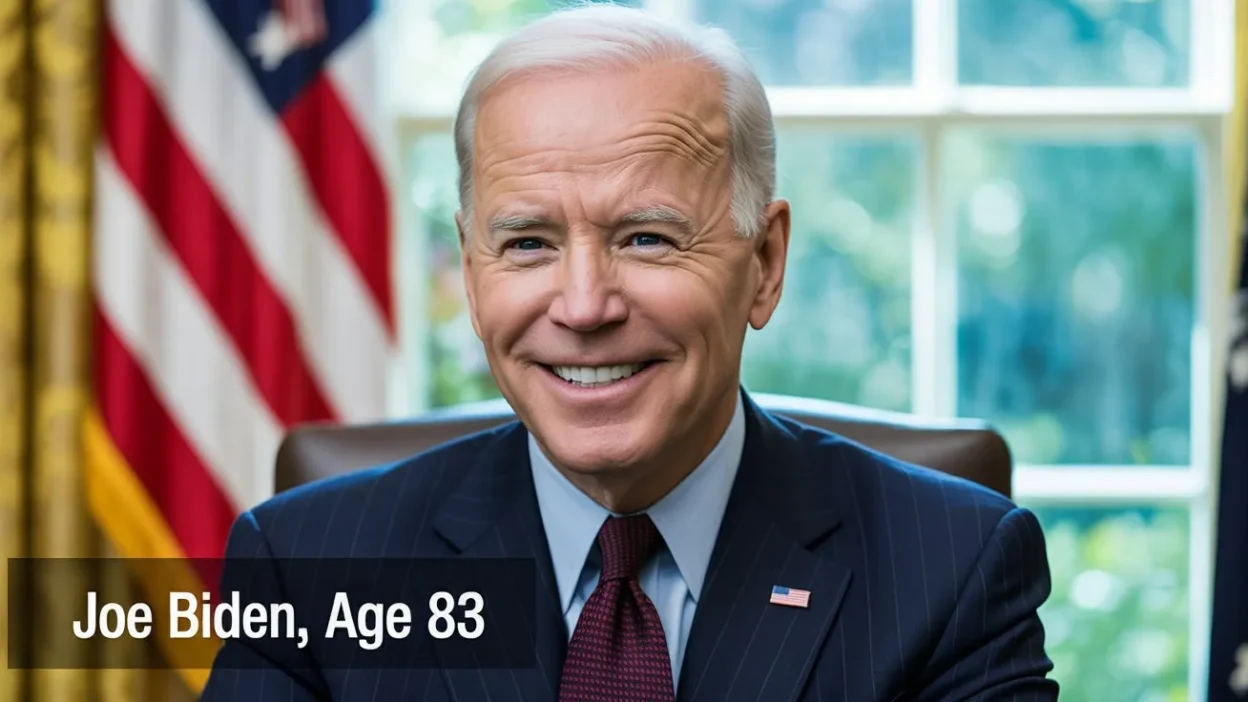
Joe Biden, the 46th President of the United States, has long been a prominent figure in American politics.
Born on November 20, 1942, in Scranton, Pennsylvania, Biden’s life and career span nearly eight decades, making his age a topic of public interest and discussion.
Age in politics often sparks debate, as it intertwines with experience, leadership ability, and public perception.
Biden’s journey—from his early days as a young senator to serving as Vice President and eventually becoming President—highlights the unique role age plays in shaping a political career.
In this article, we will explore Joe Biden’s exact age, notable milestones throughout his life, comparisons with other presidents, and the impact of his age on his political journey.
Whether you’re curious about his current age, health, or historical significance, this comprehensive guide covers all aspects of Joe Biden’s age.
Early Life and Birth Details
Joseph Robinette Biden Jr., widely known as Joe Biden, was born on November 20, 1942, in Scranton, Pennsylvania. He was the first of four siblings in a middle-class family, with parents Catherine Eugenia “Jean” Finnegan Biden and Joseph Robinette Biden Sr. Growing up in a modest household, Biden experienced both the challenges and the values of working-class life, which later shaped his empathy and approach to politics.
From an early age, Biden faced personal challenges, including a stutter, which he worked diligently to overcome—a struggle that instilled resilience and determination in him. His education began at local Catholic schools, where he excelled academically and socially, though he was also known for his competitive spirit. Later, Biden attended Archmere Academy, a private high school in Claymont, Delaware, where he distinguished himself in debate and student leadership.
Biden went on to study at University of Delaware, earning a double major in history and political science, followed by a law degree from Syracuse University College of Law. His early life experiences, from growing up in Scranton to his formative years in Delaware, provided a strong foundation for his political ambitions. These years laid the groundwork for his future as a U.S. Senator, Vice President, and ultimately, President, showing that his age and life experiences have been central to shaping the leader he became.
Current Age and Milestones
As of January 4, 2026, Joe Biden is 83 years old, having been born on November 20, 1942. His age makes him not only the oldest person to serve as U.S. President but also one of the most experienced leaders in American political history. Over the decades, Biden’s age has coincided with significant personal and professional milestones, reflecting a life dedicated to public service.
Biden began his political career at a remarkably young age. At 29, he was elected to the U.S. Senate, becoming one of the youngest senators in history. Serving Delaware for 36 years, he gained invaluable legislative experience and became known for his foreign policy expertise and dedication to bipartisan cooperation. Later, at 65, Biden assumed the role of Vice President under Barack Obama, where he focused on domestic and international policy issues and earned a reputation as a steady, experienced leader.
At 78, Biden was inaugurated as the 46th President of the United States, marking a historic milestone as the oldest president in American history. His age, far from being a limitation, is often cited as a testament to his endurance, wisdom, and accumulated experience. Throughout his life, each decade has brought new challenges and accomplishments, from personal growth and family milestones to historic political achievements. Understanding Biden’s age alongside his milestones provides insight into how experience and longevity have shaped his leadership style.
Age in Politics: Impact and Significance
Joe Biden’s age has been a frequent topic of discussion in American politics, reflecting broader debates about the role of age and experience in leadership. At 83 years old, Biden brings decades of political expertise, historical knowledge, and seasoned judgment to the presidency. Supporters argue that his long tenure equips him with unparalleled insight into both domestic and international affairs, allowing him to navigate complex challenges with calm and informed decision-making.
However, age in politics can also raise questions about energy, stamina, and the ability to respond to the fast pace of modern governance. Critics sometimes frame Biden’s age as a concern during long campaigns, public events, or legislative negotiations. Despite these concerns, Biden’s continued active engagement in policy, frequent public appearances, and hands-on involvement in decision-making demonstrate that age has not hindered his capacity to lead effectively.
Historically, American voters have grappled with the question of age versus experience. Biden’s presidency highlights this tension, showing that while youth can symbolize vitality and innovation, age often represents wisdom, perspective, and institutional knowledge. His age also places him in a unique position: as the oldest president in U.S. history, he has set a new benchmark for longevity in political leadership, inspiring debates about how experience and age intersect in public service.
Ultimately, Biden’s age has become both a defining characteristic and a conversation starter, emphasizing that leadership in politics is shaped not just by years, but by the accumulated lessons and experiences those years provide.
Health and Fitness
At 83 years old, Joe Biden’s health and fitness have been closely monitored and widely discussed, reflecting public interest in how age affects presidential performance. Throughout his political career, Biden has maintained a lifestyle that emphasizes physical activity, mental acuity, and overall wellness—key factors that have allowed him to remain active and engaged despite the demands of high office.
Biden’s routine reportedly includes daily cardiovascular exercise, such as cycling and walking, along with light strength training, which contributes to maintaining his stamina and energy. Public appearances and speeches often demonstrate his endurance, as he frequently participates in long events, meetings, and international summits without showing signs of fatigue. In addition to physical fitness, Biden places importance on mental health, reportedly engaging in activities that stimulate cognitive function, such as reading, strategic planning, and staying informed on complex policy matters.
Medical assessments released to the public indicate that Biden is in good health for his age, with no major conditions that would impede his presidential responsibilities. However, his age naturally requires ongoing monitoring, as with any individual in their eighties. The administration has been transparent about his checkups and health status, aiming to assure the public about his ability to lead effectively.
Biden’s commitment to health and fitness underscores a broader point: age does not necessarily limit capability. By prioritizing wellness, exercise, and mental sharpness, he exemplifies how even in advanced years, leaders can maintain the energy, focus, and resilience required to govern at the highest level.
Age Records and Trivia
Joe Biden’s age has not only made him a historic figure but also a source of interesting records and trivia in American political history. Born on November 20, 1942, Biden became the oldest U.S. president ever elected when he assumed office at 78 years old in January 2021, surpassing the previous record held by Ronald Reagan, who was 77 at his second inauguration. This milestone reflects both his longevity and his enduring political relevance.
Beyond presidential records, Biden’s age highlights other notable achievements. He was elected to the U.S. Senate at just 29, making him one of the youngest senators in modern history, and he became Vice President at 65, demonstrating a career that spans nearly six decades. These milestones illustrate a rare combination of early ambition and sustained endurance over a lifetime in public service.
Biden’s age also intersects with fun facts and personal trivia. For instance, he celebrated his 80th birthday in 2022 while actively serving as president, making him the first U.S. president to reach that age while in office. Additionally, his long career has allowed him to witness and participate in major historical events, from the Civil Rights Movement to international diplomacy, all while advancing through various stages of life.
Even pop culture and media references often highlight Biden’s age, sometimes humorously, while emphasizing his experience and wisdom. Whether through historical records, political milestones, or quirky trivia, Biden’s age remains a defining and fascinating aspect of his life and legacy.
Age Comparison with Other Presidents
Joe Biden’s age at the time of his presidency is unprecedented in American history. At 78 years old during his inauguration in January 2021, he became the oldest president ever to take office, surpassing Ronald Reagan, who was 77 during his second term. This comparison highlights a trend in recent decades where U.S. presidents are increasingly older, reflecting the value of experience in national leadership.
Historically, the average age of presidents at inauguration has been approximately 55 years. Younger presidents, like Theodore Roosevelt (42) and John F. Kennedy (43), symbolized energy and fresh perspectives, while older presidents often brought decades of political and diplomatic experience. Biden’s presidency illustrates how longevity in politics can allow for a depth of knowledge and leadership maturity that younger counterparts may lack.
Age comparisons also show interesting patterns regarding political longevity. Biden’s long career—from U.S. Senator at 29 to Vice President at 65, and finally President at 78—demonstrates one of the longest spans of active political service in U.S. history. In contrast, many presidents have had shorter careers before reaching the highest office, emphasizing the uniqueness of Biden’s trajectory.
Furthermore, comparisons extend beyond politics into public perception. While some voters prioritize youth and vigor, others value wisdom and experience, particularly in complex global and domestic contexts. Biden’s age, therefore, places him at a unique intersection of historical record, political precedent, and public discourse, highlighting both the opportunities and challenges associated with advanced age in the presidency.
Public Perception and Media Coverage
Joe Biden’s age has been a recurring topic in media coverage and public discussions, reflecting society’s curiosity about how advanced age intersects with leadership. Supporters often highlight his age as a symbol of experience, wisdom, and resilience, emphasizing that decades in politics have equipped him with the knowledge and judgment necessary to navigate complex challenges. His ability to remain active, engage in diplomatic negotiations, and participate in high-pressure decision-making underscores this perspective.
At the same time, critics frequently raise concerns about stamina, alertness, and the physical demands of the presidency. Headlines occasionally focus on moments when Biden appears tired, forgetful, or in need of briefings, fueling debates about whether age affects his effectiveness. Social media amplifies these narratives, with both supportive and critical voices weighing in on his capacity to lead at 83 years old.
Media coverage often frames Biden’s age in the context of historical comparisons, noting that he is the oldest person ever to hold the U.S. presidency. This comparison reinforces his unique position in American history while also sparking discussions about generational change in politics.
Despite the mixed perceptions, public opinion polls suggest that many voters prioritize experience and policy knowledge over age alone. Biden’s continued approval ratings indicate that while age is a conversation starter, it does not overwhelmingly define his political credibility. Ultimately, the way media and the public perceive Biden’s age reflects broader societal debates about experience versus youth, wisdom versus energy, and the evolving expectations of national leaders.
The Future: Age and Presidency
As Joe Biden continues his presidency in his eighties, his age remains a central topic in discussions about the future of American leadership. At 83 years old, Biden faces the unique challenge of balancing the demands of the presidency with the natural effects of aging. While his decades of experience provide a strong foundation for decision-making, questions about longevity, stamina, and the ability to pursue long-term initiatives naturally arise.
Looking ahead, Biden’s age may influence both his political decisions and the broader conversation about succession and party leadership. Speculation about whether he will seek a second term is closely tied to considerations of age, energy, and public perception. Nevertheless, Biden has expressed a continued commitment to public service, emphasizing that his focus remains on achieving policy goals, addressing national challenges, and representing the United States on the global stage.
From a historical perspective, advanced age in the presidency is not unprecedented, but Biden sets a new benchmark. His tenure may redefine expectations for older leaders, demonstrating that advanced age does not necessarily limit effectiveness or vision. Moreover, his approach to governance, combined with strong advisors and a capable administration, highlights how experience can complement the energy and perspectives of younger political figures.
Ultimately, the future of Biden’s presidency will be closely watched, not just for the policies he enacts, but also for what his age represents in modern politics. His leadership may serve as a case study on the interplay between experience, wisdom, and the physical demands of high office.
Frequently Asked Questions (FAQs)
1. What is Joe Biden’s current age?
As of January 4, 2026, Joe Biden is 83 years old, having been born on November 20, 1942.
2. When was Joe Biden born?
Biden was born on November 20, 1942, in Scranton, Pennsylvania, USA, making him a Sagittarius.
3. How old was Joe Biden when he became President?
Joe Biden was 78 years old when he was inaugurated as the 46th President of the United States on January 20, 2021, making him the oldest president in U.S. history.
4. Is Joe Biden the oldest U.S. president ever?
Yes. Biden surpassed Ronald Reagan, who was 77 at his second inauguration, to become the oldest person ever elected and inaugurated as president.
5. How has Biden’s age affected his political career?
Biden’s age reflects decades of experience, allowing him to hold long-term leadership roles in the Senate, as Vice President, and President. While critics sometimes question stamina or alertness, supporters highlight his wisdom, resilience, and historical perspective.
6. What are Joe Biden’s health and fitness routines at his age?
Biden prioritizes daily cardiovascular exercise, light strength training, and mental stimulation. Medical assessments indicate he is in good health for his age, enabling him to meet the demands of the presidency.
7. How does Biden’s age compare to other presidents?
The average age of U.S. presidents at inauguration is around 55 years. Biden, at 78, sets a historical record, illustrating a trend toward valuing experience and longevity in political leadership.
These FAQs provide quick, informative answers for readers and enhance the article’s SEO and user engagement, addressing common search queries about Joe Biden’s age.
Conclusion:
Joe Biden’s age is more than just a number—it is a defining feature of his life, career, and presidency.
Born on November 20, 1942, he has spent over eight decades navigating the complexities of American politics, rising from a young senator in Delaware to Vice President, and ultimately becoming the 46th President of the United States at the historic age of 78.
His longevity in public service highlights the unique intersection of experience, wisdom, and resilience, showing that age can bring valuable perspective to leadership.
Throughout his presidency, Biden’s age has sparked discussion about stamina, alertness, and the challenges of governing at an advanced stage of life.
Yet, his active engagement in domestic and international affairs, his dedication to policy initiatives, and his ability to connect with citizens demonstrate that age has not hindered his effectiveness.
Media coverage, public perception, and political discourse often frame Biden’s age both as a point of curiosity and as a measure of his extensive expertise.
Moreover, Biden’s story offers a broader lesson: experience gained over decades can complement youthful energy in governance, and age should not automatically be seen as a limitation.
From early milestones to current achievements, Joe Biden exemplifies how a lifetime of dedication and perseverance can culminate in historic leadership.
As the oldest president in U.S. history, his age will remain a key part of his legacy, inspiring discussion on the balance between wisdom, longevity, and effective leadership in the modern era.

Jonathan Bishopson is the punmaster-in-chief at ThinkPun.com, where wordplay meets wit and every phrase gets a clever twist. Known for turning ordinary language into laugh-out-loud lines, Jonathan crafts puns that make readers groan, grin, and think twice. When he’s not busy bending words, he’s probably plotting his next “pun-derful” masterpiece or proving that humor really is the best re-word.