
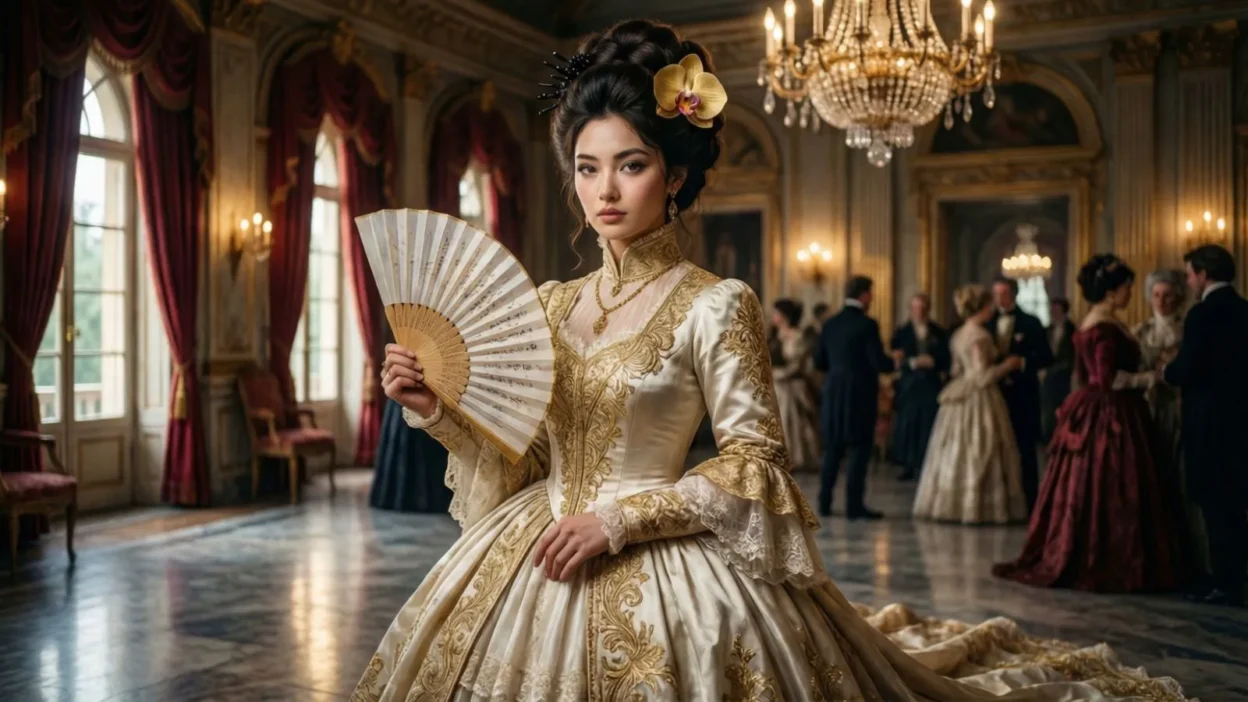
The Gilded Age (1870s–1900) was a period of profound transformation in America, marked by rapid industrialization, extreme wealth disparity, and societal change.
It was an era where fashion became a reflection of the newfound affluence among the wealthy elite, with extravagant clothing serving as a visible symbol of power, status, and refinement.
As the rich flaunted their wealth through opulent fabrics, intricate designs, and lavish accessories, fashion became a means of distinction and class separation.
Women’s dresses were characterized by tightly-laced corsets, voluminous skirts, and bustles, while men’s fashion focused on tailored suits, waistcoats, and accessories like pocket watches and top hats.
This period saw the rise of haute couture houses and luxury department stores, paving the way for modern fashion trends. In this article, we’ll explore the key styles, cultural influences, and lasting legacy of Gilded Age fashion.
Social and Economic Context of the Gilded Age
The Gilded Age was a time of stark contrasts, where rapid industrialization led to unprecedented wealth for some, while the majority of the population faced harsh working conditions and low wages. This period saw the rise of powerful industrialists, often referred to as “captains of industry,” such as Andrew Carnegie, John D. Rockefeller, and J.P. Morgan. They accumulated massive fortunes and became symbols of the era’s wealth and excess. In contrast, many working-class Americans struggled to make ends meet, particularly in the burgeoning cities where factory jobs were abundant but grueling.
As wealth and power became more concentrated among the upper classes, fashion became an essential tool for signaling status and distinction. The nouveau riche—those who had recently acquired wealth through business ventures—emulated the older, established families, often through their clothing. At the same time, the fashion industry began to cater specifically to the elite, with lavish garments made from expensive materials like silk, velvet, and lace, and detailed with intricate embroidery and beadwork.
Social expectations played a significant role in dictating the fashion choices of both people. For women, rigid gender roles and societal norms meant that modesty, elegance, and restraint were paramount. Men, on the other hand, were expected to dress with a sense of dignity and professionalism, often wearing dark suits and accessories that emphasized their success and authority. Fashion, therefore, was not just about style but a tool for social signaling, with distinct markers that separated the rich from the rest of society.
Key Elements of Women’s Fashion in the Gilded Age
Women’s fashion during the Gilded Age was a study in extravagance and structure, reflecting both the wealth of the elite and the rigid gender expectations of the time. The most iconic feature of Gilded Age women’s fashion was the corset, which shaped the figure into an hourglass silhouette. Corsets were made from whalebone or steel and tightly laced to emphasize a small waist, often causing discomfort and health problems, yet they were seen as essential for proper feminine posture and beauty. They were worn under multiple layers of clothing, creating a structured and heavily constructed look.
Above the corset, women’s dresses featured voluminous skirts that were supported by crinolines and petticoats. The skirts were designed to be wide, emphasizing the woman’s wealth by their sheer fabric volume. As the century progressed, this fashion evolved into the bustle, a structure worn at the back of the skirt to create a pronounced rear profile, dramatically changing the silhouette by the late 1870s. The bustle allowed for more freedom of movement and was often adorned with ribbons, lace, and embroidery, reflecting the era’s taste for ornamental detail.
Fabrics used for these elaborate gowns included silk, satin, and velvet, often embroidered or decorated with lace, beads, and sequins. Wealthy women wore evening gowns that were distinctly different from daywear, made with luxurious fabrics and designs meant to dazzle at high-society events. Accessories played an equally important role, with gloves, hats, and parasol becoming essential items in a woman’s wardrobe, reflecting both practicality and opulence.
Men’s Fashion in the Gilded Age
While women’s fashion during the Gilded Age was characterized by elaborate dresses and accessories, men’s fashion also went through a transformation, reflecting the growing importance of industrial success and professionalism. The backbone of Gilded Age men’s attire was the tailored suit, a symbol of both status and refined taste. Suits were designed to fit impeccably, with long frock coats, waistcoats, and trousers, often made from high-quality wool, tweed, or cashmere. The suits were usually dark, signaling seriousness and propriety, and were worn with a stiff shirt collar and necktie.
The morning coat was a popular choice for formal daywear, featuring a cutaway front and long tails, paired with a waistcoat and trousers. For evening occasions, men donned dress coats, often accompanied by bow ties or cravats, which were more decorative than daywear neckties. These styles were adopted by businessmen and the elite as symbols of success and respectability, as they were designed to project an image of power, confidence, and wealth.
Men also paid close attention to accessories, which added sophistication to their outfits. The top hat, a quintessential symbol of the Gilded Age, was worn by nearly all men of the upper class when attending formal events. Pocket watches and cufflinks became essential accessories, symbolizing both wealth and refinement. Men’s fashion, unlike women’s, was relatively restrained in color and design, but it was no less important in signaling social status and achievement.
The Influence of Fashion Icons in the Gilded Age
During the Gilded Age, fashion was not only about clothing but also about the personalities who wore them. Fashion icons played a significant role in shaping the style trends of the time, particularly among the wealthy elite, whose choices were emulated by society at large. Among the most influential figures was Caroline Astor, the matriarch of New York society and a prominent figure in shaping the city’s fashion landscape. Known for her impeccable taste and strict adherence to social norms, Mrs. Astor’s wardrobe became a symbol of elite New York fashion. She was often credited with establishing the “400,” a term used to describe the most fashionable and socially elite families of the period.
Other prominent families, such as the Vanderbilts and the Rockefellers, were also known for their lavish lifestyles and extravagant fashion choices. The Vanderbilt women, for example, were frequently seen in grand ball gowns made from luxurious fabrics like silk and satin, often adorned with lace and jewels. Their clothing was a visible marker of their immense wealth and high status in society, and they were often photographed at high-society events, further cementing their influence on fashion.
The Morgans were similarly influential, with J.P. Morgan’s wife, Annie Laurie, becoming a style icon in her own right. The wealth of these families, combined with their prominent social positions, made them key figures in defining what was fashionable during the Gilded Age, setting the standard for others to follow.
The Rise of Department Stores and Mass Fashion
The Gilded Age not only transformed the way the elite dressed but also revolutionized the fashion industry as a whole. One of the most significant developments during this period was the emergence of department stores, which played a crucial role in democratizing fashion. Previously, fashion was primarily accessed through exclusive, small boutiques or custom tailoring, often reserved for the wealthy. However, with the advent of large department stores, like Macy’s in New York and Wanamaker’s in Philadelphia, luxury goods became more accessible to the emerging middle class.
These department stores offered a wide range of clothing and accessories under one roof, showcasing the latest fashion trends, from everyday wear to high-society gowns. Ready-to-wear clothing also gained popularity during this period, marking a shift away from custom-made garments. The rise of mass production allowed for the creation of high-quality, standardized clothing that could be sold at more affordable prices, albeit still aimed at those with disposable income.
Department stores became not just retail spaces but social hubs, attracting the attention of both the wealthy elite and the new middle class eager to emulate them. These stores were often designed as architectural masterpieces, featuring elegant displays and grand interiors, and they became places where fashion was no longer just a symbol of the elite but also a growing consumer experience for the broader population.
The influence of these stores extended beyond clothing, with fashion magazines like Vogue and Harper’s Bazaar becoming vital in promoting trends and helping the general public stay informed about the latest styles.
The Legacy and Modern Influence of Gilded Age Fashion
The impact of Gilded Age fashion extends far beyond the 19th century, with many of its trends and principles continuing to influence modern fashion today. The era’s focus on luxury, elegance, and sophistication laid the groundwork for much of what we now consider haute couture. Designers such as Charles Frederick Worth, who was a pioneer of haute couture fashion in Paris, established practices that would go on to shape the fashion industry in the years to come. His legacy of creating custom-made garments for the elite continues in today’s luxury fashion houses, including Chanel, Dior, and Givenchy.
The corset, although no longer used to the extreme it was during the Gilded Age, made a comeback in the late 20th and early 21st centuries as part of both vintage and couture collections. Designers have often looked back to the Gilded Age for inspiration, drawing on the period’s emphasis on form and structure in women’s fashion. The bustle silhouette, while less common, occasionally resurfaces in modern runway shows, especially in wedding gowns or couture collections that seek to evoke a sense of historical grandeur.
Even more than clothing, the idea of exclusive, high-status fashion remains a core element of the industry. The luxury market—with its focus on craftsmanship, quality, and exclusivity—has roots in the Gilded Age, when fashion was not just about aesthetics but also a display of wealth and societal power. Today, brands continue to cater to this desire, offering products that symbolize success and affluence, much like the fashions of the Gilded Age did for the wealthy elite.
Conclusion:
Gilded Age fashion was much more than a reflection of style; it was a powerful symbol of the social dynamics, wealth, and cultural changes that defined the late 19th century.
The intricate designs, luxurious fabrics, and structured silhouettes that characterized the clothing of this era were not just about aesthetics they were about status, power, and an unspoken social code.
Fashion was a tool for differentiation, marking the divide between the elite and the working class, and reinforcing the societal norms that governed gender roles and expectations.
Though the opulence and excess of the Gilded Age may seem distant, the influence of this era continues to reverberate in modern fashion.
Today, we still look to the Gilded Age for inspiration, whether in the form of luxury brands, vintage collections, or high-fashion runway shows.
Designers continue to borrow from the past, reinterpreting the lavish dresses, tailored suits, and iconic accessories that once defined the upper class.
The cultural legacy of Gilded Age fashion also remains present in the idea that fashion can represent more than personal style—it can symbolize wealth, success, and influence.
In conclusion, while the Gilded Age may have ended more than a century ago, its fashion continues to inspire and influence how we understand both the art of dressing and the complexities of social class.
The splendor and structure of this period’s attire serve as a timeless reminder of the powerful connection between fashion and identity, wealth, and societal standing.