
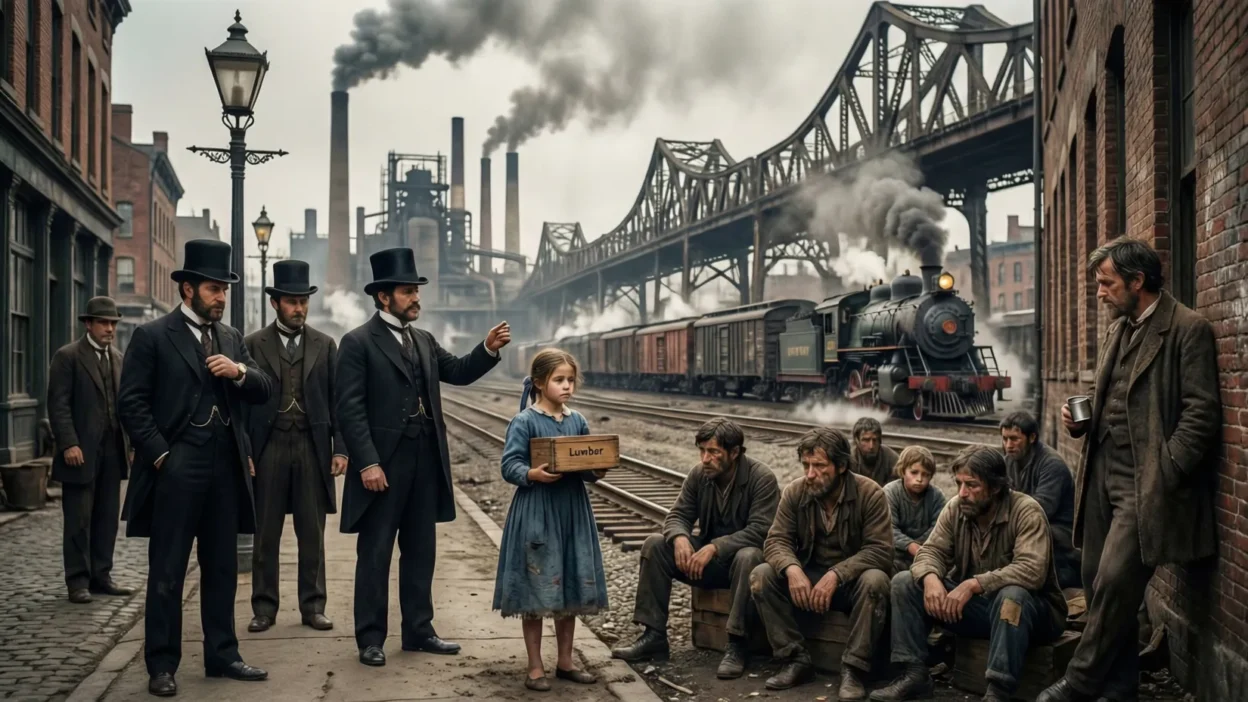
The Gilded Age, spanning roughly from the 1870s to the early 1900s, was one of the most transformative periods in American history.
It was an era marked by explosive industrial growth, rapid urbanization, and the rise of unprecedented wealth.
Railroads stitched the nation together, factories multiplied, and a new class of powerful industrialists emerged, promising progress and prosperity. Yet beneath this glittering surface lay deep and often unsettling realities.
The term “Gilded Age,” coined by Mark Twain, captured this contradiction perfectly: a thin layer of gold covering widespread poverty, political corruption, and social inequality.
While a small elite amassed enormous fortunes, millions of workers, immigrants, and marginalized groups struggled in unsafe conditions with little economic security.
Understanding the Gilded Age means looking beyond its celebrated innovations to examine the tensions and injustices that shaped modern America.
The challenges born in this era—corporate power, wealth inequality, and labor unrest—continue to echo in contemporary society, making the Gilded Age as relevant today as it was over a century ago.
Economic Transformation and Industrial Expansion
The Gilded Age witnessed a dramatic transformation of the American economy, shifting the nation from a primarily agrarian society to an industrial powerhouse. Advances in technology, access to natural resources, and a growing labor force fueled rapid industrialization. Factories replaced small workshops, and mechanized production allowed goods to be manufactured faster and more cheaply than ever before. Industries such as steel, oil, railroads, coal, and textiles became the backbone of economic growth, reshaping how Americans worked, lived, and consumed.
Railroad expansion played a central role in this transformation. By linking distant regions, railroads created a national market, encouraged westward expansion, and standardized time zones to coordinate transportation. The federal government supported this growth through land grants and subsidies, allowing railroad companies to expand quickly and amass significant power. At the same time, financial innovations and investment capital helped large corporations scale at unprecedented levels.
This period also marked the rise of big business and corporate consolidation. Industrial leaders used strategies such as vertical and horizontal integration to dominate markets, reduce competition, and maximize profits. Trusts and monopolies emerged, concentrating economic power in the hands of a few corporations and individuals. While supporters argued that these practices increased efficiency and lowered prices, critics warned that unchecked corporate power undermined fair competition and democratic values.
Overall, economic expansion during the Gilded Age generated extraordinary wealth and positioned the United States as a global industrial leader. However, this growth came at a cost, laying the foundation for inequality, labor conflict, and regulatory debates that would soon demand national attention.
Wealth, Class Structure, and Inequality
One of the defining features of the Gilded Age was the extreme concentration of wealth and the rigid class divisions that accompanied it. A small group of industrialists and financiers accumulated fortunes on a scale never before seen in the United States. Figures such as Andrew Carnegie, John D. Rockefeller, and J. P. Morgan controlled vast economic empires, shaping entire industries and wielding enormous influence over politics and society. Supporters praised these men as “captains of industry” who drove progress and innovation, while critics labeled them “robber barons” who profited from exploitation and unfair practices.
At the opposite end of the social spectrum, millions of workers lived in poverty or near-poverty. Factory laborers often worked twelve-hour days, six days a week, for low wages that barely covered basic necessities. Child labor was common, and workplace injuries were frequent due to a lack of safety regulations. Immigrants and unskilled laborers were especially vulnerable, facing job insecurity and discrimination.
The widening gap between rich and poor was often justified through Social Darwinism, a popular belief that applied the concept of “survival of the fittest” to human society. According to this view, wealth was seen as evidence of moral and intellectual superiority, while poverty was blamed on personal failure. Such ideas discouraged government intervention and reinforced existing inequalities.
Despite the era’s image of prosperity, the reality for many Americans was marked by hardship and limited opportunity. The stark contrast between lavish lifestyles and widespread deprivation exposed the deep structural inequalities of the Gilded Age, fueling social tensions and calls for reform.
Immigration, Urbanization, and Demographic Change
The Gilded Age was a period of profound demographic transformation, driven largely by mass immigration and rapid urbanization. Between the late nineteenth and early twentieth centuries, millions of immigrants arrived in the United States seeking economic opportunity, political freedom, and escape from poverty or persecution. While earlier “Old Immigrants” came mainly from Northern and Western Europe, a growing number of “New Immigrants” arrived from Southern and Eastern Europe, as well as Asia. Their arrival dramatically reshaped the cultural, social, and economic landscape of American cities.
Most immigrants settled in urban centers, where factories and construction projects offered employment. Cities such as New York, Chicago, and Boston expanded at astonishing rates, becoming densely populated industrial hubs. To accommodate this growth, working-class families crowded into tenement housing—often poorly built, overcrowded, and lacking proper sanitation. These conditions contributed to frequent disease outbreaks, high mortality rates, and persistent poverty.
Immigrants played a crucial role in fueling industrial growth, providing cheap labor that allowed factories to operate at maximum efficiency. However, they often faced harsh working conditions, low wages, and exploitation. Cultural and language differences also made immigrants targets of discrimination and nativist hostility. Many native-born Americans blamed newcomers for job competition, crime, and declining wages, leading to restrictive policies such as the Chinese Exclusion Act.
Despite these challenges, immigrant communities built vibrant neighborhoods, preserving cultural traditions while gradually integrating into American society. Their experiences during the Gilded Age highlighted both the opportunities and hardships of urban life, shaping debates over identity, citizenship, and social reform that would intensify in the decades that followed.
Labor, Unions, and Social Conflict
As industrialization accelerated during the Gilded Age, tensions between workers and employers grew increasingly intense. Factory labor was demanding and often dangerous, with long hours, low wages, and little job security. Workers had few legal protections, and employers frequently resisted any attempts to improve conditions. In response, laborers began organizing unions to collectively demand better pay, shorter workdays, and safer workplaces.
Two of the most influential labor organizations of the era were the Knights of Labor and the American Federation of Labor (AFL). The Knights of Labor sought broad reforms, welcoming both skilled and unskilled workers, including women and African Americans. In contrast, the AFL focused primarily on skilled workers and pursued practical goals such as higher wages and improved working conditions. Despite differing approaches, both organizations represented growing worker resistance to unchecked corporate power.
Labor unrest often erupted into large-scale strikes, many of which turned violent. The Great Railroad Strike of 1877, the Haymarket Affair of 1886, the Homestead Strike of 1892, and the Pullman Strike of 1894 exposed deep divisions within American society. In most cases, the government sided with business interests, deploying federal troops or state militias to suppress strikes and restore order. Courts frequently issued injunctions against unions, further limiting workers’ power.
These conflicts revealed the imbalance of power between labor and capital during the Gilded Age. Although unions achieved limited short-term successes, their struggles laid the groundwork for future labor reforms. The era’s social conflicts highlighted the urgent need for regulation and protections, helping to set the stage for the labor advances of the Progressive Era.
Politics, Corruption, and Governance
Politics during the Gilded Age were deeply intertwined with economic power, resulting in widespread corruption and weak governance. As industrial wealth expanded, business leaders increasingly influenced political institutions at the local, state, and federal levels. Many politicians embraced laissez-faire policies, arguing that government should not interfere with the free market. In practice, this approach allowed corporations to operate with minimal oversight while benefiting from tariffs, subsidies, and favorable legislation.
At the local level, political machines dominated many rapidly growing cities. Organizations such as New York City’s Tammany Hall used patronage, bribery, and voter manipulation to maintain control. Political bosses traded jobs and services for votes, securing loyalty from immigrant communities while enriching themselves through graft and kickbacks. Although these machines sometimes provided social services neglected by the government, they undermined democratic accountability and transparency.
At the federal level, corruption scandals and partisan gridlock were common. The spoils system rewarded political supporters with government positions regardless of merit, leading to inefficiency and abuse. Elections were often closely contested, yet major social and economic problems went largely unaddressed. Public frustration grew as it became clear that political institutions served elite interests more effectively than the needs of ordinary citizens.
Reform efforts slowly emerged in response to these abuses. The Pendleton Civil Service Reform Act marked an early attempt to limit patronage by requiring merit-based hiring for certain government positions. Although modest in scope, such reforms reflected growing demands for cleaner government. Political corruption during the Gilded Age exposed serious flaws in American democracy and strengthened calls for structural reform in the years that followed.
Race, Gender, and Social Hierarchies
The social order of the Gilded Age was shaped by rigid hierarchies based on race, gender, and ethnicity, reinforcing inequality even as the nation experienced rapid growth. For African Americans, the end of Reconstruction in 1877 marked the beginning of systematic disenfranchisement and segregation. Southern states enacted Jim Crow laws that enforced racial separation and denied Black citizens political rights through poll taxes, literacy tests, and intimidation. Economically, many African Americans were trapped in sharecropping and low-wage labor, limiting opportunities for advancement.
Native Americans also faced severe displacement and cultural destruction during this period. Federal policies forced Indigenous peoples onto reservations and promoted assimilation through boarding schools that sought to erase native languages and traditions. Violent conflicts and broken treaties culminated in tragedies such as the massacre at Wounded Knee, symbolizing the devastating consequences of westward expansion.
Women’s roles during the Gilded Age were similarly constrained by social expectations. Middle- and upper-class women were often expected to remain in domestic roles, while working-class women labored in factories, garment shops, or as domestic servants for low pay. Despite these limitations, women increasingly challenged traditional norms by participating in reform movements, labor activism, and early campaigns for suffrage.
Gender inequality was reinforced by limited legal rights and economic opportunities, yet the era also witnessed the growth of women’s organizations and advocacy networks. These efforts laid the foundation for future gains in voting rights and workplace protections. The entrenched social hierarchies of the Gilded Age exposed the contradictions of a society that celebrated progress while denying equality to large segments of its population.
Culture, Consumption, and Social Life
The Gilded Age was not only an era of industrial growth but also a time of significant cultural change and expanding consumerism. As mass production lowered the cost of goods, Americans gained greater access to products that had once been considered luxuries. Department stores, mail-order catalogs like those from Sears and Montgomery Ward, and national advertising campaigns transformed shopping into a central feature of everyday life. Consumption increasingly became a marker of social status, especially among the growing middle class.
Leisure and entertainment also expanded during this period. Amusement parks, vaudeville theaters, professional sports, and public concerts offered new forms of recreation for urban populations. Advances in transportation allowed people to travel more easily, while shorter working hours for some workers created limited but meaningful leisure time. These developments helped shape a shared popular culture across regions and social classes.
Education and intellectual life evolved alongside these cultural shifts. Public education expanded, literacy rates increased, and universities grew in size and influence. New academic disciplines, including sociology and economics, emerged as scholars sought to understand the rapid changes transforming society. At the same time, ideas such as Social Darwinism gained popularity, reinforcing beliefs about competition and hierarchy.
Art, architecture, and literature reflected both the optimism and criticism of the era. Grand Beaux-Arts buildings symbolized wealth and ambition, while writers like Mark Twain and Edith Wharton exposed hypocrisy and excess through realism and satire. Cultural life during the Gilded Age revealed a society captivated by progress and prosperity, yet increasingly aware of the contradictions beneath its polished surface.
The Seeds of Reform: Transition to the Progressive Era
By the late nineteenth century, the contradictions of the Gilded Age had become increasingly difficult to ignore. Rapid industrial growth had produced enormous wealth, but it also generated widespread inequality, labor unrest, urban poverty, and political corruption. As public awareness of these problems grew, reform-minded citizens began to demand change, planting the seeds for what would become the Progressive Era.
Journalists, later known as muckrakers, played a critical role in exposing social and economic abuses. Through investigative reporting, they revealed unsafe working conditions, corporate monopolies, and corrupt political practices, helping to shape public opinion. Their work challenged the notion that unchecked capitalism naturally benefited society and fueled calls for government intervention. Reformers argued that democracy could not survive if economic and political power remained concentrated in the hands of a few.
The federal government took modest but significant steps toward reform. The Sherman Antitrust Act sought to limit monopolies and restore competition, signaling a shift away from pure laissez-faire policies. Labor reforms, though limited, began to address working hours and child labor. Urban reformers pushed for improved housing, sanitation, and public health systems to address the worst conditions of city life.
Social reform movements also gained momentum. Middle-class women became increasingly active in settlement houses, temperance campaigns, and education reform, linking social welfare to civic responsibility. Although many reforms remained incomplete, the efforts of this period marked a turning point. The Progressive Era emerged as a response to the excesses of the Gilded Age, aiming to balance economic growth with fairness, accountability, and social justice.
Legacy and Modern Parallels
The legacy of the Gilded Age continues to shape American society long after the era itself ended. The period established the foundations of modern industrial capitalism, including large corporations, national markets, and mass consumer culture. At the same time, it exposed the dangers of unregulated economic power and extreme wealth inequality.
Many of the institutions and reforms that define contemporary American life—antitrust laws, labor protections, and regulatory agencies—emerged as direct responses to the problems that first became visible during this era.
One of the most enduring lessons of the Gilded Age is the relationship between economic growth and social responsibility. While industrial expansion created opportunity and innovation, it also demonstrated that prosperity does not automatically benefit all members of society.
The stark divide between the wealthy elite and the working poor sparked debates that remain relevant today, particularly in discussions surrounding income inequality, corporate influence in politics, and workers’ rights.
Modern parallels to the Gilded Age are often drawn in periods of rapid technological change and economic concentration. Just as railroads and steel once transformed the economy, today’s digital platforms and multinational corporations wield immense power. Public concerns over monopolies, political lobbying, and labor conditions echo those voiced more than a century ago. These similarities highlight the cyclical nature of economic development and reform.
By examining the Gilded Age, we gain valuable insight into the challenges of balancing innovation with equity. Its legacy serves as both a warning and a guide, reminding us that sustainable progress requires accountability, regulation, and a commitment to social justice.
Conclusion:
The Gilded Age stands as one of the most complex and contradictory periods in American history.
It was a time of remarkable innovation, economic expansion, and national growth, yet it was equally defined by exploitation, inequality, and systemic injustice.
Industrialization transformed the United States into a global economic power, but the benefits of that transformation were distributed unevenly, leaving millions struggling beneath a thin veneer of prosperity.
The era’s immense fortunes, political corruption, and social unrest revealed the limits of unchecked capitalism and minimal government oversight.
Examining the Gilded Age in its entirety allows us to see how deeply interconnected economic, political, and social forces shape a nation.
Labor conflicts, immigration debates, racial and gender hierarchies, and reform movements were not isolated developments; they were direct responses to the pressures created by rapid industrial growth.
These tensions ultimately forced Americans to reconsider the role of government, the responsibilities of corporations, and the meaning of democracy in a modern society.
The reforms that followed did not erase the inequalities of the Gilded Age, but they marked a critical shift toward accountability and regulation.
Antitrust laws, labor protections, and social reforms emerged because citizens demanded change. This legacy reminds us that progress is rarely automatic—it is contested, negotiated, and often born from conflict.
Understanding the Gilded Age is essential not only for appreciating the roots of modern America, but also for recognizing recurring patterns in times of rapid change.
By looking beyond the gilded surface, we gain insight into how societies can pursue growth while striving for fairness, inclusion, and long-term stability.

Jonathan Bishopson is the punmaster-in-chief at ThinkPun.com, where wordplay meets wit and every phrase gets a clever twist. Known for turning ordinary language into laugh-out-loud lines, Jonathan crafts puns that make readers groan, grin, and think twice. When he’s not busy bending words, he’s probably plotting his next “pun-derful” masterpiece or proving that humor really is the best re-word.