
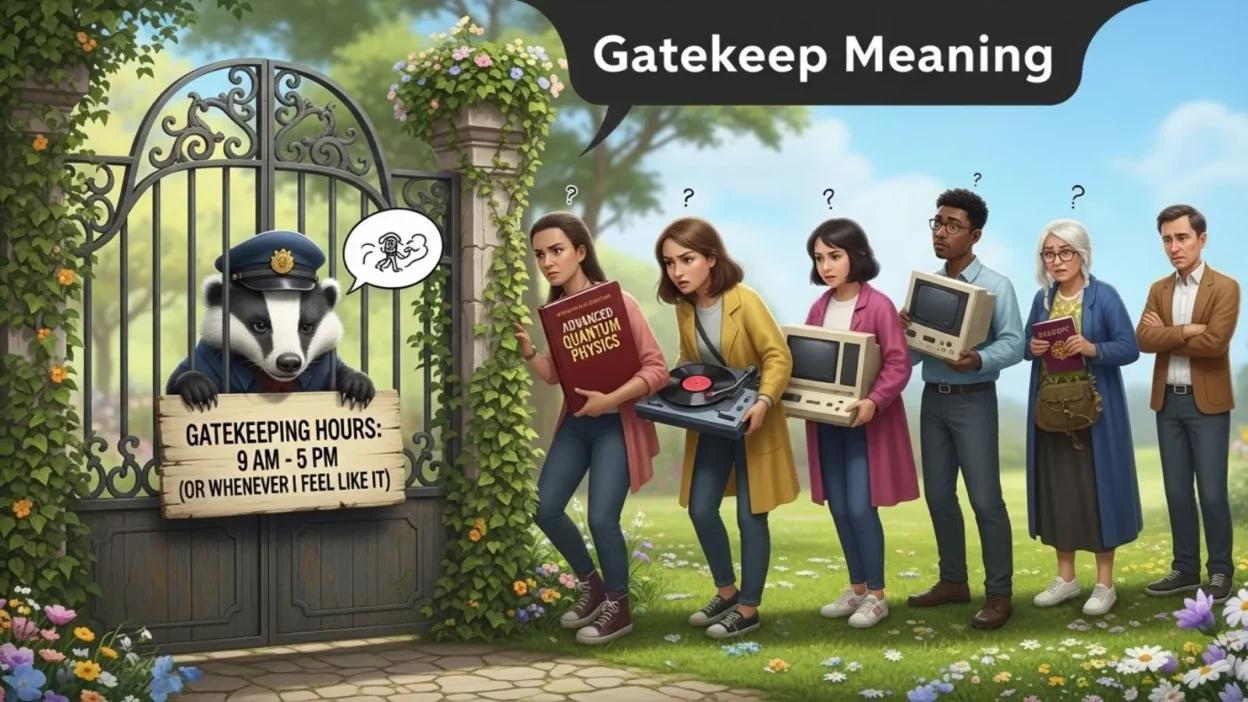
In today’s digital world, you’ve probably seen the term “gatekeep” pop up on social media, memes, or even casual chats with friends. But what does it really mean?
At its core, gatekeeping is the act of controlling who gets access to something if it’s knowledge, hobbies, communities, or trends.
People often gatekeep unintentionally, setting arbitrary rules about who belongs or who qualifies as “authentic.” While sometimes harmless, it can also make spaces feel exclusive or intimidating, especially online.
Understanding the meaning of gatekeep is more than just keeping up with slang; it’s about recognizing social dynamics, both online and offline.
In this article, we’ll explore what gatekeeping is, why people do it, real-life examples, and how it shapes modern digital culture in 2026. By the end, you’ll know how to spot gatekeeping and maybe even avoid doing it yourself.
What Does Gatekeep Mean?
The term gatekeep comes from the idea of a gatekeeper, someone who controls access to a place, information, or community. In modern digital culture, to gatekeep means deciding who is “allowed” or “worthy” to be part of a group, trend, or fandom. Essentially, it’s about creating barriers—sometimes explicit, sometimes subtle—between insiders and outsiders.
For example, in online communities, a fan might say, “You can’t call yourself a true Star Wars fan unless you’ve watched every single movie and read all the books.” This is a classic case of gatekeeping behavior, where someone sets arbitrary standards to measure authenticity. While it may come from a genuine love for the subject, it can make others feel unwelcome or excluded.
Gatekeeping isn’t limited to fandoms. It happens in workplaces, social groups, or hobbies, where people create informal rules about who qualifies to participate. Recognizing gatekeeping examples helps you understand whether someone is trying to maintain quality or just asserting control.
In 2026, the term has expanded beyond its literal meaning to include online gatekeeping, memes, and cultural commentary. People now use it humorously to call out elitism or unnecessary exclusivity. By understanding the meaning of gatekeep, you can spot when it happens and learn to navigate communities with awareness—without falling into gatekeeping yourself.
Origins of Gatekeeping
The concept of gatekeeping has roots that go far beyond modern internet culture. Originally, a gatekeeper was someone who literally controlled access to a gate or entrance, deciding who could enter a building, city, or restricted area. Over time, the term evolved metaphorically to describe anyone who controls access to information, resources, or communities.
In the 20th century, gatekeeping was often used in journalism and media. Editors acted as gatekeepers, deciding which news stories reached the public and which ones stayed behind the scenes. This form of gatekeeping was essential for maintaining standards, but it also highlighted how control over information could create exclusivity.
With the rise of the internet and social media, the meaning shifted again. By the 2000s, gatekeeping began appearing in online communities, forums, and fandoms. Fans, hobbyists, and enthusiasts started using the term to describe situations where people set arbitrary rules about who qualifies as a “true fan” or expert. For instance, in gaming communities, someone might claim, “You can’t play this game properly unless you’ve mastered every level,” which is a digital form of gatekeeping.
By 2026, the term has fully entered internet slang, often used humorously in memes or social commentary. Understanding the origins of gatekeeping helps us see how a simple concept of controlling access transformed into a widespread social phenomenon—both online and offline—and why calling out gatekeeping has become a common part of modern digital culture.
Why People Gatekeep
Understanding why people gatekeep helps explain a lot about social behavior, both online and offline. At its core, gatekeeping often comes from a desire to protect authenticity or maintain a sense of expertise. People want to feel that their knowledge, passion, or membership in a community is valued—and sometimes they create rules to define what “counts” as legitimate.
Psychologically, gatekeeping stems from the human tendency to form in-groups and out-groups. By controlling who is included, individuals reinforce their sense of identity and belonging. For example, in a hobby like photography, someone might say, “You can’t call yourself a real photographer unless you use a professional camera,” even though skill matters more than equipment. This is a subtle form of gatekeeping that can unintentionally exclude newcomers.
Online communities are especially prone to gatekeeping. Fandoms, gaming groups, and social media circles often see members policing what counts as “real” participation. While some gatekeeping is harmless—like protecting the quality of discussions—excessive gatekeeping can discourage new members and create elitism.
Another reason people gatekeep is fear of change or dilution. When communities grow or trends go mainstream, longtime members may try to preserve a sense of exclusivity. Humorously, this is often called “old guard gatekeeping” in memes. Recognizing why gatekeeping happens helps you navigate these dynamics thoughtfully and avoid being unintentionally exclusive while participating in communities.
Common Forms of Gatekeeping
Gatekeeping can appear in many areas of life, both online and offline. Recognizing its common forms helps you spot it early and respond thoughtfully. One of the most visible places is online communities. Fandoms, social media groups, and gaming communities often have members who set strict standards for “true fans” or “real players.” For example, a fan might say, “You haven’t read all the books, so you’re not a real Potterhead,” which is a classic case of digital gatekeeping.
Hobbies and interests also see gatekeeping in subtler ways. Photography, cooking, fitness, or music communities sometimes create informal rules about tools, experience, or achievements. Statements like, “You can’t call yourself a runner unless you’ve completed a marathon,” illustrate how gatekeeping can limit participation unnecessarily.
Workplaces and professional circles are other common spaces. Senior employees or long-term members may gatekeep knowledge, skills, or opportunities, either to maintain quality or assert authority. While this can sometimes ensure standards, it can also discourage growth and inclusivity.
Even in everyday social life, people engage in gatekeeping without realizing it. Whether it’s in clubs, sports, or cultural groups, gatekeeping often emerges from a desire to protect tradition or authenticity. Memes and online humor now frequently highlight these behaviors, calling out elitism and exclusivity.
Understanding these common forms of gatekeeping helps individuals navigate communities with awareness, fostering participation while avoiding unnecessary exclusion. Recognizing it is the first step toward promoting inclusivity in both online and offline spaces.
Effects of Gatekeeping
Gatekeeping can have both positive and negative effects, depending on context and intent. On the positive side, it can help maintain quality and standards within communities. For instance, in professional circles or hobby groups, gatekeeping ensures that newcomers understand basic rules, etiquette, or safety guidelines. This can protect the integrity of a community, prevent misinformation, and encourage participants to engage seriously rather than superficially.
However, the negative effects of gatekeeping are far more visible, especially in online culture. Excessive gatekeeping can create exclusivity and elitism, making people feel unwelcome or judged for not meeting arbitrary standards. For example, a meme might joke, “You can’t call yourself a gamer unless you’ve played this exact list of games,” highlighting how arbitrary rules discourage participation. In fandoms, social media communities, or hobby groups, this can reduce engagement, drive away newcomers, and stifle creativity.
Gatekeeping also affects social dynamics and personal confidence. People may feel pressured to prove their legitimacy, leading to anxiety or unnecessary competition. In online spaces, it can spark debates, arguments, or even bullying when members try to enforce their own definitions of authenticity.
Understanding the effects of gatekeeping allows you to recognize when it’s constructive versus harmful. By being aware, you can contribute positively to communities, uphold quality without excluding others, and foster inclusivity in both online and offline spaces.
Gatekeeping vs. Healthy Boundaries
While gatekeeping often gets a bad reputation, it’s important to differentiate it from healthy boundaries. Healthy boundaries are about protecting yourself or a community without unnecessarily excluding others, whereas gatekeeping involves imposing arbitrary rules to decide who is “worthy” or “authentic.” Understanding this difference helps prevent misunderstandings and promotes more inclusive social spaces.
For example, in online communities, a moderator who restricts spam or harmful content is not gatekeeping—they are maintaining a safe and productive environment. Similarly, in a hobby group, asking beginners to learn basic safety rules before using certain equipment is a healthy boundary, not gatekeeping. On the other hand, telling someone, “You can’t be a true fan unless you’ve watched every single episode or read every book,” is gatekeeping because it enforces arbitrary standards.
Gatekeeping often comes from a desire for exclusivity, while healthy boundaries are meant to support participation and safety. Memes and social commentary now frequently highlight the difference, showing how one encourages inclusion and the other limits it.
Recognizing this distinction is especially important in 2026, when digital culture continues to blur the lines between humor, elitism, and community guidelines. By learning to enforce boundaries without gatekeeping, individuals and communities can thrive—welcoming newcomers, maintaining standards, and creating a space where everyone feels valued.
How to Deal With Gatekeeping
Dealing with gatekeeping requires awareness, patience, and a mix of diplomacy and assertiveness. The first step is recognizing when gatekeeping is happening. Often, it appears as judgment, exclusion, or arbitrary rules about who belongs or qualifies in a community. Once you notice it, you can decide how to respond effectively without escalating conflict.
One strategy is to ignore minor gatekeeping behaviors, especially when they are meant humorously or are trivial. Many online memes call out gatekeeping in a lighthearted way, and sometimes it’s best not to take it personally. In more serious cases, you can politely challenge gatekeepers by asking questions or offering alternative perspectives. For example, instead of arguing, you might say, “I’m new to this, but I’m excited to learn and contribute,” which demonstrates willingness without confrontation.
Another approach is to create inclusive spaces yourself. If you lead a group, community, or discussion, set clear guidelines that encourage participation and respect. Avoid arbitrary standards, and focus on shared values, learning, and engagement.
Lastly, reflect on your own behavior. Many people unintentionally gatekeep without realizing it. By practicing self-awareness, you can avoid excluding others while still maintaining quality and authenticity in your community.
Understanding how to deal with gatekeeping helps you navigate social spaces with confidence, whether online, at work, or in hobbies. By responding thoughtfully, you can reduce unnecessary exclusivity and promote an environment where everyone feels welcome.
Modern Examples & Memes (2026 Relevance)
In 2026, gatekeeping has become a major part of online humor and social commentary. Social media platforms like TikTok, Twitter, Instagram, and Reddit often showcase memes that highlight the absurdity of gatekeeping behavior. For example, a popular meme might joke, “You’re not a true coffee lover unless you’ve tried 37 different brews,” poking fun at how arbitrary rules can be when measuring authenticity.
Fandoms continue to be fertile ground for gatekeeping jokes. From superhero franchises to K-pop communities, memes exaggerate the lengths some fans go to enforce their “standards.” These humorous portrayals allow people to recognize gatekeeping without taking it too seriously while also calling out elitism in a lighthearted way.
Gatekeeping also appears in professional and hobbyist contexts. For instance, memes about “graphic designers who refuse to teach beginners” or “gamers who criticize newcomers” are widely shared, reflecting real-world behaviors in a humorous format. By using satire, memes help people identify gatekeeping, discuss its impact, and even learn to navigate it better.
Moreover, 2026 has seen a rise in educational memes and social posts explaining gatekeeping to younger audiences. These posts not only entertain but also raise awareness about the difference between healthy boundaries and exclusionary behavior.
By observing these modern examples and memes, readers can better understand how gatekeeping operates today, why it’s often humorous, and how digital culture has turned this concept into a recognizable and widely discussed social phenomenon.
FAQs:
1. What does gatekeep mean?
To gatekeep means to control access to something—like a community, hobby, or knowledge—by deciding who is “worthy” or “authentic.” It often involves setting arbitrary rules that separate insiders from outsiders.
2. How do you know if someone is gatekeeping?
Someone is gatekeeping when they set unnecessary standards or judgments about who belongs or qualifies. Common phrases include, “You’re not a real fan unless…” or “Only people with this experience can participate.”
3. Is gatekeeping always bad?
Not always. Some forms of gatekeeping, like enforcing rules for safety or maintaining quality, are helpful. However, excessive gatekeeping can lead to elitism, exclusion, and discouragement of newcomers.
4. What are common examples of gatekeeping?
Examples include fandoms (e.g., “You haven’t read all the books, so you’re not a true fan”), hobbies (e.g., “You need a professional camera to be a real photographer”), workplaces (restricting knowledge or opportunities), and online social groups.
5. How can you deal with gatekeeping?
You can ignore minor gatekeeping, politely challenge it, or create inclusive spaces yourself. Practicing self-awareness helps avoid unintentionally gatekeeping others.
6. What is the difference between gatekeeping and healthy boundaries?
Gatekeeping enforces arbitrary standards to exclude, while healthy boundaries protect safety, quality, or fairness without limiting participation unnecessarily.
7. Why is gatekeeping relevant in 2026?
In 2026, gatekeeping is a common part of digital culture, often highlighted in memes, social media, and discussions about inclusivity, making it a widely recognized term in online communities.
Conclusion
Understanding the meaning of gatekeep is more important than ever in 2026, as online communities, social media, and fandoms continue to grow.
Gatekeeping occurs when someone sets arbitrary rules or standards to decide who belongs, often creating exclusion or elitism.
While sometimes intended to maintain quality or authenticity, excessive gatekeeping can discourage participation and foster unnecessary competition.
By recognizing common gatekeeping behaviors, distinguishing them from healthy boundaries, and learning strategies to navigate or address them, individuals can participate in communities more thoughtfully.
Modern memes and social commentary also help highlight gatekeeping in a humorous, relatable way, making it easier to spot and understand.