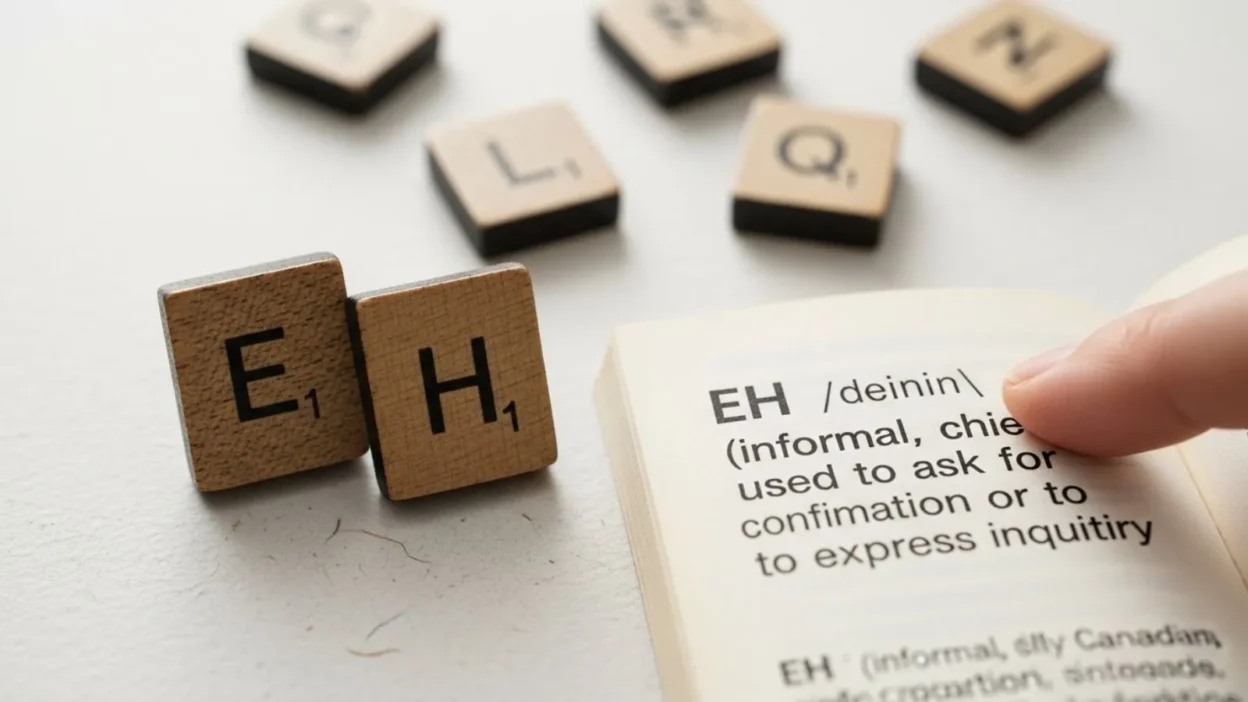
In today’s fast-paced digital world, texting and social media have introduced countless slang expressions, and one that often pops up is “EH.”
But what exactly does EH mean? At its core, EH is a casual expression used to show indifference, uncertainty, or a nonchalant reaction think of it as a digital shrug.
You might see it in texts, social media comments, or online chats, where someone wants to convey a “so-so” feeling, mild agreement, or simply a neutral response.
Understanding EH meaning is essential for anyone navigating modern online communication because it helps you interpret conversations more accurately and respond appropriately.
If you’re a teen, young adult, or just curious about current slang trends, knowing how to read and use EH can make your digital interactions smoother, funnier, and more relatable in 2026’s evolving texting culture.
What Does EH Mean?
The term EH is a short, versatile expression commonly used in texting, social media, and casual conversations. At its simplest, EH meaning can be described as a way to show indifference, uncertainty, or mild agreement. Think of it as a digital shrug—an easy way to convey “so-so,” “I don’t mind,” or “whatever” without typing a full sentence.
In texting, EH often reflects a neutral or nonchalant attitude.
For example:
- “Did you like the movie?”
- “Eh… it was okay.”
- “Do you want to go out tonight?”
- “Eh, I’m not really feeling it.”
As you can see, EH is not overly positive or negative; it simply expresses a casual, sometimes indifferent reaction.
EH can also be used to indicate uncertainty or hesitation.
For instance:
- “Do you think this plan will work?”
- “Eh… maybe, not sure.”
It’s a flexible term, making it popular among teens, young adults, and social media users who want to communicate quickly and casually. Unlike stronger reactions like “love it” or “hate it,” EH allows the sender to stay neutral, informal, and relatable.
Origins of EH
The expression EH has an interesting history, both in spoken language and digital communication. While many people today associate it with texting and social media, EH has been around for decades as a casual verbal expression. In English, it has often been used to indicate indifference, mild curiosity, or a neutral response—essentially a “so-so” reaction.
One of the most notable historical uses of EH comes from Canada, where it is commonly used as a conversational tag. In Canadian English, saying “eh” at the end of a sentence is a way to seek agreement or confirmation:
- “Nice weather today, eh?”
This usage differs slightly from the casual texting version, which leans more toward indifference rather than seeking validation.
In modern internet culture, EH evolved to convey a neutral or “meh” feeling in short digital exchanges. The rise of texting, instant messaging, and social media platforms like Twitter, Instagram, and TikTok accelerated the adoption of EH as a quick, informal response. Memes and online humor also contributed to its popularity, often pairing EH with emojis like 🤷♂️ or 😐 to emphasize the casual tone.
EH in Texting and Online Chats
In the world of digital communication, EH has become a go-to expression for texting and online chats. It’s short, simple, and conveys a casual, often indifferent tone that fits perfectly into modern messaging platforms. Whether you’re chatting with friends on WhatsApp, commenting on Instagram, or scrolling through Twitter threads, EH is commonly used to express a “so-so” feeling, mild agreement, or uncertainty without typing a full response.
For example, in texting:
- “How was the concert?”
- “Eh… not that great, honestly.”
- “Do you like the new show?”
- “Eh, it’s okay, I guess.”
On social media, EH often appears in casual replies, comments, or memes, paired with punctuation or emojis to enhance its meaning:
- “The latest episode was… eh 😐”
- “New phone? Eh… I like my old one better 🤷♀️”
The tone of EH can vary depending on context, punctuation, or accompanying emojis. A simple “Eh.” might feel indifferent or dismissive, while “Eh 🤔” could show mild curiosity or contemplation.
One reason EH has gained popularity in texting is its efficiency. In fast-paced conversations, it communicates a nuanced emotional response quickly without seeming harsh or negative. Understanding the EH meaning in online chats ensures you can interpret others’ messages accurately and use the expression yourself in a friendly, casual way.
EH in Spoken Language
While EH is widely recognized in texting and online chats, it also plays a role in spoken language. In conversations, EH is often used to express indifference, uncertainty, or mild interest, similar to saying “I don’t know” or “so-so.” The tone, pitch, and emphasis when saying EH can completely change its meaning, making it a flexible tool in casual speech.
Pronunciation is simple—just a short, neutral “eh” sound—but context is key. For example:
- Friend A: “Did you enjoy the party last night?”
- Friend B: “Eh… it was okay.”
Here, EH conveys a neutral reaction, neither enthusiastic nor negative.
Regional variations exist as well. In Canada, “eh” is often used as a conversational tag to seek agreement:
- “Nice day, eh?”
In contrast, in the US or UK, EH in casual speech usually expresses indifference or uncertainty rather than seeking confirmation. Tone, facial expression, and body language also influence how EH is interpreted. A rising intonation may indicate curiosity or mild interest, while a flat tone can signal boredom or nonchalance.
EH vs Similar Expressions
Understanding EH meaning becomes clearer when comparing it to similar expressions often used in texting and casual conversations. Words like meh, huh, hmm, and whatever share similarities with EH, but subtle differences in tone, context, and emotion set them apart.
EH is generally neutral, expressing mild indifference, uncertainty, or a casual reaction.
For example:
- “Did you like the new café?”
- “Eh… it was okay.”
In contrast, meh conveys stronger indifference or lack of interest. It often carries a slightly dismissive tone:
- “How was the movie?”
- “Meh… not worth it.”
Huh is typically used to express confusion, surprise, or the need for clarification rather than indifference:
- “I can’t find my keys.”
- “Huh? Where did you leave them?”
Hmm indicates thinking, hesitation, or contemplation. It’s less about indifference and more about processing information:
- “Do you want to join us for dinner?”
- “Hmm… maybe later.”
Lastly, whatever can signal indifference but often with a stronger, sometimes dismissive or frustrated tone:
- “Do you want to come with us?”
- “Whatever, I don’t care.”
By comparing these expressions, you can see why EH is unique: it’s casual, neutral, and safe for expressing a “so-so” feeling without sounding rude or overly dismissive. Knowing the differences helps you choose the right word in texting, social media, or spoken conversation, making your communication smoother and more accurate.
Common Mistakes When Using EH
While EH is a simple and versatile expression, it’s easy to misuse it, especially in texting or online conversations. Understanding EH meaning is one thing, but using it correctly ensures you don’t come across as rude, dismissive, or uninterested.
One common mistake is overusing EH. Sending “Eh” repeatedly in responses can make you seem indifferent or disengaged, even if you’re just casual.
For example:
- Friend: “How was your day?”
- You: “Eh… Eh… Eh.”
This can unintentionally signal boredom or annoyance.
Another mistake is misinterpreting someone else’s EH. Since the term is neutral, the tone or context matters. A plain “Eh.” might seem negative without emojis or additional context, while “Eh 🙂” conveys a more relaxed or lighthearted feeling.
Some people also confuse EH with expressions like meh or whatever, which can carry stronger dismissive tones. Using EH when you want to express frustration or sarcasm can lead to misunderstandings.
Finally, using EH in formal communication, professional emails, or serious conversations is inappropriate. It’s best reserved for casual texting, social media, or spoken interactions with friends.
Tips for proper usage:
- Use EH sparingly to keep it casual.
- Add context, punctuation, or emojis to clarify tone.
- Avoid using EH in formal or professional settings.
- Observe how others use EH to match the social tone.
Mastering these nuances ensures that EH stays a friendly, casual tool in your digital and spoken conversations in 2026.
Fun Facts About EH
The expression EH isn’t just a casual slang term—it also has a fascinating presence in pop culture, memes, and digital humor. Over the years, EH meaning has evolved beyond texting, appearing in movies, TV shows, and viral social media content, making it a recognizable part of modern language.
One fun fact is the Canadian connection. In Canada, eh is famously used as a conversational tag to seek agreement or confirmation. Shows, movies, and comedians often highlight this as a cultural stereotype, which has helped the term gain global recognition.
On the internet, EH has become meme-worthy. Social media users pair EH with facial expressions, emojis, or GIFs to emphasize casual indifference or mild boredom. For instance:
- Meme caption: “When someone asks if I’m excited about Monday… Eh 😐”
EH also frequently appears in humorous text exchanges, TikTok videos, and Twitter posts, showcasing its versatility and relatability. Its simplicity allows anyone to use it without needing complex wording, making it perfect for quick, funny, or casual reactions.
Interestingly, EH reflects a broader trend in modern communication: expressing emotions subtly, efficiently, and humorously. Unlike words like “love it” or “hate it,” EH gives space for neutrality, which resonates with audiences who prefer understated, relatable reactions.
How to Use EH Like a Pro
Using EH effectively requires understanding its subtle meaning and applying it in the right context. While it may seem simple, mastering EH ensures your digital and spoken conversations feel natural, casual, and relatable.
The first tip is to consider tone. A flat “Eh” can communicate indifference, while adding punctuation, emojis, or stretching the sound can convey humor, curiosity, or mild surprise:
- “Eh…” → uncertainty or hesitation
- “Eh 😐” → neutral or so-so feeling
- “Ehhh 😂” → jokingly indifferent
Next, context matters. EH works best in casual conversations with friends, family, or peers. Avoid using it in formal settings, professional emails, or serious discussions, as it may come across as dismissive or unprofessional.
Another pro tip is to pair EH with other words to create nuanced expressions.
For example:
- “Eh, it’s okay, I guess.” → casual approval
- “Eh, not my favorite.” → mild dislike without sounding harsh
- “Eh… maybe later.” → polite hesitation
Observing how others use EH on social media, memes, and texting platforms can also improve your understanding. Matching the tone and context makes your use of EH feel natural rather than forced.
EH in Global Context
While EH is widely recognized in English-speaking countries, its use—or similar expressions—can be found across the globe, reflecting how digital communication shapes language worldwide. Understanding EH meaning in a global context highlights its versatility and cultural nuances.
In Canada, EH is famously used as a conversational tag to seek agreement or confirmation, such as:
- “Nice weather today, eh?”
This usage differs from casual texting in the US or UK, where EH usually expresses mild indifference or a “so-so” reaction.
In other countries, digital slang has developed equivalents that convey similar feelings of neutrality or uncertainty.
For example:
- In Japan, “まあまあ” (maa maa) expresses a “so-so” feeling, much like EH.
- In Spain, “pues” can be used casually to indicate hesitation or mild indifference in conversations.
- In Brazil, “mais ou menos” (more or less) functions similarly in both spoken and written communication.
Social media and online platforms have accelerated the globalization of slang. As memes, GIFs, and short-form videos cross borders, expressions like EH become part of a shared digital vocabulary that transcends language barriers.
EH Meaning: Frequently Asked Questions (FAQ)
1. What does EH mean in texting?
In texting, EH is used to express indifference, mild uncertainty, or a casual reaction. It’s similar to saying “so-so,” “I don’t mind,” or “whatever” in a quick, informal way.
2. Is EH rude?
Not usually. EH is generally neutral and casual. However, tone matters—repeatedly replying “Eh” without context or emojis can make it seem dismissive or uninterested.
3. How is EH different from meh?
Both EH and meh indicate indifference, but meh is often stronger and slightly more dismissive. EH is softer, casual, and safe to use in most informal conversations.
4. Can I use EH in professional messages?
It’s best to avoid EH in formal or professional communication. It works well in casual texts, social media, and spoken conversations but can appear unprofessional in work emails or serious discussions.
5. Where did EH come from?
EH has roots in English-speaking countries, with notable usage in Canada as a conversational tag for agreement. Modern texting and social media helped it evolve into a neutral, casual response in digital communication.
6. How do I use EH like a pro?
Use EH sparingly, pair it with punctuation or emojis to clarify tone, and match it to the context. For example, “Eh 😐” shows neutrality, while “Ehhh 😂” can convey playful indifference.
7. Does EH have equivalents in other languages?
Yes! Many languages have similar expressions for casual indifference, like Japan’s “まあまあ (maa maa)” or Brazil’s “mais ou menos.”
Conclusion
Understanding the meaning of EH is essential for navigating modern digital communication.
If texting, social media, or casual spoken conversations, EH serves as a simple yet versatile expression to convey indifference, mild uncertainty, or a casual “so-so” reaction.
Unlike stronger reactions such as “meh” or “whatever,” EH remains neutral, making it safe and relatable for everyday chats.
From its historical roots in Canadian English to its widespread use in memes, social media, and texting, EH has evolved into a global digital expression.
Knowing how to use it correctly including tone, punctuation, and context ensures your messages come across as friendly and casual rather than dismissive.
In 2026, slang like EH continues to reflect the evolving nature of online communication.
Mastering it allows you to participate confidently in digital conversations, interpret messages accurately, and express subtle emotions efficiently while keeping your interactions lighthearted and relatable.

Jonathan Bishopson is the punmaster-in-chief at ThinkPun.com, where wordplay meets wit and every phrase gets a clever twist. Known for turning ordinary language into laugh-out-loud lines, Jonathan crafts puns that make readers groan, grin, and think twice. When he’s not busy bending words, he’s probably plotting his next “pun-derful” masterpiece or proving that humor really is the best re-word.