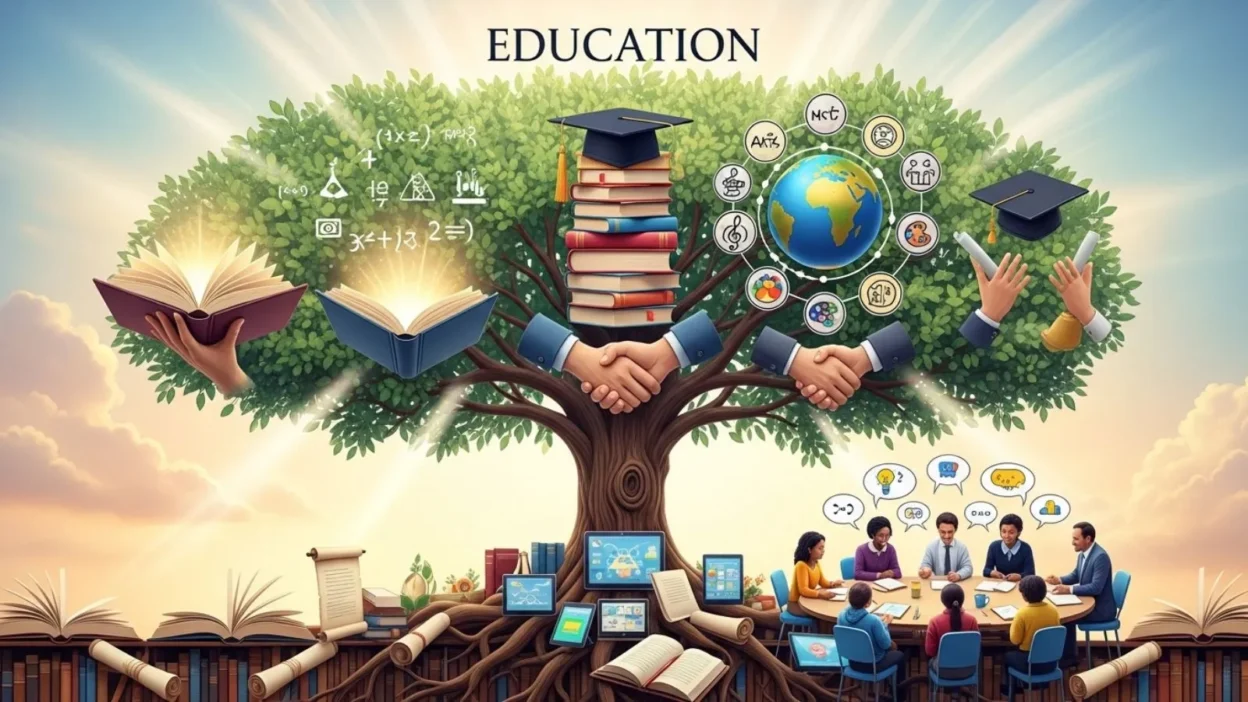
Education is one of the most powerful tools that shapes human life, thinking, and future. The meaning of education goes beyond textbooks and classrooms; it is the process of gaining knowledge, skills, values, and habits that help a person grow intellectually, socially, and emotionally.
From early childhood to adulthood, education plays a continuous role in developing personality and building a successful life.
In today’s modern world, education is not limited to schools and colleges. It also includes online learning, practical experiences, and self-development activities that help individuals adapt to changing environments.
The true concept of education focuses on understanding life, solving problems, and making better decisions.
Education is also the foundation of a strong society, as it promotes awareness, equality, and progress.
Without education, personal and national development becomes difficult. This article will explore the meaning of education in detail, along with its importance, types, and real-life benefits.
What is the Meaning of Education?
The meaning of education refers to the process of learning, understanding, and gaining knowledge, skills, values, and attitudes that help individuals grow in life. In simple words, education is not just about reading books or passing exams; it is about developing a person’s mind, behavior, and ability to think critically and make better decisions.
The word “education” comes from the Latin word “educare” which means “to bring out” or “to lead forth.” This shows that education is about bringing out the hidden potential inside every individual. Traditionally, education was mainly limited to schools, teachers, and structured classrooms. However, in the modern world, its meaning has expanded to include practical learning, online education, and life experiences.
Education helps individuals understand the world around them and prepares them for personal, social, and professional life. It builds confidence, improves communication skills, and develops problem-solving abilities. A well-educated person is not only knowledgeable but also responsible, disciplined, and aware of society.
Moreover, education is a lifelong process. People continue to learn new things throughout their lives, whether through formal institutions or real-life experiences. It plays a key role in shaping personality and improving quality of life.
In short, the meaning of education is not limited to academic success; it is about overall human development that enables a person to live a meaningful, productive, and successful life in society.
Importance of Education in Daily Life
Education plays a vital role in our daily life because it helps individuals grow, understand the world, and make better decisions. The importance of education goes far beyond academic achievement; it shapes personality, builds character, and creates opportunities for a successful future.
One of the main benefits of education is personal development. It improves thinking ability, increases knowledge, and helps a person become more confident. An educated person can easily solve problems, communicate effectively, and adapt to different situations in life.
Education is also essential for career growth. In today’s competitive world, good education opens the door to better job opportunities and financial stability. Employers prefer individuals who are skilled, knowledgeable, and well-trained in their field.
In addition, education plays an important role in society. It promotes awareness, equality, and social harmony. Educated people are more likely to respect laws, understand their rights, and contribute positively to their community. It also helps reduce poverty by creating employment opportunities and improving living standards.
Education further helps in building moral values and discipline. It teaches individuals what is right and wrong, and encourages responsible behavior. From simple daily activities to major life decisions, education guides people in the right direction.
In conclusion, education is not just a part of life—it is the foundation of a better life. It empowers individuals, strengthens society, and contributes to the overall progress of a nation. Without education, personal and social development becomes very difficult.
Types of Education Explained
Education can be divided into different types based on how, where, and in what way learning takes place. The main types of education include formal education, informal education, non-formal education, vocational education, and modern digital education. Each type plays an important role in shaping an individual’s knowledge and skills.
Formal education is the structured system of learning that takes place in schools, colleges, and universities. It follows a proper curriculum, timetable, and is guided by trained teachers. Students receive degrees or certificates after completing each level.
Informal education is unstructured learning that happens outside the classroom. It includes learning from family, friends, society, and real-life experiences. It has no fixed syllabus but plays a major role in personality development.
Non-formal education is organized learning that does not follow a traditional school system. Examples include workshops, short courses, training programs, and skill development centers.
Vocational education focuses on practical skills that prepare individuals for specific jobs or careers. It includes fields like technical training, computer skills, mechanical work, and healthcare training.
In today’s digital world, online education has become very important. It allows people to learn from anywhere using the internet through e-learning platforms, video lectures, and virtual classrooms.
All these types of education work together to support lifelong learning. They help individuals gain knowledge, improve skills, and prepare for real-world challenges. Understanding these types of education helps us realize that learning is not limited to schools but happens in many different ways throughout life.
Role of Education in Modern Society
Education plays a central role in shaping modern society and driving its development. The role of education in society goes beyond individual growth; it contributes to building a stronger, more aware, and progressive community. In today’s fast-changing world, education helps people adapt to new technologies, ideas, and global challenges.
One of the most important roles of education is creating awareness. It helps individuals understand their rights, responsibilities, and social duties. Educated citizens are more likely to participate in social activities, follow laws, and contribute positively to society.
Education also promotes equality and reduces social differences. When people have access to education, they get equal opportunities to improve their lives regardless of their background. This helps reduce poverty and creates a fair society where everyone has a chance to succeed.
In modern society, education is closely linked with technology and innovation. It supports scientific research, digital development, and new inventions that improve the quality of life. From healthcare to communication, education plays a key role in every field.
Furthermore, education strengthens the economy by producing skilled workers, professionals, and entrepreneurs. A well-educated population leads to higher productivity and national growth.
Education also builds moral values and encourages peaceful behavior. It teaches respect, tolerance, and cooperation among people from different cultures and backgrounds.
Benefits of Education in Real Life
Education provides countless benefits that directly improve an individual’s personal, social, and professional life. The benefits of education are not limited to academic success; they extend to every area of human development and daily living.
One of the biggest benefits of education is better career opportunities. Educated individuals have access to a wider range of jobs and are more likely to secure stable and high-paying positions. Education also helps people develop important skills such as communication, problem-solving, and critical thinking, which are essential in every profession.
Another major benefit is personal growth. Education builds confidence and helps individuals understand themselves and the world around them. It encourages positive thinking, discipline, and decision-making abilities, which lead to a more successful and balanced life.
Education also improves social behavior. It teaches respect, responsibility, and cooperation, which are necessary for living in a peaceful society. Educated people are more aware of social issues and are often active in improving their communities.
Financial independence is another important advantage. With proper education, individuals can earn a stable income and improve their standard of living. It reduces poverty and supports long-term financial security.
In addition, education helps people stay informed about health, technology, and global changes. This awareness enables them to make better lifestyle choices and adapt to modern developments.
Overall, education is a powerful tool that transforms lives. It not only provides knowledge but also shapes character, builds skills, and opens the door to a brighter and more successful future.
Challenges in the Education System
Despite its importance, the education system faces several challenges that affect the quality and accessibility of learning. The challenges in education system vary from country to country, but many issues are common across the world, especially in developing regions.
One of the biggest challenges is the lack of equal access to education. Many children in rural or underdeveloped areas do not have proper schools, teachers, or learning resources. Poverty also forces some students to leave education early and start working to support their families.
Another major issue is the poor quality of education. In some places, outdated teaching methods and untrained teachers make learning less effective. Students often focus more on memorization rather than understanding concepts and practical knowledge.
High educational costs are also a significant barrier. Tuition fees, books, uniforms, and transportation expenses make education unaffordable for many families. This creates inequality between different social groups.
The education system also struggles with a lack of modern technology integration. In many regions, schools do not have access to computers, internet, or digital learning tools, which puts students behind in today’s digital world.
In addition, the curriculum in some systems is not updated according to modern needs. It often lacks practical skills and does not prepare students for real-life challenges or job markets.
In conclusion, while education is essential for development, these challenges must be addressed. Improving infrastructure, updating curriculum, training teachers, and ensuring equal access can help create a better and more effective education system for everyone.
Future of Education
The future of education is rapidly changing due to advancements in technology, global connectivity, and evolving learning needs. The future of education is expected to be more flexible, digital, personalized, and skill-oriented compared to traditional systems.
One of the biggest changes is the rise of online and digital learning. Virtual classrooms, e-learning platforms, and mobile education apps are making it possible for students to learn anytime and anywhere. This flexibility helps learners balance education with other responsibilities.
Artificial Intelligence (AI) is also transforming education. AI-powered tools can personalize learning experiences by analyzing student performance and providing customized lessons. This ensures that every student learns at their own pace and according to their understanding level.
Another important trend is the use of virtual reality (VR) and augmented reality (AR). These technologies make learning more interactive and practical by allowing students to experience real-life simulations in subjects like science, medicine, and engineering.
In the future, education will focus more on skills rather than just academic degrees. Employers are increasingly looking for practical knowledge, creativity, problem-solving ability, and technical skills. This shift is encouraging schools and universities to update their curriculum accordingly.
Lifelong learning will also become a key part of education. People will continue to upgrade their skills throughout their lives to keep up with changing job markets and technologies.
Frequently Asked Questions (FAQs) Education Meaning
1. What is the simple meaning of education?
Education is the process of gaining knowledge, skills, values, and habits through learning, teaching, or life experiences. It helps people understand the world and improve their thinking and behavior.
2. Why is education important in life?
Education is important because it builds personality, improves decision-making, and provides better job opportunities. It also helps individuals live a respectful, confident, and successful life.
3. What are the main types of education?
The main types of education include formal education (schools and colleges), informal education (life experiences and home learning), and non-formal education (training programs and online courses).
4. Is education only limited to schools?
No, education is not limited to schools. It also happens at home, in society, through online platforms, and from real-life experiences. Learning is a lifelong process.
5. How does education shape a person’s personality?
Education helps develop discipline, confidence, communication skills, and moral values. It teaches individuals how to behave, think critically, and make better life decisions.
6. What is the role of education in society?
Education helps build a strong society by promoting awareness, equality, and progress. It reduces poverty and creates responsible citizens.
7. What is the future of education?
The future of education is digital, flexible, and skill-based. Technologies like AI, online learning, and virtual classrooms will play a major role in modern education
Conclusion
In the end, the meaning of education is much broader than just studying textbooks or passing exams. It is a lifelong journey that develops knowledge, skills, values, and attitudes in individuals.
Education helps people understand themselves and the world, make better decisions, and build a successful future.
It plays a key role in personal growth, career development, and social progress. A well-educated person is more confident, responsible, and capable of contributing positively to society.
Education also promotes equality, reduces poverty, and strengthens communities by creating awareness and opportunities for everyone.