Japan is famous for its vibrant nightlife, convenience stores stocked with alcohol, and a deep-rooted drinking culture tied to social and work life.
However, one rule often surprises tourists, international students, and even first-time visitors: the drinking age in Japan is 20, not 18.
This creates confusion, especially since Japan officially lowered its age of adulthood to 18 in recent years.
Many people wonder whether this change also applies to alcohol, how strictly the law is enforced, and whether foreigners or tourists are treated differently.
Understanding Japan’s drinking laws is important not only to avoid legal trouble but also to respect local customs and social norms.
In this guide, we’ll explain the legal drinking age in Japan, why it remains at 20, how alcohol laws apply to tourists and residents, and what you should know before buying or consuming alcohol in the country.
What Is the Legal Drinking Age in Japan?
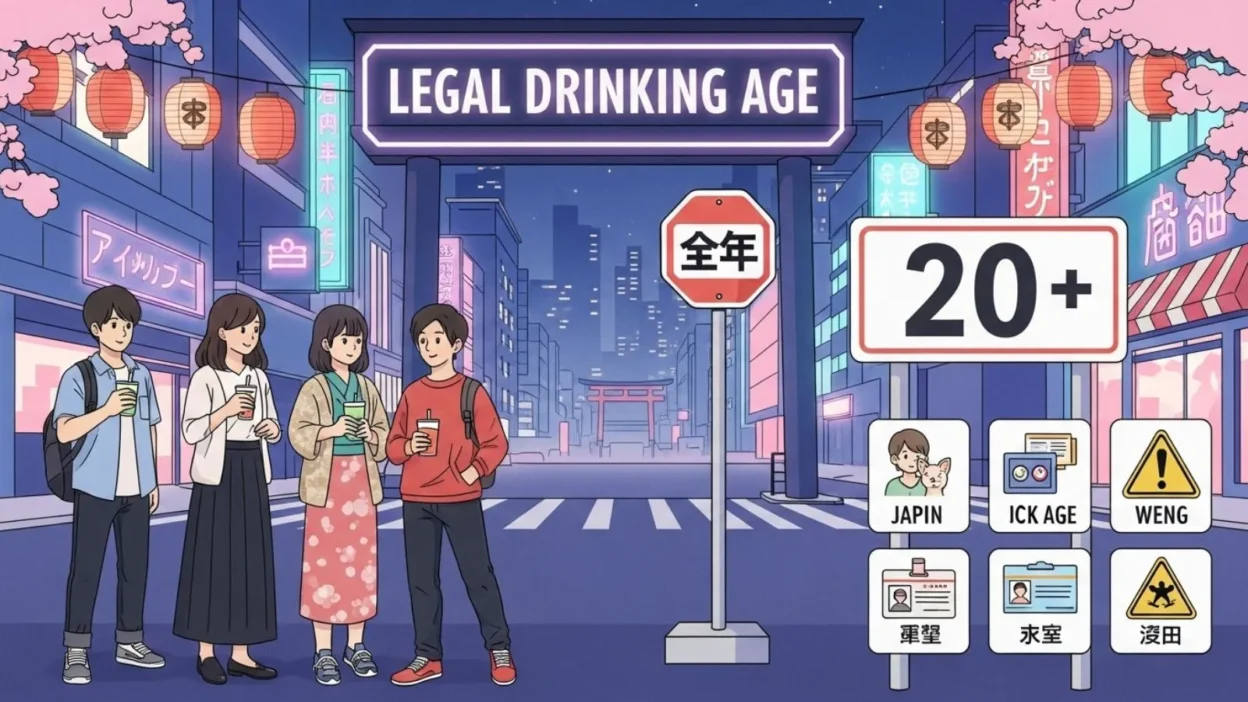
The legal drinking age in Japan is 20 years old, and this rule applies to everyone, including Japanese citizens, foreign residents, and tourists. Under Japanese law, anyone under the age of 20 is prohibited from consuming alcohol, purchasing alcoholic beverages, or being served alcohol in bars, restaurants, or other establishments. This regulation is clearly defined in the Minor Drinking Prohibition Act, which has been in place for over a century and remains strictly valid today.
It’s important to note that Japan’s drinking age is enforced nationwide, meaning there are no regional exceptions or local variations. Whether you are in a major city like Tokyo or Osaka, or in a rural town, the minimum age to legally drink alcohol remains the same. The law covers all types of alcoholic beverages, including beer, wine, sake, spirits, and ready-to-drink alcoholic cans commonly sold in convenience stores.
A common point of confusion arises because Japan lowered its age of adulthood to 18 in 2022. While this change allows 18-year-olds to vote, sign contracts, and live independently, it does not affect alcohol consumption. Drinking, smoking, and gambling laws were intentionally kept at 20 due to public health concerns and long-standing social policy.
Because alcohol is widely available in Japan, especially in convenience stores that operate 24/7, visitors sometimes assume the rules are relaxed. In reality, the law is clear: you must be 20 or older to drink alcohol in Japan, regardless of your nationality or residency status.
Drinking Age vs Adulthood Age in Japan (18 vs 20 Explained)
One of the biggest sources of confusion about the drinking age in Japan is the difference between the country’s legal adulthood age and its alcohol laws. In April 2022, Japan officially lowered the age of adulthood from 20 to 18. This change gave 18-year-olds new legal rights, such as the ability to vote, sign contracts, rent apartments, and apply for credit cards without parental consent. However, this reform did not include alcohol consumption.
Despite being legally considered adults at 18, individuals in Japan must still wait until age 20 to drink alcohol. The government made a clear decision to keep drinking, smoking, and gambling age limits unchanged. This separation exists because these activities are considered higher risk for health and social harm, particularly for younger people whose bodies and judgment are still developing.
From a legal perspective, this means an 18- or 19-year-old can live independently and make many adult decisions but can still face penalties for underage drinking. This often surprises international students and foreign residents from countries where the drinking age is lower or tied directly to adulthood.
The Japanese government also emphasized education and prevention when explaining this distinction. Officials argued that lowering the drinking age could lead to increased health risks, binge drinking, and long-term social issues. As a result, the drinking age in Japan remains firmly set at 20, creating a unique system where adulthood and alcohol consumption are governed by separate legal standards.
Why Is the Drinking Age in Japan 20?
The drinking age in Japan is 20 largely due to historical, cultural, and public health reasons. Historically, Japan set the drinking age at 20 over a century ago to protect young people from alcohol-related harm. Even as society modernized and adulthood laws changed, the government maintained the drinking age to minimize risks like underage drinking, accidents, and long-term health issues.
Culturally, alcohol in Japan is deeply tied to social rituals, work culture, and celebrations. Nomikai (drinking gatherings with colleagues) and festivals often involve alcohol, and these settings are seen as adult spaces where responsible behavior is expected. By limiting drinking to those aged 20 and above, Japan ensures that participants are considered mature enough to handle alcohol responsibly within these social contexts.
Public health considerations also play a major role. Studies show that drinking at a younger age can increase the likelihood of alcohol dependency, impaired judgment, and risky behavior. Japanese policymakers have emphasized that keeping the drinking age at 20 helps protect youth from these risks while allowing adults to engage in alcohol consumption safely.
Finally, the legal drinking age aligns with international practices in many countries that prioritize public health over the definition of adulthood. Unlike the U.S., where the drinking age is 21, Japan’s law balances cultural norms and health concerns.
In short, the drinking age of 20 is a deliberate choice rooted in history, culture, and health, ensuring that alcohol consumption in Japan remains a regulated and socially responsible activity for adults.
Drinking Laws in Japan: What the Law Actually Says
Japan’s drinking laws are clear, but they are sometimes misunderstood by locals and foreigners alike. Under Japanese law, anyone under 20 years old is prohibited from drinking alcohol, purchasing alcoholic beverages, or being served alcohol in restaurants, bars, or other establishments. The law applies equally to Japanese citizens, residents, and tourists, leaving no exceptions for foreigners.
Alcohol consumption is allowed in private and public settings as long as the individual is of legal age. Japan does not criminalize drinking in public for adults, so enjoying a drink in a park or at a festival is generally acceptable. However, minors caught drinking, or adults supplying alcohol to minors, can face fines or other legal penalties. The law also applies to vending machines, convenience stores, supermarkets, and restaurants, where staff are required to verify age before selling alcohol.
Certain alcohol-related regulations also exist, such as restrictions on the sale of alcohol to visibly intoxicated individuals and regulations for establishments serving alcohol late at night. Some regions may enforce additional rules on alcohol sales at festivals or large public events, though the nationwide age requirement remains the same.
Importantly, while alcohol is widely available in convenience stores, bars, and restaurants, staff are legally obligated to check age when there is any doubt, such as if the customer looks young. Understanding these rules helps prevent legal issues and ensures responsible drinking while respecting Japanese culture and law.
In summary, Japan’s drinking laws are strict regarding age but generally allow adults freedom to drink responsibly in public and private spaces.
Drinking Age Rules for Tourists and Foreigners
If you’re planning to visit Japan, it’s important to understand that the drinking age rules apply to everyone, including tourists and foreign visitors. The law does not make exceptions for travelers, meaning that anyone under 20 years old cannot legally drink alcohol, buy alcoholic beverages, or be served in bars and restaurants. Even if you are from a country where the legal drinking age is lower, Japan’s rules take precedence while you are in the country.
Tourists are often surprised by the strictness of age verification. Bars, izakayas, and convenience stores may ask for identification to confirm age. Acceptable forms of ID typically include a passport for foreigners or a Japanese residence card. Some establishments may be stricter than others, especially in busy nightlife districts in Tokyo, Osaka, and Kyoto. It’s always better to carry your ID when attempting to purchase or consume alcohol.
It’s also important to note that penalties for underage drinking in Japan apply regardless of nationality. If a minor is caught drinking, law enforcement may issue warnings, fines, or involve the parents or guardians if the visitor is a student. Adults who provide alcohol to minors, including tourists, can face serious legal consequences.
For tourists over 20, the process is straightforward: show your ID, and you can legally enjoy Japan’s extensive alcohol options—from sake and shochu to beer and cocktails—at stores, restaurants, and bars. Respecting these rules ensures a safe, hassle-free experience and helps visitors avoid legal issues while enjoying Japan’s drinking culture responsibly.
Buying Alcohol in Japan: Stores, Bars & Restaurants
In Japan, buying alcohol is generally straightforward for those aged 20 and above, but the process can be surprising for newcomers. Alcohol is widely available in convenience stores, supermarkets, liquor stores, restaurants, and bars, reflecting its integral role in Japanese culture. Convenience stores such as 7-Eleven, Lawson, and FamilyMart sell beer, sake, wine, and ready-to-drink cocktails 24/7, making it easy for adults to purchase alcohol at almost any time.
Bars, izakayas, and restaurants also serve alcohol freely to anyone who can provide valid ID. Many establishments in urban nightlife districts, such as Shibuya in Tokyo or Dotonbori in Osaka, may even check ID more carefully, especially during busy hours or if the customer appears young. Restaurants typically include alcoholic beverages like sake, beer, shochu, and cocktails on their menus, with prices ranging from affordable to premium depending on the venue.
Vending machines for alcohol still exist in some areas, but most require age verification through identification or a prepaid age-check card. This ensures minors cannot access alcohol easily. Similarly, some large festivals or events may have designated alcohol booths where IDs are checked rigorously.
It’s also worth noting that while alcohol is easily accessible, Japanese law prohibits selling to intoxicated individuals or to those underage. As a result, staff may refuse service if they suspect the customer does not meet legal requirements. Understanding these buying rules ensures that visitors and residents can enjoy Japan’s diverse alcohol offerings legally and responsibly, whether at a convenience store, a bar, or a traditional izakaya.
How Strictly Is the Drinking Age Enforced in Japan?
Japan is known for its orderly society and strict adherence to rules, and the drinking age of 20 is enforced carefully, though enforcement may vary depending on the context. In most cases, convenience stores, supermarkets, and restaurants check the customer’s age if there is any doubt, especially for younger-looking individuals. Staff are trained to ask for valid ID, such as a passport, Japanese residence card, or driver’s license, before selling alcohol. This ensures that underage customers cannot easily bypass the law.
Bars, clubs, and izakayas in urban centers often enforce the drinking age even more strictly. Nightlife districts like Shinjuku, Roppongi, and Dotonbori have establishments that may refuse entry to anyone who cannot provide age verification. In contrast, rural areas or smaller towns may be slightly more relaxed, but the law still technically applies, and legal liability remains for businesses that serve minors.
For tourists, enforcement can feel surprising because alcohol is so widely available. Some vending machines and festival booths may still allow alcohol purchases only after scanning an age-verification card or presenting ID. Public drinking by adults is generally allowed, but minors consuming alcohol in public can face immediate intervention by authorities.
While Japan does not have aggressive policing like some countries, the combination of cultural expectation and legal obligation ensures that underage drinking is taken seriously. Overall, anyone under 20 should be extremely cautious, and those over 20 should always carry identification when buying or consuming alcohol to avoid any legal or social issues.
Penalties and Consequences for Underage Drinking
In Japan, the penalties for underage drinking are taken seriously, and both minors and adults who break the law can face legal consequences. Anyone under the age of 20 caught drinking alcohol, purchasing it, or being served alcohol can be subject to fines, warnings, or intervention by law enforcement. While the penalties for first-time minor offenders are often mild—such as a warning or counseling—repeat offenses can lead to stricter measures.
Adults who supply alcohol to minors face more severe consequences. Businesses, such as bars, restaurants, or convenience stores, risk fines, suspension of business licenses, or even criminal charges if they knowingly serve alcohol to someone underage. Individuals providing alcohol to minors outside of commercial settings, such as friends or relatives, can also be held liable under Japanese law. This strict approach reflects Japan’s emphasis on public health and social responsibility.
Underage drinking can also have social consequences. Schools, universities, and parents may become involved if minors are caught consuming alcohol, and students may face disciplinary actions. In some cases, legal records or warnings may affect employment or educational opportunities, particularly in stricter institutions.
Although alcohol is easily accessible in Japan, these legal penalties serve as a strong deterrent for underage drinking. Tourists, international students, and residents under 20 should be aware that breaking this law can have both legal and social consequences, making compliance essential for a safe and respectful experience in Japan’s alcohol culture.
In short, underage drinking in Japan carries both legal and social risks, emphasizing the importance of respecting the 20-year-old minimum age rule.
Japanese Drinking Culture and Social Norms
Alcohol holds a unique and important place in Japanese society, shaping both social interactions and cultural traditions. Drinking is not just about consumption; it is often intertwined with work, family, and community life. One of the most well-known examples is the nomikai, or company drinking party, where colleagues gather after work to build relationships, network, and foster teamwork. Alcohol is considered a social lubricant in these settings, helping people relax and communicate more openly than they might in formal situations.
Festivals and celebrations also heavily feature alcohol. Sake, beer, and cocktails are commonly consumed during events like cherry blossom (hanami) season, New Year celebrations, and local matsuri (festivals). While these events encourage communal drinking, the law strictly prohibits anyone under 20 from participating in alcohol consumption. Even in social settings where drinking is widespread, respecting the legal drinking age is expected and culturally enforced.
Japanese society generally views alcohol responsibly; excessive drinking is discouraged outside social or ceremonial contexts. While binge drinking may occur among young adults in nightlife districts, public drunkenness is socially frowned upon. Additionally, peer pressure in Japan often encourages legal compliance—minors rarely attempt to drink in public due to the strong social norms surrounding legality and propriety.
Understanding these cultural aspects is crucial for foreigners. While alcohol is a celebrated part of Japanese life, it comes with rules and expectations. Observing the drinking age law and respecting social norms ensures a positive experience while participating in Japan’s rich and structured alcohol culture.
Can You Drink Alcohol in Public in Japan?
In Japan, public drinking is generally legal for adults aged 20 and above, which may surprise visitors from countries where public consumption is strictly prohibited. It is common to see people enjoying beer, sake, or chu-hi in parks, at cherry blossom (hanami) viewing spots, and during summer festivals. Convenience stores sell alcohol that can be consumed on-site or in nearby public areas, and local authorities typically do not intervene as long as individuals behave responsibly.
Despite its legality, there are some important social and legal considerations. Public drunkenness is culturally frowned upon, and disorderly behavior, littering, or harassment can result in police intervention. While adults can legally drink in public, minors under 20 cannot consume alcohol in any setting, including streets, parks, or public events. Law enforcement may issue fines or warnings to underage drinkers and may involve parents or guardians if minors are caught.
During large festivals or events, organizers often provide designated drinking areas with staff monitoring consumption. In some regions, authorities may enforce stricter rules during public events to maintain safety and order. Tourists should also be aware that while casual public drinking is common, excessive intoxication or disruptive behavior can attract police attention.
In summary, adults over 20 can legally drink in public in Japan, but respecting social norms and behaving responsibly is essential. Minors, however, must strictly avoid public alcohol consumption, as enforcement is taken seriously and penalties can apply even outside commercial settings.
Frequently Asked Questions (FAQs)
When it comes to the drinking age in Japan, many people have common questions, especially tourists and international students. Understanding these FAQs can help avoid confusion and ensure compliance with the law.
1. Is the drinking age in Japan 18 or 20?
The legal drinking age is 20 years old, even though Japan lowered the age of adulthood to 18 in 2022. Drinking, smoking, and gambling remain restricted to those 20 and above.
2. Can a 19-year-old drink alcohol in Japan?
No. Anyone under 20 is considered a minor under Japanese law and cannot legally drink, purchase, or be served alcohol.
3. Can tourists drink alcohol in Japan?
Yes, tourists who are 20 years or older can legally drink alcohol. They may need to show a passport or other valid ID to purchase or be served alcohol.
4. Do convenience stores check ID for alcohol purchases?
Yes. Staff are required to check identification if a customer appears young. Some stores also use electronic ID verification for vending machines.
5. Is public drinking legal in Japan?
Yes, adults over 20 can drink in public places such as parks, festivals, and streets. However, minors cannot drink in public, and excessive intoxication or disorderly behavior is socially frowned upon.
6. What happens if someone underage is caught drinking?
Underage drinkers can face warnings, fines, or legal action. Adults supplying alcohol to minors can face severe penalties.
Conclusion:
Understanding Japan’s drinking age is essential for anyone visiting, studying, or living in the country.
While the age of adulthood was lowered to 18 in 2022, the legal drinking age remains 20, a distinction rooted in public health, historical precedent, and social responsibility.
This law applies to everyone, including Japanese citizens, residents, and tourists, with strict enforcement at convenience stores, bars, restaurants, and festivals.
Alcohol plays a central role in Japanese culture, from workplace nomikai to seasonal festivals, but responsible consumption is expected.
Adults can drink in public spaces such as parks and streets, but minors are strictly prohibited from drinking anywhere.
Penalties for underage drinking can include fines, warnings, and legal consequences, and adults supplying alcohol to minors face serious repercussions.
For tourists, international students, and residents, the rules are simple: carry valid identification if you are 20 or older, respect local laws, and observe social norms.
By following these guidelines, visitors can enjoy Japan’s rich drinking culture safely and responsibly, whether savoring sake at a festival, relaxing at a bar, or buying a cold beer from a convenience store.
In conclusion, Japan’s drinking age law balances cultural tradition, public safety, and maturity, ensuring that alcohol consumption remains a responsible and respected part of Japanese life.

Jonathan Bishopson is the punmaster-in-chief at ThinkPun.com, where wordplay meets wit and every phrase gets a clever twist. Known for turning ordinary language into laugh-out-loud lines, Jonathan crafts puns that make readers groan, grin, and think twice. When he’s not busy bending words, he’s probably plotting his next “pun-derful” masterpiece or proving that humor really is the best re-word.