
Knowing your dog’s age is more than just counting birthdays—it’s essential for understanding their health, behavior, and care needs.
Many dog owners still rely on the old rule of “one dog year equals seven human years,” but modern research shows that a dog’s aging process is much more complex. Factors like breed, size, and genetics all play a role in how quickly a dog matures and ages.
This is where a dog age calculator becomes invaluable. By converting your dog’s age into human years, you can better anticipate life stages, tailor nutrition, schedule vet visits, and even adjust exercise routines.
If you have a tiny Chihuahua, a playful Labrador, or a senior Great Dane, knowing their true age in human terms helps you provide the best care possible.
In this article, we’ll guide you through how to calculate your dog’s age, explore different formulas, and share tips for every stage of your dog’s life.
How Dog Age is Calculated
For years, dog owners have relied on the simple rule that one dog year equals seven human years. While easy to remember, this formula is far from accurate. Dogs mature much faster in their early years, and the aging process varies significantly depending on breed, size, and genetics. A one-year-old dog is roughly equivalent to a 15-year-old human, not just seven, and their growth slows as they age.
Modern science now provides more accurate ways to calculate dog age. Size and breed play a critical role—small dogs like Chihuahuas and Dachshunds often live longer and mature slower, while large breeds like Great Danes and Mastiffs age more quickly and have shorter lifespans. Veterinarians often use age charts and formulas that consider these differences to estimate a dog’s “human age.”
There are generally two main methods for calculating dog age: simple formulas and detailed calculators. Simple formulas adjust the dog’s age based on size and breed, while advanced calculators factor in breed, weight, and developmental milestones. These tools give a more realistic picture of your dog’s stage in life, from puppy to senior.
Understanding how dog age is calculated is the first step in providing the right care for your furry friend. With accurate knowledge, you can anticipate health needs, plan nutrition, and enjoy a longer, healthier life together.
Dog Age Calculator Step by Step Guide
A dog age calculator is a simple yet powerful tool to help pet owners understand their dog’s age in human years. Whether you prefer an online calculator or a manual formula, knowing your dog’s “human equivalent” age can guide health care, diet, and exercise routines. Here’s how to use one effectively.
Step 1: Determine Your Dog’s Actual Age
Start by identifying your dog’s exact age in years and months. If you adopted a dog and aren’t sure of the birth date, veterinarians can estimate age based on teeth, weight, and physical development.
Step 2: Consider Breed and Size
Dog age varies widely by breed. Small dogs generally age slower, while large breeds reach senior stages faster. Most calculators ask for breed or size to adjust the age conversion accurately.
Step 3: Use a Dog Age Calculator
There are many online tools available—simply input your dog’s age and breed, and the calculator will provide the equivalent human age. Some calculators even break it down by months for puppies and detailed life stages for older dogs.
Step 4: Interpret the Results
Once you have the human age equivalent, use it as a guideline to adjust nutrition, activity, and health checkups. For example, a 7-year-old Labrador may already be entering senior stages, while a small Chihuahua of the same age is considered middle-aged.
By following these steps, you can get a realistic understanding of your dog’s age and provide care tailored to their unique needs. A dog age calculator transforms numbers into meaningful guidance for a healthier, happier life for your furry friend.
Dog Life Stage
Understanding a dog’s life stages is essential for providing the right care at the right time. Dogs, like humans, go through distinct phases, each with unique physical, mental, and nutritional needs.
Puppy Stage (0–1 Year):
This is the fastest-growing stage. Puppies develop rapidly, learning basic behaviors and social skills. Proper nutrition, vaccinations, and early training are crucial. During this stage, one dog year can equal 15 human years, reflecting the rapid development compared to adult dogs.
Adolescent/Young Adult Stage (1–3 Years):
Dogs enter adolescence, becoming more independent and energetic. They reach physical maturity but may still exhibit playful or sometimes challenging behavior. Health care should focus on maintaining weight, regular exercise, and dental hygiene.
Adult Stage (3–7 Years):
Most dogs are fully grown physically and emotionally. Energy levels stabilize, and routines become predictable. Nutrition should match activity levels, and preventive health checks become increasingly important. For larger breeds, this stage is shorter, while small breeds may remain in adulthood longer.
Senior Stage (7+ Years):
Dogs begin to show signs of aging, such as slower movement, graying fur, and reduced stamina. Senior dogs may require specialized diets, more frequent vet visits, and adjustments in exercise routines to maintain mobility and quality of life.
Knowing your dog’s life stage helps anticipate changes in behavior, energy, and health. By aligning care with their stage, you can ensure your furry friend enjoys a long, happy, and healthy life.
Dog Age by Breed and Size
Not all dogs age the same way. Breed and size are major factors in determining a dog’s lifespan and how quickly they mature. Small dogs like Chihuahuas, Pomeranians, and Dachshunds tend to live longer and age more slowly. A 7-year-old Chihuahua might still be considered middle-aged, while a large breed dog of the same age, such as a Great Dane or Mastiff, is already entering its senior years.
Medium-sized dogs, including breeds like Beagles and Cocker Spaniels, fall somewhere in between. Their aging pace is moderate, and they generally live 10–13 years. Large and giant breeds, such as Labradors, German Shepherds, and Saint Bernards, age faster and often have shorter life expectancies, usually around 8–12 years.
To simplify this, many veterinarians and pet experts use breed-specific dog age charts. These charts convert your dog’s actual age into a human-equivalent age based on size and breed, giving a more accurate picture of their development and expected lifespan. For example:
| Breed Size | 1 Year | 5 Years | 10 Years |
|---|---|---|---|
| Small | 15 | 36 | 56 |
| Medium | 15 | 38 | 60 |
| Large | 15 | 43 | 66 |
Understanding these differences helps you tailor care, diet, and exercise to your dog’s unique needs. It also allows you to anticipate age-related health issues and ensure a higher quality of life throughout your dog’s years.
Signs Your Dog is Aging
Just like humans, dogs show physical and behavioral signs as they grow older. Recognizing these signs early can help you adjust their care and ensure they remain healthy and comfortable throughout their senior years.
Physical Signs:
One of the first indicators of aging is changes in appearance. Gray hairs often appear around the muzzle and eyes. Dental health may decline, leading to tartar buildup or missing teeth. Joints and muscles also weaken over time, making movement slower or causing stiffness. You might notice your dog hesitating on stairs or taking longer walks. Vision and hearing may also deteriorate, which can affect their confidence and behavior.
Behavioral Changes:
Older dogs often show a change in temperament. They may sleep more, be less active, or become more irritable or anxious. Some dogs experience cognitive changes, such as confusion, decreased recognition of familiar people, or disrupted sleep patterns, similar to dementia in humans.
Health Indicators:
Weight fluctuations, either gain or loss, can signal aging-related health issues. Older dogs are more prone to illnesses like arthritis, kidney disease, or diabetes. Regular vet checkups are essential to catch problems early.
Recognizing these signs allows you to adjust their diet, exercise routine, and healthcare plan. For example, switching to senior dog food, providing joint supplements, or modifying daily walks can significantly improve their quality of life. By staying attentive, you can help your furry friend age gracefully and remain a happy, active companion for many years.
Why Knowing Your Dog’s Age Matters
Knowing your dog’s age is more than just a fun calculation—it plays a crucial role in their health, wellbeing, and overall quality of life. Accurate knowledge of your dog’s age helps you make informed decisions about diet, exercise, and medical care at every stage of life.
Health Care and Preventive Measures:
Understanding whether your dog is a puppy, adult, or senior allows you to schedule vaccinations, dental care, and wellness checkups appropriately. For example, senior dogs may need more frequent vet visits to monitor joint health, kidney function, and other age-related conditions.
Nutrition and Exercise:
Different life stages require different nutritional plans. Puppies need high-calorie diets to support rapid growth, adults need balanced nutrition for maintenance, and older people benefit from diets rich in joint support and lower calories to prevent weight gain. Exercise routines also change as dogs age—active play for young dogs versus gentle walks for older dogs to maintain mobility.
Behavior and Training:
Knowing your dog’s age helps anticipate changes in behavior. Puppies require patience and consistent training, adults benefit from structured routines, and older people may need accommodations for decreased mobility or cognitive changes.
Planning for Life Stages:
Awareness of your dog’s age can guide long-term planning, from creating comfortable living spaces to preparing for eventual end-of-life care. It ensures you can provide the best possible care at every stage.
In short, calculating your dog’s age isn’t just a number—it’s a roadmap for healthier living, happier companionship, and a longer, more fulfilling life for your furry friend.
Common Misconceptions About Dog Age
There are several myths and misconceptions about dog age that can mislead pet owners, affecting how they care for their furry friends. Understanding the truth is essential for providing proper health care and support throughout a dog’s life.
Myth 1: One Dog Year Equals Seven Human Years
This is the most common misconception. While it’s a simple formula, it doesn’t reflect reality. Dogs age faster in their first two years and then slow down, with variations depending on breed and size. For example, a one-year-old dog is more like a 15-year-old human, not seven.
Myth 2: All Dogs Age the Same Way
Many believe that dog age can be calculated uniformly, but small breeds often live longer than large breeds. A 10-year-old Chihuahua may be considered senior but still active, while a 10-year-old Great Dane is typically in the later stages of life. Breed, genetics, and size significantly influence aging.
Myth 3: Dogs Don’t Experience Cognitive Aging
Some owners assume older dogs don’t face mental decline. In reality, senior dogs can experience cognitive changes similar to dementia, including confusion, disrupted sleep, and decreased recognition of familiar people.
Myth 4: Age Doesn’t Affect Care Needs
Some pet owners treat senior dogs the same as adults. Aging affects mobility, metabolism, and health, requiring adjustments in diet, exercise, and medical care.
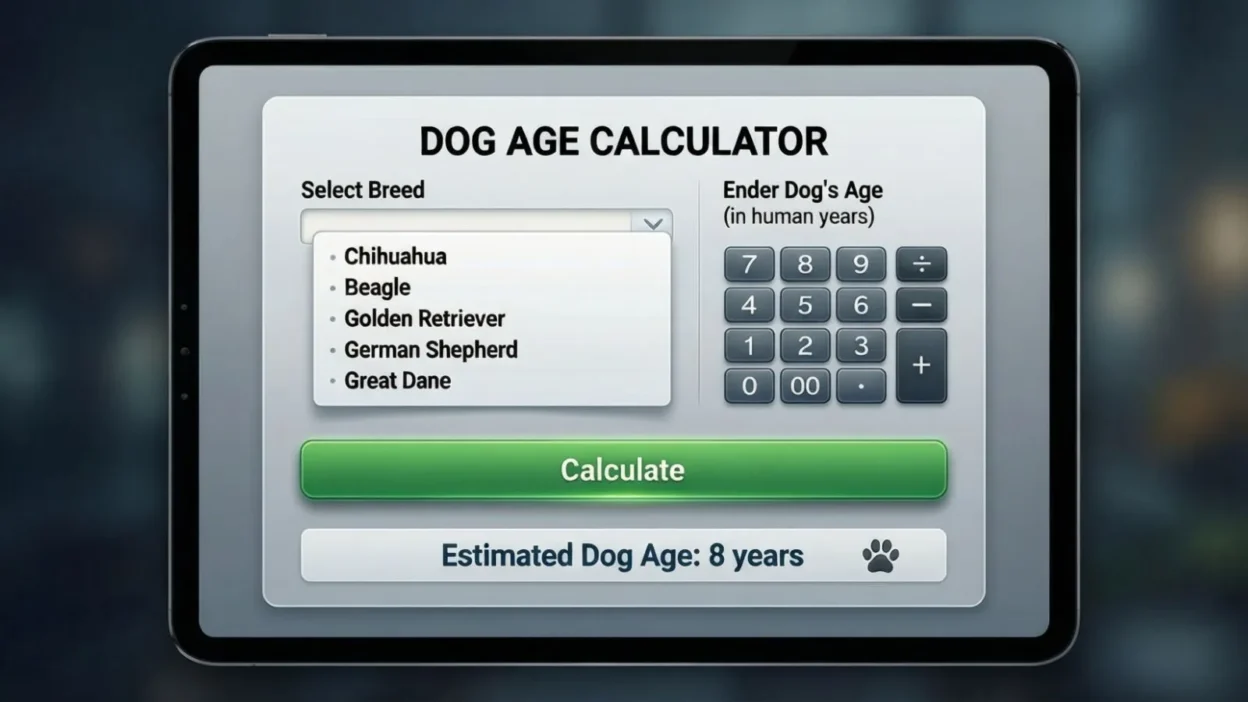
Interactive Dog Age Calculator
An interactive dog age calculator is a convenient tool that helps dog owners determine their pet’s age in human years quickly and accurately. Unlike the traditional “one dog year equals seven human years” rule, these calculators consider factors like breed, size, and developmental stage, offering a more precise estimate of your dog’s true age.
How to Use an Interactive Calculator:
- Input Your Dog’s Age:
Start by entering your dog’s age in years and months. If your dog’s exact age is unknown, a veterinarian can help estimate it using teeth, weight, and physical development. - Select Breed or Size:
Most calculators allow you to choose the breed or size category—small, medium, large, or giant. This is important because larger breeds generally age faster than smaller ones. - Get the Result:
The calculator will convert your dog’s age into human-equivalent years, often breaking it down into life stages: puppy, adult, or senior. Some advanced calculators even provide expected life expectancy based on breed and size.
Why It’s Useful:
Knowing your dog’s human-equivalent age helps you make informed decisions about nutrition, exercise, and health care. For instance, a 7-year-old Labrador might require joint supplements and more frequent vet checkups, while a 7-year-old Chihuahua may still be energetic and playful.
Tip:
Many online calculators are free and mobile-friendly, allowing you to check your dog’s age anytime. Using this tool ensures your furry friend receives age-appropriate care, promoting a longer, healthier, and happier life.
FAQs About Dog Age Calculator
Understanding your dog’s age can raise several common questions. Here are some frequently asked questions to help you care for your furry friend better.
Q1: How do I calculate my dog’s age in human years?
The traditional method multiplies your dog’s age by seven, but this is overly simplistic. A more accurate approach considers breed and size. Small dogs age slower, while large dogs age faster. Using a dog age calculator is the easiest way to get a precise estimate.
Q2: Are small dogs longer-lived than large dogs?
Yes. Small breeds, like Chihuahuas or Pomeranians, often live 12–20 years. Large breeds, such as Great Danes or Saint Bernards, usually live 8–12 years. Genetics and lifestyle also influence lifespan.
Q3: When is my dog considered a senior?
Generally, dogs are considered senior around 7 years old, but this depends on breed and size. Small breeds may not reach senior stages until 9–10 years, while large breeds may be senior by 6–7 years.
Q4: Can online calculators be trusted?
Most reputable dog age calculators are reliable, especially those based on breed-specific data and veterinary research. They provide a close approximation but may not replace individual health assessments.
Q5: Does neutering or spaying affect aging?
Spaying or neutering can influence metabolism and weight but has minimal impact on the aging process itself. It may, however, improve overall health and longevity.
Conclusion:
Knowing your dog’s age is more than just a number it’s a vital tool for ensuring a long, healthy, and happy life for your furry companion.
With the traditional one dog year equals seven human years rule being outdated, using a dog age calculator or breed specific charts provides a much more accurate picture of your dog’s true age.
Understanding your dog’s age helps you tailor nutrition, exercise, and healthcare to their specific life stage, from playful puppy to wise senior.
It also allows you to anticipate health concerns, adjust daily routines, and provide the best quality of life possible.
If you own a tiny Chihuahua, a lively Labrador, or a gentle Great Dane, knowing your dog’s human equivalent age ensures they receive age appropriate care and attention.
Start using a dog age calculator today and take proactive steps toward a healthier, happier life for your beloved pet.