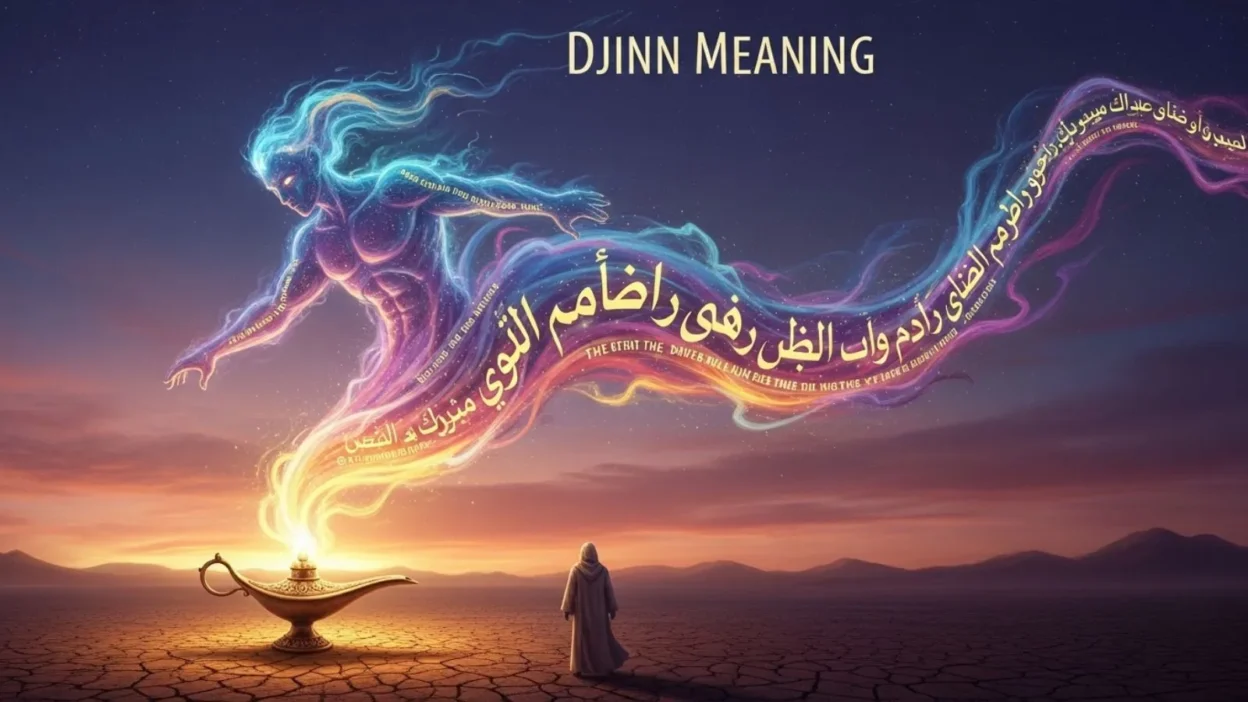
The word Djinn has fascinated people for centuries, evoking images of mysterious, supernatural beings that exist just beyond the limits of human perception.
Often described as invisible entities with extraordinary powers, Djinn hold a significant place in Islamic tradition, folklore, and mythology across the Middle East, Africa, and Asia.
Their nature is complex they can be benevolent, mischievous, or even malevolent, depending on the stories and cultural interpretations.
In modern times, Djinn have captured the imagination of writers, filmmakers, and gamers, sometimes being portrayed as magical genies who grant wishes, while other times as dark, enigmatic spirits.
Understanding the true meaning of Djinn goes beyond pop culture, revealing centuries-old beliefs about the unseen world, morality, and the forces that shape human life.
In this article, we will explore the origins, types, folklore, and cultural significance of Djinn, helping you discover what makes these mystical beings so captivating and enduring across history.
Origins of Djinn
The concept of Djinn has roots that stretch back thousands of years, long before modern depictions in films or literature. The word Djinn comes from the Arabic term Jinn, which means “hidden” or “invisible,” reflecting their unseen nature. Early beliefs about these supernatural beings existed in pre-Islamic Arabia, where they were considered spirits of the desert—powerful, unpredictable, and often associated with natural phenomena like wind, fire, or storms. People believed that Djinn could influence human affairs, bring both fortune and misfortune, and even possess individuals.
Some scholars trace the origins of Djinn to Mesopotamian mythology, where similar spirits—like the “div” or “djinniya”—were described in ancient texts as beings with supernatural abilities who lived in parallel worlds. These early myths influenced the Arabian understanding of Djinn, blending with local folklore over centuries.
With the rise of Islam, the concept of Djinn was formalized in religious texts. The Quran describes Djinn as beings created from smokeless fire, distinct from humans and angels, possessing free will and capable of moral choices. This combination of ancient folklore and religious doctrine created a rich, multi-layered understanding of Djinn that continues to evolve in culture and storytelling today.
Djinn in Islamic Tradition
In Islamic belief, Djinn hold a unique and important role in the unseen world. According to the Quran, they are beings created from smokeless fire, distinct from humans, who were created from clay, and angels, who were made from light. Like humans, Djinn possess free will, meaning they can choose between good and evil, obey or disobey God, and are accountable for their actions. This moral responsibility is a key element in understanding their behavior and place in Islamic teachings.
The Quran mentions Djinn in several verses, emphasizing that some are righteous, following God’s guidance, while others rebel and mislead humans. They can be invisible, but sometimes take physical forms, appearing as animals, humans, or even natural elements. Hadiths—sayings of the Prophet Muhammad—also describe encounters with Djinn and provide guidance on how humans should act if they encounter these beings.
In Islamic culture, Djinn are believed to inhabit remote or hidden places, such as deserts, ruins, and abandoned buildings. They are often associated with temptation, testing humans’ faith, and influencing decisions, but they are not inherently evil. Some Djinn may even help humans or remain neutral observers. Understanding Djinn in this religious context reveals that they are not just mythical creatures but also serve as symbols of moral choice, free will, and the unseen forces shaping human life.
Types of Djinn
Djinn are diverse beings with a variety of characteristics, powers, and temperaments. They are often categorized by their moral alignment, elemental associations, or specific roles in folklore. One of the simplest distinctions is good versus evil Djinn. Benevolent Djinn are said to help humans, protect travelers, or bring fortune, while malevolent Djinn may deceive, harm, or possess people, often as a test of faith or morality.
Beyond morality, Djinn are also linked to the elements. Some traditions describe fire Djinn, known for their intensity and power, air Djinn that can move swiftly and invisibly, earth Djinn associated with strength and secrecy, and water Djinn tied to emotions and mystery. This elemental classification highlights their deep connection to nature and the forces that shape the world.
Many Djinn are shape-shifters, able to appear as humans, animals, or other forms to interact with the physical world. They can also become invisible, passing unnoticed among humans. Some have special powers, including granting wishes, influencing dreams, or controlling certain aspects of the environment.
Islamic texts and folklore also mention named or specialized Djinn, such as Marid, often seen as powerful and prideful; Ifrit, known for rebellion and fire; and Jann, considered neutral or weaker spirits. Understanding the different types of Djinn helps explain their roles in stories, religious teachings, and cultural traditions, illustrating their complexity and the fascination they have inspired for centuries.
Djinn in Folklore Around the World
Djinn have left a lasting mark on folklore across multiple regions, with stories evolving differently in the Middle East, Africa, and Asia. In the Middle East, particularly in Arabian culture, Djinn are often depicted as spirits of the desert, inhabiting ruins, caves, and uninhabited lands. These tales highlight their unpredictable nature—capable of helping travelers or bringing misfortune. Stories from pre-Islamic Arabia often describe Djinn as intermediaries between humans and the unseen world, sometimes worshiped or feared for their supernatural abilities.
In African traditions, Djinn are sometimes associated with spirits of the forest, rivers, or ancestral beings. Their roles often focus on morality and justice, punishing wrongdoing or rewarding kindness. Folklore in countries like Morocco or Sudan includes tales of Djinn possessing humans or interacting with the living in mysterious ways, blending with local beliefs about spirits and magic.
In South and Southeast Asia, Djinn myths merged with local spirits and supernatural creatures. For example, in Indian folklore, some Djinn resemble elemental spirits with specific powers, while in Indonesia, they are woven into stories of hidden realms and magical interventions.
Many of these stories were popularized in classic literature, such as One Thousand and One Nights, where Djinn are central figures in moral lessons, adventures, and fantastical encounters. Despite regional variations, a common thread persists: Djinn embody the unknown, the supernatural, and the moral complexities of human life, reflecting centuries of cultural imagination and belief.
Misconceptions About Djinn
Over time, Djinn have been widely misunderstood, especially outside of the cultures where they originated. One of the most common misconceptions is equating Djinn with genies who simply grant wishes. While popularized by films like Disney’s Aladdin, this portrayal is far from the traditional belief. In folklore and Islamic teachings, Djinn are complex beings with free will, capable of good or evil, and are not obligated to fulfill human desires.
Another misconception is that all Djinn are malevolent. While some stories do describe harmful Djinn, many are neutral or benevolent. The belief that encountering a Djinn automatically brings danger is exaggerated and often influenced by cautionary tales meant to teach respect for the unseen world.
Shape-shifting and invisibility have also fueled myths. Some people believe that any unexplained occurrence must be caused by a Djinn, such as sudden illnesses or mysterious noises. Traditional teachings encourage discernment and spiritual protection rather than fear-based assumptions.
Finally, some assume Djinn exist only in Islamic culture. In reality, similar spirits exist across Middle Eastern, African, and Asian folklore, each with unique traits and cultural significance.
Understanding these misconceptions is important to appreciate Djinn as more than mystical caricatures. They represent moral complexity, cultural history, and the human fascination with forces beyond perception—far richer than the simplistic “wish-granting spirit” often depicted in modern media.
Djinn in Popular Culture
Djinn have long captured the imagination of writers, filmmakers, and gamers, evolving from traditional folklore into modern pop culture. over their moral and spiritual aspects.
Literature has also embraced Djinn as central figures. In fantasy novels, they appear as powerful supernatural allies or adversaries, sometimes reflecting their traditional traits of shape-shifting, invisibility, and elemental powers. Collections of Middle Eastern folktales, like One Thousand and One Nights, introduced Western audiences to Djinn, shaping centuries of literary fascination.
Video games and role-playing games also feature Djinn as playable characters or powerful creatures, often inspired by elemental or magical abilities. These adaptations showcase their enduring relevance in storytelling, while creative liberties sometimes blur the line between myth and entertainment.
Through modern media, Djinn continue to fascinate audiences worldwide, demonstrating how ancient folklore adapts to contemporary culture, preserving their mystique while inspiring new generations with imaginative interpretations.
Interesting Facts and Trivia About Djinn
Djinn are more than just mystical figures in stories—they carry a rich tapestry of fascinating facts and cultural trivia that highlight their enduring allure. For instance, the word Djinn itself comes from the Arabic root j-n-n, which means “to hide” or “to conceal,” reflecting their invisible and mysterious nature. This hidden quality made them ideal subjects for folklore, cautionary tales, and moral lessons.
Djinn also appear in various forms of art and literature, from intricate Islamic manuscripts to modern novels and video games. Their depiction often reflects their dual nature: some are helpful and protective, while others are mischievous or vengeful.
Another fascinating aspect is their role in moral storytelling. Many Djinn tales serve as allegories about human behavior, ethics, and consequences, teaching lessons about greed, honesty, and respect for the unseen world.
Lastly, Djinn remain part of modern paranormal culture. Some claim encounters with Djinn or use rituals and talismans for protection, showing that belief in these beings persists even in contemporary society. These facts reveal why Djinn continue to captivate the imagination, blending mystery, morality, and the supernatural in compelling ways.
How People Protect Themselves from Malicious Djinn
Throughout history, humans have developed various methods to protect themselves from malicious Djinn, reflecting a blend of religious guidance, cultural traditions, and folklore. In Islamic belief, reciting specific verses from the Quran is considered the most effective protection. Verses like Ayat al-Kursi (The Throne Verse) and the opening chapter, Al-Fatiha, are believed to create a spiritual barrier against harmful Djinn influences. Daily prayers and remembrance of God are also thought to safeguard individuals from negative supernatural interactions.
Cultural practices often include using amulets, talismans, or charms inscribed with Quranic verses or protective symbols. These objects are carried or placed in homes to ward off unwanted Djinn activity. In some regions, traditional rituals such as burning incense, reciting prayers, or performing cleansing ceremonies are common methods to remove or neutralize the presence of a malicious Djinn.
Folklore also emphasizes personal conduct as a form of protection. Being respectful of sacred spaces, avoiding places considered inhabited by Djinn, and maintaining ethical behavior are all seen as ways to minimize encounters. Stories frequently warn against tempting or mocking Djinn, as their unpredictable nature can turn playful interactions into harmful experiences.
In modern times, while belief in Djinn varies, many people continue to follow these protective practices as part of cultural heritage. Understanding these measures shows that protection against Djinn combines spiritual, moral, and practical approaches, highlighting the deep respect humans have historically held for these unseen beings.
Frequently Asked Questions (FAQ) About
1. What exactly is a Djinn?
A Djinn is a supernatural being from Arabian folklore and Islamic belief, created from smokeless fire. Unlike humans or angels, Djinn possess free will, allowing them to choose between good and evil. They are often invisible but can take various forms, including humans, animals, or elemental shapes.
2. Are Djinn evil or good?
Djinn are morally complex. Some are benevolent, helping humans or staying neutral, while others can be mischievous or malevolent. Islamic teachings emphasize that, like humans, Djinn are accountable for their actions and can be rewarded or punished based on their choices.
3. Can Djinn interact with humans today?
According to folklore and religious belief, Djinn still exist and can interact with humans. However, encounters are rare. Protective measures, such as Quranic verses, prayers, and talismans, are recommended to avoid negative interactions.
4. What is the difference between a Djinn and a genie?
The term “genie” in Western media often simplifies Djinn as wish-granting spirits. Traditional Djinn are more complex, with free will, moral responsibility, and a range of powers that extend far beyond granting wishes.
5. Are Djinn only found in Islamic culture?
No. While they are most closely associated with Islamic texts, Djinn-like spirits appear in Middle Eastern, African, and Asian folklore. Each culture interprets them differently, blending local beliefs with ancient Arabian traditions.
Conclusion
Djinn are among the most fascinating and enduring supernatural beings in human imagination.
From their ancient origins in Arabian and Mesopotamian folklore to their formal depiction in Islamic tradition, Djinn represent a world beyond human perception complex, morally nuanced, and full of mystery.
Their ability to be benevolent, mischievous, or malevolent reflects the same free will and accountability that humans possess, making them powerful symbols of morality, choice, and the unseen forces that shape life.
Across cultures, Djinn continue to captivate through stories, literature, movies, and games, adapting to modern contexts while retaining their mystical essence.
Belief in their existence has inspired both cautionary tales and practical protective practices, highlighting their deep cultural significance.
By understanding the true meaning of Djinn, readers gain insight not only into a mystical creature but also into centuries of human curiosity, morality, and imagination. Djinn remain a testament to the enduring allure of the unseen world.