
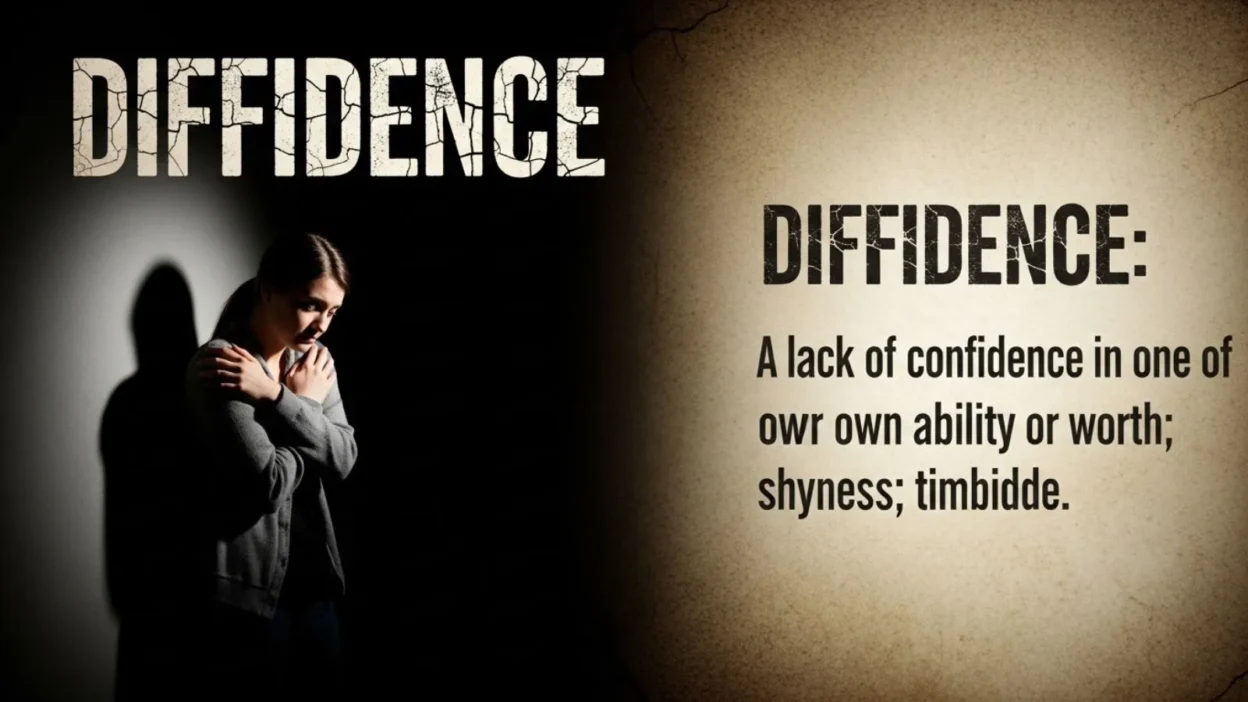
Have you ever noticed someone hesitating to speak up in a meeting, avoiding eye contact, or quietly stepping back in a social gathering? That hesitation often stems from diffidence, a word that describes a gentle form of self-doubt or shyness.
Understanding the meaning of diffidence can help you recognize these subtle behaviors in yourself and others, and even improve your communication skills.
While diffidence is sometimes confused with shyness, it has its own unique nuances it’s not just fear or insecurity, but a quiet reserve that influences how someone interacts with the world.
For students, professionals, writers, or English learners, knowing this word and its proper usage adds depth to vocabulary and enriches expression.
In this article, we’ll explore the definition of diffidence, its characteristics, examples in sentences, synonyms, antonyms, and tips to understand and overcome it in everyday life.
What Is Diffidence? (Definition & Pronunciation)
Diffidence is a noun that refers to a state of modest shyness, lack of self-confidence, or hesitancy in expressing oneself. People who exhibit diffidence often feel uncertain about their abilities or opinions, making them more reserved in social, academic, or professional situations. Unlike extreme fear or social anxiety, diffidence is a subtle and natural form of caution that influences how someone communicates with others.
The word diffidence is pronounced as /ˈdɪf.ɪ.dəns/. Breaking it down, it sounds like “dif-i-dens.” Knowing the pronunciation is essential, especially for English learners who want to use the word confidently in conversation or presentations.
For example, you might say:
- “Her diffidence prevented her from joining the debate team, even though she was very knowledgeable.”
- “Despite his diffidence, he gradually gained confidence during the group discussion.”
Understanding the meaning of diffidence goes beyond memorizing the definition; it also involves recognizing its subtle effects in real-life interactions. Diffident individuals often avoid drawing attention, speak softly, or hesitate before expressing opinions. While some may view this as shyness, diffidence carries a nuanced sense of respectfulness, caution, and awareness of social boundaries.
Characteristics of a Diffident Person
A diffident person exhibits subtle behaviors that reflect modesty, hesitation, and low self-confidence. Recognizing these traits helps in understanding both yourself and others in social, academic, or professional situations.
One key characteristic is hesitation in speaking. Diffident individuals often pause before sharing their opinions or may avoid contributing in group discussions. This is not because they lack knowledge, but because they feel uncertain or fear being judged.
Another trait is avoidance of attention. People with diffidence tend to stay in the background, avoiding situations where they might become the focus, such as public speaking or leadership roles. Their quiet nature is a way of managing social anxiety or self-consciousness.
Sensitivity to criticism is also common. Diffident individuals may take feedback personally, even if it is constructive, because they naturally doubt their abilities. They might overthink their actions or words, worrying about how others perceive them.
Other signs include politeness and reserve, which often manifest as soft-spoken behavior, careful word choice, and a tendency to yield in conversations. They may smile or nod to show agreement rather than assert their own viewpoint.
For example:
- “His diffident manner made him hesitate to voice his innovative ideas during the meeting.”
- “Despite her intelligence, her diffidence kept her from leading the group project.”
By identifying these characteristics, you can better understand the subtle nature of diffidence and learn how to support or work with someone exhibiting these traits.
Diffidence vs Shyness (Common Confusions)
Many people often confuse diffidence with shyness, but while they share similarities, there are important differences. Understanding these distinctions helps in accurately describing behavior and improving self-awareness.
Shyness is a broader term that describes discomfort or nervousness in social situations. A shy person may feel anxious around strangers, avoid social gatherings, or struggle to start conversations. Shyness can be temporary or situational and may vary in intensity depending on the environment.
Diffidence, on the other hand, specifically refers to a lack of self-confidence or hesitancy in expressing opinions, often paired with politeness and caution. While a diffident person may appear shy, their behavior is more about reserved self-expression than social anxiety. Diffidence involves conscious awareness of one’s limitations or fear of judgment, whereas shyness may not always involve self-doubt.
Here’s a quick comparison:
- Shyness: Feeling nervous or anxious in social situations.
- Diffidence: Hesitation due to lack of confidence in abilities or opinions.
For example,
A shy student may avoid raising their hand in class because they feel nervous around peers, while a diffident student may avoid answering even when they know the correct answer because they doubt their response will be valued.
Examples of Diffidence in Sentences
Seeing diffidence in action makes it easier to understand the word and use it correctly in your own writing or speech. A diffident person often shows hesitation, reservation, and polite restraint in different situations.
Everyday Examples:
- “Her diffidence kept her from joining the office discussion, even though she had valuable ideas.”
- “He spoke softly during the meeting, his diffidence making it hard for him to assert his opinion.”
Academic or Professional Examples:
- “Despite knowing the answer, the student’s diffidence prevented him from raising his hand in class.”
- “The manager noticed her diffidence but encouraged her to present her project confidently.”
Literary Examples:
- “In the novel, the protagonist’s diffidence made him step back from social gatherings, highlighting his inner insecurities.”
- “The character’s diffidence added depth to his personality, showing humility and thoughtful restraint.”
Tips for Using in Sentences:
- Use diffidence to describe cautious or reserved behavior.
- It is often paired with verbs like show, display, overcome, or reflect.
- Example: “Over time, he overcame his diffidence and became a confident speaker.”
By practicing these examples, you can recognize diffidence in others, understand its nuances, and naturally incorporate the word into your vocabulary. Using real-life and literary contexts helps make the meaning clear and memorable for readers.
Synonyms and Antonyms of Diffidence
Understanding the synonyms and antonyms of diffidence can deepen your vocabulary and make it easier to use the word accurately in different contexts.
Synonyms: These are words that share similar meanings but may carry slightly different nuances. Common synonyms of diffidence include:
- Shyness – general discomfort in social situations.
- Timidity – a sense of nervousness or fearfulness.
- Reticence – being reserved or unwilling to speak.
- Reserve – cautious self-restraint in behavior or speech.
- Modesty – humility, often paired with self-restraint.
Each synonym emphasizes a slightly different aspect of diffidence.
For example,
Rreticence highlights silence or reluctance to speak, while timidity emphasizes fearfulness. Choosing the right synonym depends on the situation.
Antonyms: These words express the opposite of diffidence, reflecting confidence and assertiveness:
- Confidence – a strong belief in one’s abilities.
- Boldness – willingness to take risks and speak up.
- Assertiveness – expressing oneself clearly and firmly.
- Courage – overcoming hesitation or fear in action.
For example:
- “Her diffidence made her avoid the spotlight, but his confidence allowed him to lead the discussion.”
By knowing both synonyms and antonyms, you can describe behaviors more precisely and use the word diffidence effectively in writing or conversation. This also helps English learners distinguish subtle differences between similar words and expand their vocabulary for academic or professional purposes.
Causes of Diffidence
Diffidence, the quiet hesitancy or lack of self-confidence, often develops due to a combination of personal, social, and environmental factors. Understanding these causes can help individuals recognize the root of their diffident behavior and work toward building confidence.
One common cause is personality traits. Naturally introverted or sensitive people may be more prone to diffidence. Their cautious approach to social interactions can make them hesitant to speak up or assert themselves.
Lack of experience or knowledge is another factor. When someone is unfamiliar with a topic or situation, they may feel unsure of themselves, resulting in diffident behavior. For example, a new employee may hesitate to share ideas during their first team meeting.
Fear of judgment or criticism also contributes to diffidence. People who worry excessively about what others think may hold back from expressing opinions or taking initiative. This self-consciousness often amplifies hesitation and avoidance.
Cultural or social factors can play a role as well. In some cultures, modesty and restraint are highly valued, which can encourage diffident behavior. Similarly, upbringing in a strict or overly critical environment may reinforce feelings of self-doubt.
Lastly, past negative experiences—such as public embarrassment or failure—can reinforce diffidence. When individuals recall these moments, they may become more cautious in similar future situations.
Recognizing these causes is the first step in addressing diffidence. By understanding why it arises, people can adopt strategies to gradually overcome hesitation, build self-confidence, and communicate more effectively in both personal and professional settings.
Effects of Diffidence
While diffidence may appear as simple shyness or modesty, it can have significant effects on personal, social, and professional life. Understanding these impacts helps individuals recognize when diffidence may be holding them back.
On Personal Life:
Diffidence can limit self-expression and prevent people from forming deeper connections. A diffident person may avoid sharing thoughts or emotions, leading to misunderstandings or feelings of isolation. Even in casual conversations, hesitation and restraint can make it difficult to assert needs or boundaries.
On Social Life:
Social situations can be challenging for those with diffidence. Avoiding attention or group activities may reduce opportunities to make friends or engage in meaningful interactions. Over time, this can create a cycle where the person feels even less confident and increasingly reserved.
On Professional Life:
In the workplace or academic settings, diffidence can affect performance and growth. Hesitation in meetings, reluctance to present ideas, or avoidance of leadership roles may result in missed opportunities for advancement. Even talented individuals may struggle to be recognized due to their reserved nature.
Emotional Impact:
Diffidence can contribute to stress, anxiety, and self-doubt. Constantly second-guessing oneself may reduce motivation and confidence. While moderate diffidence can reflect thoughtfulness and caution, excessive diffidence may interfere with personal fulfillment and success.
Tips to Overcome Diffidence
While diffidence is a natural trait for many people, it can be gradually reduced through conscious effort and practice. Here are some effective strategies to overcome diffidence and build confidence:
1. Practice Speaking in Small Groups:
Start by sharing your thoughts with close friends, family, or a supportive group. Gradually increase the audience size. This helps you gain confidence in expressing opinions without feeling overwhelmed.
2. Positive Self-Affirmations:
Remind yourself of your skills and achievements regularly. Phrases like “I am capable” or “My opinion matters” can reinforce self-belief and reduce hesitation.
3. Gradual Exposure to Challenging Situations:
Take small steps to face situations that make you nervous.
For example,
Volunteer to answer a question in class or lead a small project at work. Over time, repeated exposure can decrease anxiety and build courage.
4. Focus on Preparation:
Being well-prepared for meetings, presentations, or social events can reduce self-doubt. Knowing your material and anticipating questions or scenarios makes it easier to participate confidently.
5. Observe and Learn from Others:
Watch confident speakers or role models. Notice how they express ideas, maintain composure, and handle criticism. Apply similar techniques in your own interactions.
6. Seek Professional Support if Needed:
Sometimes, diffidence is linked to deeper anxiety or self-esteem issues. Working with a coach, mentor, or counselor can provide personalized guidance and practical exercises.
Fun Facts and Interesting Insights About Diffidence
The word diffidence has an interesting history and several unique aspects that make it a fascinating addition to your vocabulary. Its origin comes from the Latin word “diffidere”, which means “to distrust” or “to lack confidence”. This etymology highlights that diffidence is not just shyness—it reflects a subtle self-doubt or hesitation rooted in trust, or rather, a lack of it in one’s own abilities.
In literature, diffident characters are often portrayed as thoughtful, polite, and cautious, which adds depth to their personalities. For example, in classic novels, a diffident protagonist may avoid confrontations but demonstrates insight and intelligence in quieter ways. This nuance makes the term richer than simple shyness.
Diffidence is sometimes mistaken for humility, but the difference is subtle: humility is a conscious choice to remain modest, whereas diffidence is often involuntary hesitation due to self-doubt. Similarly, it differs from timidity or social anxiety, as it is more about reserved behavior and careful self-expression than fear or nervousness alone.
Interestingly, diffidence can be an advantage in certain contexts. For instance, a diffident person may be more thoughtful, considerate, and careful in decision-making, avoiding impulsive actions. Many successful writers, thinkers, and leaders have exhibited diffidence, using their reserved nature to carefully weigh ideas before acting.
Frequently Asked Questions (FAQ) About Diffidence
1. What does diffidence mean?
Diffidence refers to a lack of self-confidence or hesitation in expressing oneself. A diffident person may be reserved, polite, and cautious in social, academic, or professional situations.
2. How is diffidence different from shyness?
While both involve hesitation, shyness is a general discomfort in social situations, often due to nervousness, whereas diffidence specifically involves self-doubt and reserved expression, even when someone knows the correct answer or has a strong opinion.
3. Can diffidence be a positive trait?
Yes. Diffidence can reflect thoughtfulness, politeness, and careful decision-making. Diffident individuals may avoid impulsive actions and listen more attentively, which can be advantageous in professional and personal contexts.
4. What are some synonyms of diffidence?
Common synonyms include shyness, timidity, reticence, modesty, and reserve. Each word has a slightly different nuance, so choosing the right synonym depends on context.
5. How can I overcome diffidence?
Practical strategies include:
- Practicing speaking in small groups
- Using positive self-affirmations
- Gradual exposure to challenging situations
- Being well-prepared for social or professional interactions
- Observing confident role models
6. Is diffidence common?
Yes. Many people experience diffidence to some degree, especially in unfamiliar or high-pressure situations. With awareness and practice, it can be managed effectively.
7. How do I use diffidence in a sentence?
Example:
Despite his knowledge, his diffidence kept him from contributing during the meeting.
Conclusion
Understanding the meaning of diffidence is more than just learning a new word it’s about recognizing subtle behaviors of hesitation, modesty, and self-doubt in yourself and others.
Diffidence influences how people communicate, make decisions, and interact socially or professionally. While it can sometimes hold individuals back, it also reflects thoughtfulness, politeness, and careful consideration.
By identifying the characteristics, causes, and effects of diffidence, you can become more self-aware and develop strategies to overcome hesitation, such as practicing communication, building confidence, and gradually facing challenging situations.
Expanding your vocabulary with words like diffidence, along with understanding their synonyms and antonyms, enriches both your writing and speech.
If for personal growth, professional development, or academic purposes, learning to recognize and manage diffidence can enhance your interactions, help you express your ideas more clearly, and empower you to participate confidently in any situation.

Jonathan Bishopson is the punmaster-in-chief at ThinkPun.com, where wordplay meets wit and every phrase gets a clever twist. Known for turning ordinary language into laugh-out-loud lines, Jonathan crafts puns that make readers groan, grin, and think twice. When he’s not busy bending words, he’s probably plotting his next “pun-derful” masterpiece or proving that humor really is the best re-word.