
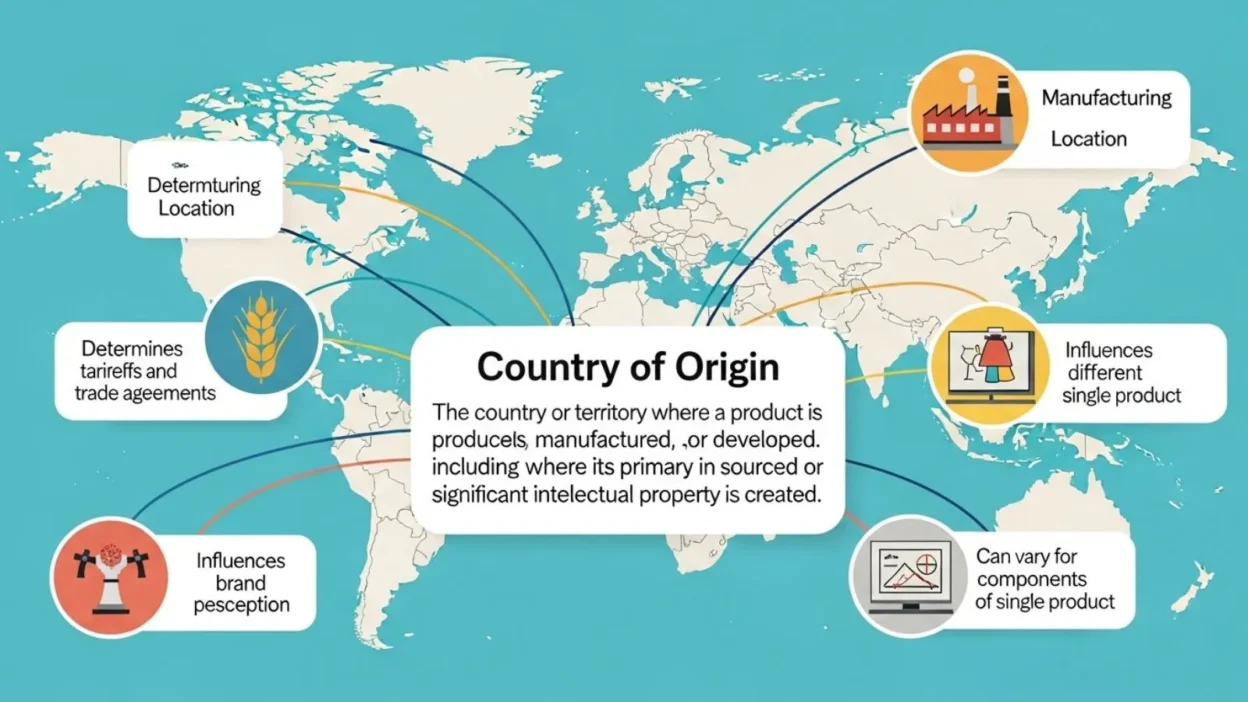
Understanding the country of origin of a product has become increasingly important for both consumers and businesses.
Simply put, the term refers to the country where a product is manufactured, assembled, or substantially transformed.
From “Made in Italy” on luxury fashion items to “Made in Japan” on electronics, the country of origin can influence consumer trust, buying decisions, and even perceptions of quality.
Beyond consumer choices, it plays a critical role in international trade, affecting import/export regulations, tariffs, and labeling requirements. For businesses, correctly indicating the origin is essential for legal compliance and maintaining brand credibility.
In a global marketplace where products often pass through multiple countries before reaching the end user, understanding product origin and its implications helps shoppers make informed decisions and ensures companies follow trade and labeling standards.
This article will explore the full meaning of country of origin, its importance, and practical examples across industries.
What Is the Country of Origin?
The country of origin refers to the nation where a product is manufactured, produced, or substantially transformed before reaching the consumer. It is often indicated on product labels with phrases like “Made in [Country]” and provides critical information about the product’s background. Understanding the country of origin is not always straightforward, especially in today’s global supply chains where raw materials and components may come from multiple countries before final assembly.
There are several key distinctions in determining origin. A product’s country of manufacture is where it is actually made, while the country of assembly refers to the location where different parts are combined into the final product. Meanwhile, the country of origin often considers where the last substantial transformation occurred—meaning the place where the product gained its essential characteristics or functionality.
For example, a smartphone may have components made in South Korea, Taiwan, and Germany, but if the final assembly happens in China, it will generally be labeled as “Made in China”. Similarly, a fashion item designed in France but produced in Bangladesh will often indicate Bangladesh as the country of origin.
Recognizing the country of origin helps consumers make informed decisions, whether prioritizing quality, authenticity, or ethical sourcing. It also ensures that businesses comply with international trade regulations and labeling laws, which are increasingly important in a globalized market.
Why Is Country of Origin Important?
The country of origin plays a significant role in shaping both consumer perception and business practices. For consumers, it often serves as a shortcut to evaluate a product’s quality, reliability, and authenticity. For instance, electronics from Japan or Germany are widely associated with precision and durability, while fashion items labeled “Made in Italy” or “Made in France” are linked to style and luxury. This perception directly influences buying decisions, brand loyalty, and even willingness to pay a premium.
From a business perspective, correctly labeling the country of origin is essential for legal compliance. Many countries enforce strict rules on origin labeling to protect consumers and prevent misleading claims. Mislabeling a product can lead to fines, recalls, and reputational damage. Moreover, accurate origin information is critical in international trade, where customs duties, tariffs, and import restrictions often depend on where a product is made.
The country of origin also affects marketing and branding strategies. Companies often highlight the origin of their products to differentiate themselves from competitors. For example, Swiss watches or Colombian coffee use their country of origin as a mark of quality and authenticity, turning the label into a powerful marketing tool.
Additionally, consumers are increasingly concerned about ethical sourcing and sustainability. Knowing the country of origin allows them to make choices aligned with their values, such as supporting fair labor practices or reducing environmental impact. Overall, understanding and clearly indicating the country of origin is essential for building trust, credibility, and transparency in today’s global marketplace.
Country of Origin in International Trade
In the context of international trade, the country of origin carries significant economic and legal implications. Governments use origin information to determine tariffs, import duties, and trade restrictions, making it a critical factor for businesses involved in cross-border commerce. For example, products from certain countries may face higher tariffs due to trade agreements, sanctions, or protective policies, while goods from preferential trade partners can benefit from reduced duties.
International organizations, such as the World Trade Organization (WTO), provide guidelines on origin determination to ensure consistency and fairness. According to WTO rules, the country of origin is typically where a product underwent its last substantial transformation—the point at which it gained its essential characteristics. This standard helps prevent disputes over origin claims and ensures that trade benefits are fairly allocated.
Accurate origin labeling is also vital for customs compliance. Importers must provide clear documentation showing where a product was made, as customs authorities can reject shipments, impose fines, or delay clearance if the information is incorrect or misleading. Additionally, origin labeling helps enforce trade regulations, such as quotas or embargoes, ensuring that only authorized goods enter a market.
For businesses, understanding international origin rules is essential not only for legal compliance but also for strategic planning. Companies can optimize their supply chains, minimize tariffs, and make informed decisions about where to manufacture or assemble products. In a globalized economy, clear and accurate country of origin information supports both regulatory compliance and competitive advantage.
How Country of Origin Is Determined
Determining a product’s country of origin can be more complex than it appears, especially in today’s global supply chains. A single product often contains components or raw materials sourced from multiple countries, making it essential to establish clear criteria for origin labeling. Authorities and trade organizations rely on a few key principles to decide the official country of origin.
One common rule is the substantial transformation principle, which states that the country where a product undergoes its last significant change, giving it new characteristics or functions, is considered the country of origin. For example, if coffee beans are grown in Brazil but roasted and packaged in Italy, the final product is generally labeled as “Made in Italy” because the roasting process transforms the raw beans into the finished product.
Another factor is the place of manufacture or assembly, which is straightforward when a product is entirely made in one country. In cases where different parts are imported and assembled elsewhere, customs authorities evaluate whether the assembly constitutes substantial transformation. If it does, the assembly country becomes the official origin; if not, the original component countries may still be recognized.
Documentation is crucial in proving a product’s origin. Businesses must maintain invoices, bills of materials, and certificates of origin to satisfy customs regulations and avoid penalties. Misrepresenting origin can lead to legal consequences, fines, or shipment delays.
Understanding how country of origin is determined ensures that businesses comply with trade laws, maintain transparency, and help consumers make informed choices about product quality, authenticity, and ethical sourcing.
Labeling and Packaging Requirements
Accurate country of origin labeling is not just a formality—it is a legal requirement in many countries. Labels help consumers identify where a product comes from, assess quality, and make informed purchasing decisions. They also ensure compliance with trade regulations and prevent misleading claims.
In most regions, the label must clearly state the country where the product was manufactured, assembled, or substantially transformed. For example, in the United States, the Federal Trade Commission (FTC) requires products marketed as “Made in USA” to be “all or virtually all” made in the country. Similarly, the European Union has strict rules for origin labeling, especially for food, textiles, and electronics, ensuring transparency for consumers across member states.
Packaging requirements often include clear placement of the origin statement, legible fonts, and sometimes additional documentation such as certificates of origin for customs clearance. Mislabeling can lead to fines, recalls, or bans from selling products in certain markets. For instance, labeling a product “Made in Italy” when it was actually assembled elsewhere can damage brand credibility and result in legal penalties.
Businesses should also consider the growing demand for ethical and sustainable labeling. Many consumers now look for origin information to assess labor practices, environmental impact, and supply chain transparency. By following proper labeling guidelines, companies not only comply with the law but also build trust, credibility, and customer loyalty in competitive markets.
Impact on Consumer Behavior
The country of origin can significantly influence how consumers perceive and choose products. Shoppers often associate specific countries with certain qualities, such as craftsmanship, durability, or style, which directly impacts purchasing decisions. For example, electronics from Japan or Germany are widely regarded for their reliability and technical excellence, while Italian or French fashion items are often seen as luxurious and high-quality.
This perception goes beyond product performance—it affects brand trust and loyalty. Consumers are more likely to buy products from countries they associate with positive attributes, and they may even pay premium prices for items from specific origins. Conversely, products from countries with reputations for lower quality may face skepticism, regardless of actual performance.
The rise of ethical consumerism has also amplified the importance of country of origin. Shoppers increasingly consider the origin to assess labor practices, environmental impact, and sustainability. Products labeled as made in countries with strong labor and environmental standards may be preferred, while goods from regions associated with unethical practices could be avoided.
Online shopping further highlights the role of country of origin. With e-commerce, consumers often rely on labels to verify authenticity, especially for international products. A clearly labeled origin not only assures quality but also reduces concerns about counterfeit goods.
Country of Origin and E-Commerce
In the digital marketplace, the country of origin has become even more critical. Online shoppers often cannot physically inspect products, making labels and origin information a key factor in trust and purchase decisions. Clearly displaying where a product is made helps consumers feel confident about its authenticity, quality, and compliance with safety standards.
E-commerce platforms and marketplaces, such as Amazon and eBay, often require sellers to provide detailed origin information. This ensures transparency and helps buyers compare products from different regions. For example, a customer purchasing electronics online may prefer items labeled “Made in Germany” over generic alternatives because of the perceived quality and reliability associated with German manufacturing.
Moreover, cross-border e-commerce introduces logistical and regulatory challenges. Accurate country of origin labeling is necessary to comply with import/export regulations, tariffs, and customs documentation. Sellers who mislabel products may face shipment delays, fines, or even account suspensions on online marketplaces.
Consumers are also becoming more conscious of ethical sourcing and sustainability. Many prefer products made in countries with strong labor laws and environmental protections. By highlighting origin, businesses can appeal to these values and differentiate themselves in a crowded online market.
For e-commerce sellers, understanding and properly communicating the country of origin is essential for building credibility, enhancing customer satisfaction, and ensuring compliance with international trade standards. Accurate labeling not only protects businesses legally but also strengthens brand trust in a global digital economy.
Case Studies & Examples
Real-world examples help illustrate the importance of country of origin in influencing consumer perception, brand credibility, and international trade compliance. One well-known example is Apple Inc. While its products are designed in the United States, many components are manufactured in countries like South Korea, Taiwan, and Germany, and final assembly occurs in China. Apple clearly labels its products to comply with customs and trade regulations, while maintaining consumer trust through transparency about quality and design.
Luxury fashion brands provide another clear example. Italian brands like Gucci or Prada emphasize their “Made in Italy” labels to highlight superior craftsmanship and heritage. This origin labeling boosts consumer confidence, supports premium pricing, and reinforces brand prestige globally. Similarly, French cosmetics brands leverage “Made in France” to signal high-quality formulations and luxury appeal, attracting discerning buyers worldwide.
In the food industry, origin labeling is crucial for authenticity and regulatory compliance. For instance, Parmigiano-Reggiano cheese must be produced in specific regions of Italy to carry its protected designation of origin (PDO). Products falsely claiming this origin face legal action and reputational damage.
Even in electronics, products labeled “Made in Germany” or “Swiss-made” communicate precision, durability, and innovation, influencing buyer decisions and allowing brands to maintain premium market positioning.
These examples show that proper country of origin labeling not only ensures legal compliance but also strengthens consumer trust, brand reputation, and market differentiation. Businesses that ignore origin labeling risk losing credibility, facing penalties, and damaging long-term brand value.
Common Misconceptions About Country of Origin
Despite its importance, there are several common misconceptions about the country of origin that can confuse consumers and even businesses. Understanding these myths helps ensure accurate labeling and informed purchasing decisions.
One frequent misconception is that “Made in” always reflects where every part of a product is produced. In reality, a product may contain components from multiple countries, but its country of origin is determined by where the last substantial transformation occurred. For example, a smartphone assembled in China using components from South Korea and Germany is labeled “Made in China”, even though most parts originated elsewhere.
Another misunderstanding is that the country of origin guarantees superior quality. While certain countries are associated with expertise in specific industries—such as Swiss watches or Italian leather goods—origin alone does not guarantee product performance. Consumers should consider both origin and actual product standards before making decisions.
Some also confuse country of assembly with country of origin, assuming the two are always the same. This is not necessarily true; assembly may not constitute substantial transformation, meaning the origin might legally remain the country where the raw materials or components were primarily made.
Finally, some businesses mistakenly believe that origin labeling is optional, especially for international shipments. In reality, mislabeling or omitting country of origin can lead to fines, shipment delays, or legal disputes with customs authorities.
Recognizing these misconceptions helps businesses comply with regulations and allows consumers to make educated choices, balancing origin information with quality, ethical standards, and product performance. Accurate understanding ensures transparency, trust, and responsible commerce.
FAQs About Country of Origin
1. What does “Made in Country” actually mean?
“Made in [Country]” indicates the country where a product was manufactured or substantially transformed. It does not necessarily reflect where all raw materials or components originated, but rather where the product gained its essential characteristics.
2. Is country of origin labeling mandatory for all products?
Most countries require origin labeling for imported and locally sold products, especially for food, electronics, textiles, and luxury goods. Requirements vary by region, so businesses must comply with local laws to avoid fines or customs delays.
3. How do customs authorities verify the origin?
Customs authorities often request documentation, such as invoices, bills of materials, or certificates of origin. These documents prove where the product was manufactured or substantially transformed, ensuring compliance with trade regulations.
4. Can a product have multiple countries of origin?
Legally, a product is generally assigned one country of origin, usually where the last substantial transformation occurred. However, components may come from multiple countries, which can be disclosed if relevant for transparency or marketing purposes.
5. Does country of origin affect product quality?
While origin can influence consumer perception—for example, Swiss watches are associated with precision—it does not automatically guarantee quality. Buyers should also consider certifications, reviews, and product standards.
6. Why is country of origin important for online shopping?
In e-commerce, consumers cannot physically inspect products. Clear origin labeling builds trust, assures authenticity, and helps buyers make informed choices regarding quality, ethics, and sustainability.
Conclusion
The country of origin is more than just a label on a product it reflects where a product was manufactured, assembled, or substantially transformed and plays a crucial role in consumer perception, trade compliance, and brand credibility.
Understanding origin helps consumers make informed choices, whether they are seeking quality, authenticity, or ethically sourced products.
For businesses, accurate origin labeling ensures legal compliance, avoids customs penalties, and strengthens trust with customers.
From luxury fashion brands emphasizing “Made in Italy” to electronics labeled according to global assembly standards, the country of origin can significantly influence marketing, pricing, and consumer loyalty.

Jonathan Bishopson is the punmaster-in-chief at ThinkPun.com, where wordplay meets wit and every phrase gets a clever twist. Known for turning ordinary language into laugh-out-loud lines, Jonathan crafts puns that make readers groan, grin, and think twice. When he’s not busy bending words, he’s probably plotting his next “pun-derful” masterpiece or proving that humor really is the best re-word.