Colorectal cancer is one of the most preventable yet serious cancers, and knowing the right colonoscopy age can make a significant difference in early detection.
A colonoscopy is a powerful screening tool that allows doctors to identify and remove precancerous polyps before they turn into cancer. ‘
Many people often wonder, When should I get a colonoscopy? The answer depends on your age, risk factors, and family history.
For average-risk adults, medical guidelines now recommend starting screenings at 45 years old, while those with higher risks may need to begin earlier.
Understanding the recommended age for colonoscopy and the frequency of screenings can empower you to take proactive steps for your health.
In this article, we’ll explore the ideal colonoscopy age, what factors influence screening schedules, and tips to ensure you get the most out of this essential procedure.
What is a Colonoscopy?
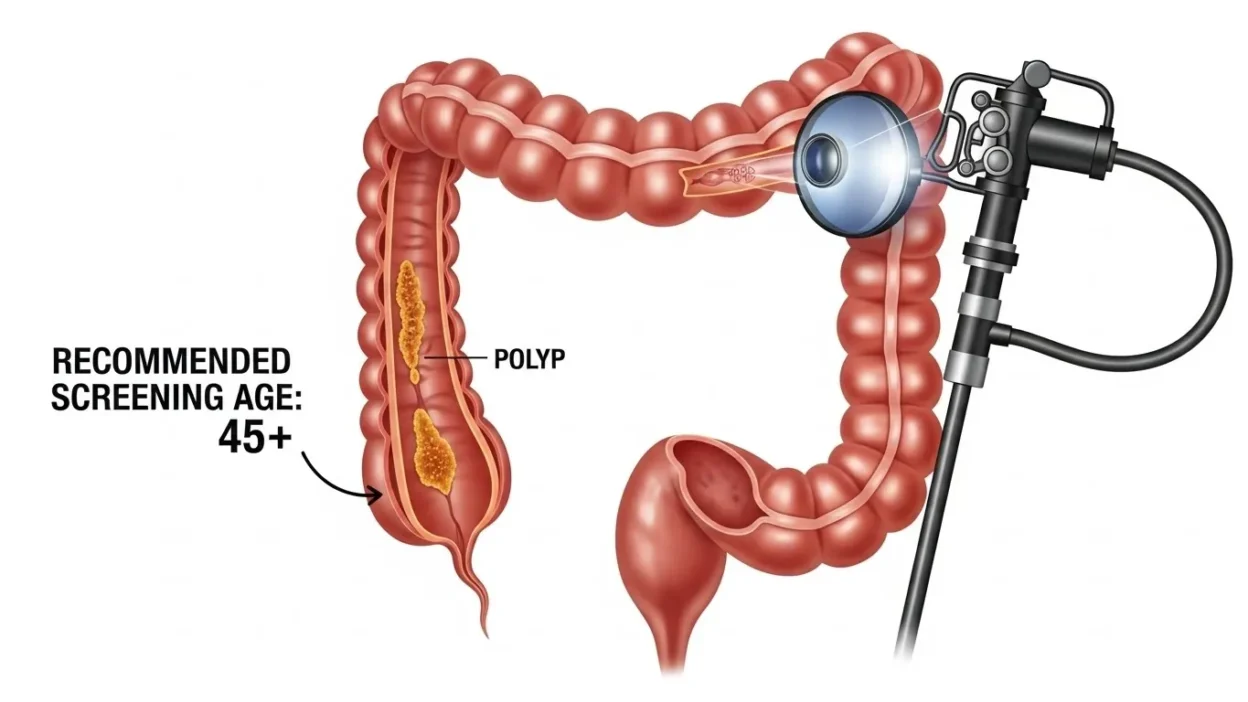
A colonoscopy is a medical procedure that allows doctors to examine the inside of the large intestine (colon) and rectum using a long, flexible tube called a colonoscope. The colonoscope has a tiny camera and light at the end, which transmits real-time images to a monitor. This procedure is widely considered the most effective method for detecting early signs of colorectal cancer and precancerous growths, such as polyps.
During a colonoscopy, the doctor can not only inspect the colon but also remove abnormal tissues or polyps immediately, reducing the risk of cancer developing in the future. The procedure typically takes 30 to 60 minutes, and patients are usually sedated to ensure comfort. Although it may sound intimidating, a colonoscopy is generally safe, with serious complications being rare.
Understanding what a colonoscopy involves is essential, especially when considering the recommended colonoscopy age. People often delay screenings due to fear or uncertainty, but early detection is crucial for prevention. By familiarizing yourself with the procedure, its purpose, and its benefits, you can approach your screening with confidence. Whether you are an average-risk adult starting at age 45 or someone with a family history needing earlier screening, knowing what a colonoscopy entails helps you take proactive steps in colon cancer prevention.
Recommended Colonoscopy Age for Average-Risk Adults
For adults with no significant family history or risk factors, understanding the recommended colonoscopy age is essential for effective colorectal cancer prevention. According to the latest guidelines from the American Cancer Society and other leading health organizations, average-risk adults should begin colonoscopy screenings at age 45. This recommendation reflects the rising incidence of colorectal cancer in younger adults and emphasizes the importance of early detection.
Once you start, the usual screening interval is every 10 years, assuming the results are normal and no polyps are found. These regular screenings allow doctors to identify and remove any abnormal growths early, significantly reducing the risk of developing colorectal cancer later in life.
It’s important to note that some individuals may wonder if waiting until 50 is acceptable. While older guidelines suggested starting at 50, research shows that beginning at 45 increases the chance of catching cancer early, especially as cases in younger adults become more common.
Understanding the right age for a colonoscopy empowers adults to take charge of their health. Routine screenings not only help in preventing cancer but also provide peace of mind. For average-risk adults, following the recommended schedule ensures that potential problems are caught early, when treatment is most effective.
Colonoscopy Age for High-Risk Individuals
Not everyone follows the same colonoscopy age guidelines. Some people are considered high-risk due to genetic factors, family history, or certain medical conditions. For these individuals, starting screenings earlier and more frequently can be life-saving.
High-risk factors include having a first-degree relative (parent, sibling, or child) with colorectal cancer or advanced polyps, inherited conditions like Lynch syndrome or Familial Adenomatous Polyposis (FAP), or a personal history of inflammatory bowel disease such as Crohn’s disease or ulcerative colitis. For most high-risk adults, medical guidelines recommend beginning colonoscopy 10 years before the youngest case of colorectal cancer in the family, or around 40 years of age, whichever comes first.
The screening frequency for high-risk individuals is typically every 3 to 5 years, depending on the specific risk factor and prior findings. This contrasts with average-risk adults, who usually undergo colonoscopy every 10 years.
Early and regular screenings for high-risk adults are crucial because colorectal cancer can develop faster in these populations. By knowing your risk level and following the recommended colonoscopy schedule, you greatly improve the chances of detecting polyps or cancer at an early, treatable stage.
Consulting a healthcare provider is essential for personalized advice, as they can assess your risk, recommend the appropriate age to start colonoscopy, and create a tailored screening plan to maximize prevention and peace of mind.
Signs You Might Need an Earlier Colonoscopy
While guidelines provide a standard colonoscopy age for screening, certain symptoms or conditions may signal the need for an earlier procedure. Recognizing these warning signs can be critical for detecting colorectal issues before they develop into serious health problems.
One of the most common indicators is blood in the stool, which may appear as bright red blood or darker, tar-like stools. Persistent changes in bowel habits, such as diarrhea, constipation, or narrowing of stools lasting more than a few weeks, should also raise concern. Additionally, unexplained abdominal pain, bloating, or cramping can be signs that further investigation is needed. Sudden weight loss without a clear cause or fatigue from anemia are other red flags that may warrant an earlier colonoscopy.
It’s important to note that these symptoms do not always indicate cancer, but they do require prompt evaluation by a healthcare provider. People with a strong family history of colorectal cancer or polyps should discuss their risk with a doctor even if symptoms are absent.
Being proactive about your health can make a significant difference. If you notice any of these warning signs or have high-risk factors, scheduling an earlier colonoscopy can help detect polyps or cancer at an early, treatable stage. Remember, early detection saves lives, and waiting for the standard screening age could delay crucial treatment.
Colonoscopy vs Other Screening Methods
While a colonoscopy is considered the gold standard for colorectal cancer screening, it is not the only option. Several alternative methods exist, each with its own advantages, limitations, and recommended usage based on age and risk factors.
One common alternative is the Fecal Immunochemical Test (FIT), which detects hidden blood in the stool. FIT is non-invasive, can be done at home, and is typically performed annually. Another option is the stool DNA test (Cologuard), which looks for genetic markers linked to colorectal cancer; it is recommended every three years for average-risk adults. Sigmoidoscopy is a procedure similar to colonoscopy but examines only the lower part of the colon and is usually recommended every five years, often in combination with stool tests.
Each screening method has pros and cons. Colonoscopy allows for the removal of polyps during the procedure and provides a full view of the colon, making it the most thorough option. However, it is invasive, requires sedation, and involves preparation. Non-invasive tests are easier to perform and more convenient but may require follow-up colonoscopy if results are abnormal.
The choice of screening method often depends on your colonoscopy age, personal risk factors, and medical history. For average-risk adults starting at 45, colonoscopy is preferred, but other methods can be suitable for those who cannot undergo the procedure or prefer less invasive options. Consulting a healthcare provider ensures you select the most appropriate screening method for your circumstances.
Risks and Benefits of Colonoscopy
A colonoscopy is one of the most effective tools for colorectal cancer prevention, but like any medical procedure, it comes with both benefits and potential risks. Understanding these factors helps individuals make informed decisions about when to undergo screening.
Benefits of colonoscopy include the early detection and removal of polyps before they become cancerous, significantly reducing the risk of colorectal cancer. It allows doctors to thoroughly examine the entire colon, identify abnormalities, and perform biopsies if needed. For high-risk individuals or those with a family history of colorectal cancer, colonoscopy can be life-saving, offering peace of mind by catching problems early when treatment is most effective.
Risks are generally low but can include minor complications such as bloating, cramping, or discomfort from sedation. Rarely, more serious issues may occur, including bleeding, perforation of the colon, or adverse reactions to anesthesia. The likelihood of complications is slightly higher for older adults or those with underlying health conditions, but overall, the procedure is considered safe.
Weighing the risks versus benefits is essential, particularly when considering the recommended colonoscopy age. For average-risk adults starting at 45, the benefits of early detection far outweigh the minimal risks. High-risk individuals may benefit even more from early and frequent screenings. Consulting with a healthcare provider can help determine the best timing, frequency, and safety measures for your colonoscopy, ensuring maximum protection for your health.
Lifestyle Factors Affecting Colonoscopy Timing
While the recommended colonoscopy age provides a general guideline, individual lifestyle factors can influence when screening should begin. Certain habits and health conditions can increase the risk of colorectal cancer, prompting doctors to recommend earlier or more frequent colonoscopies.
Diet plays a significant role. Diets high in red and processed meats, low in fiber, and lacking in fruits and vegetables have been linked to higher colorectal cancer risk. Maintaining a balanced, fiber-rich diet can help reduce risk but does not eliminate the need for timely screening.
Lifestyle habits such as smoking, excessive alcohol consumption, and sedentary behavior are also linked to higher colon cancer risk. Conversely, regular exercise and a healthy body weight can help lower risk, though they are not substitutes for recommended screenings.
Certain medical conditions, including obesity, type 2 diabetes, and inflammatory bowel disease, can increase the likelihood of developing colorectal cancer at a younger age. People with these conditions may need to start colonoscopy earlier than the standard recommended age of 45 for average-risk adults.
By considering these lifestyle factors, individuals and healthcare providers can create a personalized colonoscopy schedule. While healthy habits reduce overall risk, they do not replace the importance of following age-appropriate screening guidelines. Understanding your personal risk and making proactive lifestyle choices can complement regular colonoscopy screenings, ensuring early detection and effective colon cancer prevention.
Preparing for Your First Colonoscopy
Proper preparation is key to a successful colonoscopy. The procedure requires a clean colon so the doctor can clearly examine the intestinal walls and detect any polyps or abnormalities. Understanding the preparation process can make the experience smoother and less stressful.
A few days before your colonoscopy, your doctor may recommend a low-fiber diet to reduce residue in the colon. This means avoiding whole grains, seeds, nuts, raw vegetables, and certain fruits. The day before the procedure, patients typically follow a clear liquid diet, including water, broth, tea, coffee without cream, and clear juices. Avoid red or purple liquids, as they can interfere with visibility during the procedure.
Bowel preparation usually involves taking a laxative solution prescribed by your doctor. This may be done in split doses—part the night before and part the morning of the colonoscopy—to ensure the colon is fully emptied. Drinking plenty of fluids is essential to prevent dehydration during this process.
It’s also important to arrange transportation, as sedation is commonly used during the procedure, making it unsafe to drive afterward. Wearing comfortable clothing and bringing a list of current medications can also help streamline the experience.
By following these preparation steps carefully, you ensure that your first colonoscopy is effective, safe, and as comfortable as possible. Being well-prepared helps your doctor get accurate results and supports early detection and prevention of colorectal cancer, which is the primary goal of colonoscopy screenings.
FAQs About Colonoscopy Age
Many people have questions about colonoscopy age, screening schedules, and the procedure itself. Here are some of the most frequently asked questions to help you understand when and why to get screened.
1. At what age should I get my first colonoscopy?
For average-risk adults, experts recommend starting at age 45. Those with a family history of colorectal cancer or other high-risk factors may need to begin earlier, often around age 40 or even younger depending on individual risk.
2. How often should colonoscopy be done?
If your first colonoscopy is normal, the procedure is usually repeated every 10 years for average-risk adults. High-risk individuals may require screening every 3 to 5 years, depending on prior findings and medical guidance.
3. Can colonoscopy prevent cancer?
Yes. Colonoscopy allows doctors to detect and remove polyps before they become cancerous, making it a powerful tool for prevention as well as early detection.
4. Is colonoscopy painful or risky?
Most patients are sedated, so discomfort is minimal. Risks are rare but can include minor bleeding, cramping, or, in very rare cases, colon perforation. Overall, the procedure is considered safe.
5. What if I have a family history of colorectal cancer?
Consult your doctor to determine the best age to start colonoscopy. Screening may need to begin earlier and be performed more frequently to ensure early detection and prevention.
Conclusion:
Understanding the right colonoscopy age is a crucial step in preventing colorectal cancer and maintaining long-term digestive health.
For average-risk adults, starting screenings at 45 years old provides an opportunity to detect polyps and early-stage cancers before they become life-threatening.
High-risk individuals—those with a family history, genetic conditions, or certain medical issues—may need to begin screening even earlier and follow a more frequent schedule.
A colonoscopy is more than just a diagnostic tool; it is a preventive procedure that saves lives.
While alternative screening methods like stool tests or sigmoidoscopy exist, colonoscopy remains the most comprehensive option, allowing doctors to examine the entire colon and remove polyps immediately.
Being informed about preparation, risks, benefits, and lifestyle factors can make the procedure less intimidating and more effective.
It is equally important to recognize warning signs that may necessitate an earlier colonoscopy, such as blood in the stool, persistent changes in bowel habits, or unexplained abdominal pain.
Combining awareness of these symptoms with adherence to recommended screening schedules ensures maximum protection.
Ultimately, the key to colorectal health is proactive prevention and timely screening.
By following guidelines, consulting healthcare professionals, and making informed lifestyle choices, you can take control of your colon health and significantly reduce your risk of colorectal cancer.
Start your journey today, and prioritize your colon cancer prevention with the right screening at the right age.

Jonathan Bishopson is the punmaster-in-chief at ThinkPun.com, where wordplay meets wit and every phrase gets a clever twist. Known for turning ordinary language into laugh-out-loud lines, Jonathan crafts puns that make readers groan, grin, and think twice. When he’s not busy bending words, he’s probably plotting his next “pun-derful” masterpiece or proving that humor really is the best re-word.