Ensuring that your child is safe in the car is a top priority for every parent, and choosing the right car seat plays a crucial role in that safety.
When your child outgrows their forward-facing car seat, transitioning to a booster seat is the next step in keeping them secure.
However, knowing when it’s time to make the switch can be confusing. Is your child ready for a booster seat? What age, weight, or height should they be before transitioning?
This article aims to answer these questions and more, providing you with a comprehensive guide to understanding booster seat age, guidelines, and safety.
From when to move your child to a booster seat to how to use it correctly, we’ll cover everything you need to ensure your child is always properly protected while on the road. Let’s dive in!
What is a Booster Seat?
A booster seat is a type of child safety seat designed to lift your child so that the car’s seatbelt fits properly across their body. Unlike a forward-facing car seat with a 5-point harness, a booster seat uses the vehicle’s existing seatbelt system to secure your child. The primary goal of a booster seat is to ensure that the seatbelt fits safely and comfortably, protecting the child in the event of a crash.
There are two main types of booster seats: high-back and backless.
- High-back booster seats offer additional head and neck support, which is especially important for younger children who may not have the height or muscle development to sit properly in a car seat without back support. They are ideal for vehicles with low seatbacks or no headrests.
- Backless booster seats are lighter and more portable, making them a good choice for older children or for travel. However, they require a high seatback and headrest for optimal safety.
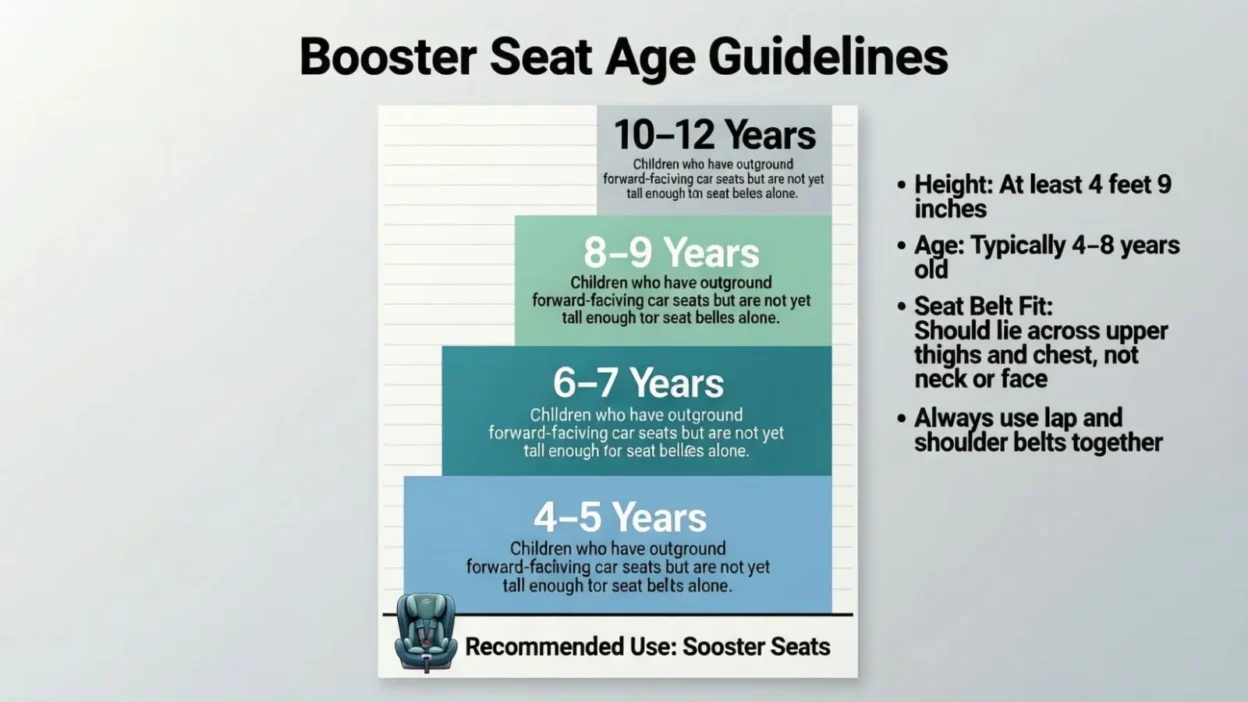
Booster seats are typically used for children between the ages of 4 and 12, though the exact age, weight, and height requirements can vary. They are essential in ensuring that the lap belt fits properly across a child’s thighs and the shoulder belt fits across the chest and shoulder, rather than the neck or face. Proper booster seat use significantly reduces the risk of injury in a crash.
Legal Guidelines and Recommendations
When it comes to booster seat usage, the laws can vary by country, state, or region, but the underlying goal remains the same: ensuring that children are properly restrained in a way that maximizes their safety. Most countries, including the U.S., Canada, and the UK, have laws that specify when a child should transition from a rear-facing car seat to a forward-facing car seat, and then to a booster seat.
In the U.S., the National Highway Traffic Safety Administration (NHTSA) recommends that children use a booster seat until they reach a height of 4’9″ (around 145 cm) and are between the ages of 8 to 12 years old. However, the exact age can vary depending on the child’s size and maturity. Many states also have laws that require children to be in a booster seat until they reach a certain age or weight (usually 4 years old and at least 40 pounds).
In addition to these laws, safety organizations like the American Academy of Pediatrics (AAP) recommend keeping your child in a booster seat until the adult seatbelt fits them properly. This means the lap belt should lie across the upper thighs, and the shoulder belt should fit across the middle of the chest and shoulder. If the seatbelt doesn’t fit properly without a booster seat, the child is still too young for a seatbelt alone.
Adhering to these guidelines not only helps parents stay compliant with the law, but also ensures the safety of their children.
When Should a Child Transition to a Booster Seat?
The decision of when to transition a child to a booster seat depends largely on their age, height, and weight. While legal guidelines and safety recommendations are helpful, every child grows at their own pace. Therefore, it’s essential to focus on the fit of the seatbelt, which is the primary indicator that a child is ready for a booster.
Generally, children are ready to transition from a forward-facing car seat with a 5-point harness to a booster seat when they reach the upper weight or height limit of their current car seat, usually around 40 pounds and 4 years old. However, the transition shouldn’t just be about meeting the weight requirement. It’s important to ensure that your child’s body size allows for proper seatbelt fit.
A booster seat is needed when the vehicle seatbelt doesn’t fit your child correctly. For a proper seatbelt fit, the lap belt should rest flat across the child’s thighs, not the stomach, and the shoulder belt should cross over the chest and shoulder, not the neck. If the seatbelt isn’t positioned properly, the child is more vulnerable in the event of a crash, as the seatbelt might not distribute crash forces effectively.
It’s crucial not to rush the transition. Even if a child meets the minimum age or weight requirements, they might not be ready for the proper fit a booster provides. Wait until both the child and the seatbelt are ready.
Signs Your Child is Ready for a Booster Seat
- Outgrowing the 5-Point Harness
If your child has reached the maximum weight or height limit of their forward-facing car seat, it’s time to consider a booster. Most forward-facing car seats with a 5-point harness are suitable for children up to 65 pounds, but once your child exceeds that, a booster seat is necessary to ensure a proper seatbelt fit. - Proper Seatbelt Fit
A key indicator that your child is ready for a booster seat is when the seatbelt no longer fits properly. The lap belt should rest securely across the upper thighs, not the stomach, and the shoulder belt should cross the middle of the chest and shoulder, not the neck or face. If the seatbelt doesn’t fit, a booster seat will ensure the seatbelt fits correctly. - Child’s Ability to Sit Properly
Your child should be able to sit upright for the entire ride without slouching or moving around. If they can sit still with their back against the seat and the seatbelt properly positioned across their body, they’re likely ready for a booster. - Maturity Level
Ensure your child has the maturity to sit properly in the booster seat without fidgeting or unbuckling the seatbelt. A child who can follow instructions and sit still is more likely to be safe in a booster seat.
The Benefits of Using a Booster Seat
- Proper Seatbelt Positioning
One of the primary functions of a booster seat is to correctly position the vehicle’s seatbelt on a child’s body. Booster seats elevate the child so the lap belt fits across the thighs instead of the stomach, and the shoulder belt fits across the chest instead of the neck. Proper belt placement is crucial for minimizing injury in the event of a crash. - Increased Safety During a Crash
According to research, children who use booster seats are less likely to be injured in a crash than those who use seatbelts alone. Booster seats help distribute crash forces more evenly across the child’s body, reducing the risk of internal injuries and ensuring that the seatbelt performs as intended. - Extended Protection
Booster seats extend the period during which a child can be safely restrained in a vehicle. Using a booster ensures that children continue to receive the safety benefits of a properly fitted seatbelt until they are large enough to use the seatbelt alone effectively. - Comfort and Security
Booster seats provide children with additional comfort and support, especially on longer trips. With the added stability, they are less likely to feel discomfort from the seatbelt or slouch during the ride, ensuring they remain properly secured.
Common Mistakes to Avoid When Using Booster Seats
- Incorrect Seatbelt Placement
One of the most common errors is improper seatbelt positioning. The lap belt should rest across the child’s upper thighs, not their stomach, and the shoulder belt should cross the middle of the chest and shoulder, not the neck. If the seatbelt is incorrectly positioned, it won’t provide the necessary protection in a crash. Always double-check that the seatbelt is positioned properly every time you buckle your child into the booster seat. - Using a Booster Seat Too Early or Too Late
Parents sometimes make the mistake of transitioning their child to a booster seat too early, before they’ve outgrown their forward-facing car seat. Conversely, some parents wait too long, even after their child has outgrown the booster seat’s height or weight limit. Both scenarios can compromise safety. Always follow the manufacturer’s guidelines for weight, height, and age. - Using a Booster Seat Without a Headrest
Backless booster seats require the vehicle’s seat to have a headrest and high enough seatback for proper support. If the car seat doesn’t have a headrest or isn’t tall enough, it can compromise the safety of the booster seat, especially during side-impact crashes. - Not Securing the Booster Seat When Not in Use
An unsecured booster seat can become a projectile during sudden stops or accidents, potentially injuring passengers. Always secure the booster seat when not in use to prevent this hazard.
Transitioning Out of the Booster Seat
- Proper Seatbelt Fit Without the Booster
The most important factor is the fit of the seatbelt. A child is ready to stop using the booster seat when the vehicle’s seatbelt fits them properly without any assistance. The lap belt should lie flat across the child’s upper thighs (not the stomach), and the shoulder belt should cross the chest and shoulder, not the neck. If the seatbelt fits correctly, it’s an indication that the child is ready for the seatbelt alone. - Height and Weight Considerations
Most children outgrow their booster seats when they reach around 4’9″ (145 cm) in height and weigh between 80 and 100 pounds. These measurements are a good guideline, but always ensure that the seatbelt fits correctly before making the transition. - Age Range
Typically, children are ready to stop using a booster seat between the ages of 8 and 12, although this can vary based on their growth. It’s essential not to rush this transition—using a booster seat ensures your child is properly protected in the event of an accident.
Frequently Asked Questions (FAQ)
- At what age can a child stop using a booster seat?
The age at which a child can stop using a booster seat varies, but most children are ready between 8 to 12 years old, depending on their height and weight. - Can a child use a backless booster seat?
Yes, a child can use a backless booster seat if they are at least 40 pounds and if the vehicle’s seat has a proper headrest and high enough back to support the child’s head in the event of a side-impact crash. Backless boosters are suitable for older children who no longer need the additional back support provided by high-back boosters. - What if my child refuses to use the booster seat?
It’s common for children to resist using a booster seat, especially if they feel they are “too old” for it. However, it’s crucial to stick to safety rules and explain why the booster seat is necessary. Encouraging children to be part of the process by choosing a booster seat they like can also help ease the transition. - Are booster seats required for older children?
Yes, booster seats are required for children until they can fit in the seatbelt properly. This usually happens once the child is 4’9″ tall. In many places, the law requires booster seat use for children who have outgrown their car seats but are still too small for the seatbelt to fit properly.
Conclusion:
Choosing the right time for your child to transition to a booster seat is an essential part of keeping them safe on the road.
By understanding the guidelines for booster seat age, weight, and height, you can make an informed decision about when it’s best to make the switch.
Proper booster seat use ensures that your child’s seatbelt fits correctly, which significantly reduces the risk of injury in the event of a car accident.
Remember, the transition to a booster seat should be based not only on age but also on whether the seatbelt fits correctly across your child’s body.
Using a booster seat too early or too late can compromise safety, so it’s important to wait until both your child and the vehicle’s seatbelt system are ready for the change.
Throughout this guide, we’ve also highlighted the benefits of booster seats, such as providing optimal seatbelt positioning, offering enhanced safety during a crash, and ensuring comfort on long trips.
However, it’s just as crucial to avoid common mistakes such as improper seatbelt placement or using the wrong type of booster seat by following the manufacturer’s guidelines and safety recommendations.

Jonathan Bishopson is the punmaster-in-chief at ThinkPun.com, where wordplay meets wit and every phrase gets a clever twist. Known for turning ordinary language into laugh-out-loud lines, Jonathan crafts puns that make readers groan, grin, and think twice. When he’s not busy bending words, he’s probably plotting his next “pun-derful” masterpiece or proving that humor really is the best re-word.