
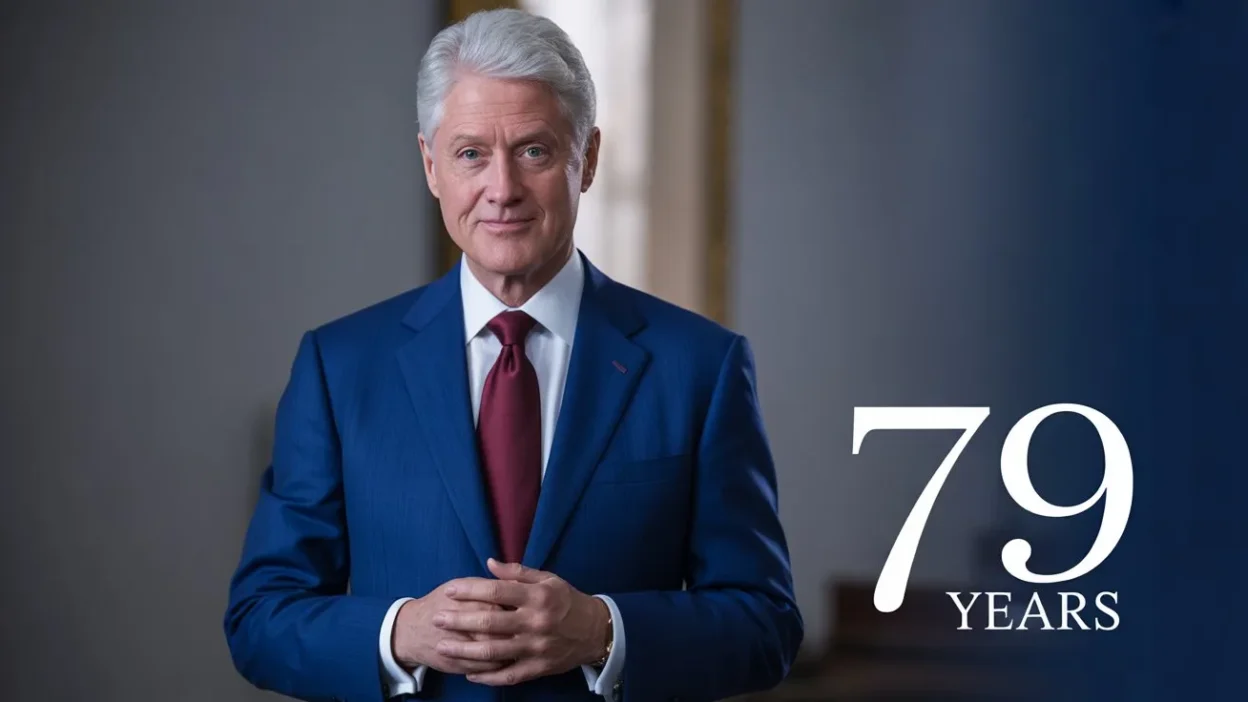
Bill Clinton’s age is a topic that continues to spark curiosity decades after his time in the White House.
As the 42nd president of the United States and one of the most recognizable political figures of the modern era.
Clinton’s life and career are often viewed through the lens of time—how young he was when he rose to power, how his presidency shaped a generation, and how age has influenced his role in public life today.
Born in the post–World War II era, Bill Clinton represents a turning point in American leadership, bridging old political traditions with a more modern, media-driven presidency.
Understanding Bill Clinton’s age is more than just knowing a number; it offers insight into his political journey, key historical moments, health milestones, and enduring legacy.
In this article, we take an in-depth look at Bill Clinton’s current age, his age during major life events, and why it remains relevant in discussions about leadership, history, and American politics today.
Bill Clinton’s Exact Age and Birth Details
Bill Clinton was born on August 19, 1946, in Hope, Arkansas, United States. As of 2026, Bill Clinton is 79 years old. His full birth name is William Jefferson Blythe III, though he later took the surname Clinton from his stepfather. Knowing Bill Clinton’s age helps place his life and leadership within a broader historical context, especially considering the era in which he was raised and came to political prominence.
Clinton was born just one year after the end of World War II, making him a prominent member of the Baby Boomer generation. This generational identity played a significant role in shaping his political image, particularly during his presidential campaign in the early 1990s, when voters viewed him as a younger, more relatable alternative to older political figures. His age symbolized a shift toward modernization in American politics, emphasizing economic growth, technological advancement, and cultural change.
Astrologically, Bill Clinton’s zodiac sign is Leo, a sign often associated with charisma, confidence, and leadership—traits frequently attributed to him by both supporters and critics. Over the years, Clinton’s age has also been a point of public discussion in relation to his health, endurance, and continued involvement in global and political affairs.
While age is often viewed as just a number, in Bill Clinton’s case it serves as a timeline marker for a life deeply intertwined with modern American history. From his youth in small-town Arkansas to becoming one of the youngest presidents of the 20th century, Clinton’s age helps frame the milestones of a remarkable political journey.
Bill Clinton’s Age Timeline: Life by Decades
Bill Clinton’s life story unfolds alongside major shifts in American history, with each decade marking an important phase in his personal and political development. Born in 1946, Clinton grew up during the 1950s in a postwar America shaped by optimism, economic expansion, and the early stages of the Cold War. These formative years in Arkansas influenced his values, work ethic, and interest in public service.
In his 20s, Clinton began to distinguish himself academically and politically. He attended Georgetown University, studied as a Rhodes Scholar at Oxford, and later earned a law degree from Yale University. During this period, he also met Hillary Rodham, setting the foundation for one of the most influential political partnerships in modern U.S. history.
By his 30s, Clinton had already entered high-level politics. At just 32 years old, he was elected Governor of Arkansas, becoming one of the youngest governors in the country. This early success highlighted his political ambition and ability to connect with voters despite his young age.
Clinton entered the national spotlight in his 40s. At 46, he was elected President of the United States, representing a generational shift in leadership. His presidency throughout his late 40s and early 50s was defined by economic growth, welfare reform, and major international engagements.
In his 60s and 70s, Clinton transitioned into a global statesman and humanitarian. His age has brought greater focus on philanthropy, diplomacy, and mentoring future leaders, demonstrating how each stage of his life has contributed to a lasting public legacy.
How Old Was Bill Clinton During Key Historical Moments?
Bill Clinton’s age provides valuable context for understanding the significance of the major events that defined his political career. When he was elected President of the United States in 1992, Clinton was 46 years old, making him one of the younger presidents elected in the modern era. His relative youth at the time symbolized a generational change in leadership and helped him connect with younger voters seeking new ideas and energy in Washington.
Clinton was 47 years old when he was inaugurated in January 1993, beginning his first term as the 42nd president. During his presidency, which lasted until 2001, he governed through his late 40s and early 50s. At 50 years old, Clinton won reelection in 1996, reinforcing public confidence in his leadership during a period of economic growth and declining unemployment.
One of the most challenging periods of his presidency occurred in 1998, when Clinton was 52 years old, during the impeachment proceedings related to the Monica Lewinsky scandal. His ability to remain in office despite intense political pressure demonstrated resilience during a critical moment of national scrutiny.
When Clinton left the White House in January 2001, he was 54 years old. This relatively young age allowed him to remain active in public life for decades after his presidency. In the years that followed, Clinton used his experience and global recognition to focus on humanitarian efforts, international diplomacy, and public speaking.
By examining Bill Clinton’s age at these pivotal moments, it becomes clear how timing, maturity, and experience played key roles in shaping both his presidency and his enduring influence on American and global affairs.
Bill Clinton’s Age Compared to Other U.S. Presidents
Bill Clinton’s age has often been a point of comparison when discussing presidential leadership in the United States. When he was inaugurated in 1993 at the age of 46, Clinton stood out as one of the youngest presidents of the 20th century. At the time, his age represented a clear generational shift from his immediate predecessor, George H. W. Bush, who was 68 years old when he took office. This contrast helped define Clinton’s image as a fresh, energetic leader focused on modernization and change.
Historically, only a few U.S. presidents have been younger at inauguration. Theodore Roosevelt became president at 42, while John F. Kennedy was 43 when inaugurated in 1961. Clinton’s age placed him among this small group of relatively young presidents, reinforcing public perceptions of vitality and adaptability during his time in office.
When compared to more recent presidents, Clinton’s age at inauguration appears even more notable. Barack Obama was 47 when he assumed office, just slightly older than Clinton, while Donald Trump was 70, and Joe Biden was 78 at their respective inaugurations. These comparisons often resurface in political discussions about age, experience, and fitness for office.
Clinton’s presidency occurred during a period when Americans increasingly valued generational representation in leadership. His age allowed him to bridge traditional political structures with emerging cultural and technological changes of the 1990s. In this way, Bill Clinton’s age not only distinguished him among U.S. presidents but also became a defining feature of his political identity and historical legacy.
Bill Clinton’s Health and Aging
As Bill Clinton has aged, public attention has increasingly focused on his health and overall well-being. Like many public figures of his generation, Clinton has faced several well-documented health challenges over the years, particularly as he entered his late 50s and 60s. In 2004, at the age of 58, he underwent quadruple bypass heart surgery, a major medical event that drew widespread attention and sparked discussions about lifestyle and aging among former leaders.
Following this procedure, Clinton made significant changes to his diet and daily habits. He publicly adopted a plant-based diet and became an advocate for healthier living, often speaking about the importance of prevention and personal responsibility when it comes to heart health. These changes were widely viewed as proactive steps toward managing the effects of aging and maintaining an active public life.
In 2010, Clinton faced another health scare at the age of 64, when he required treatment for blocked coronary arteries. Despite these setbacks, he continued to maintain a demanding schedule that included international travel, public speaking engagements, and humanitarian work through the Clinton Foundation.
As he moved into his 70s, Clinton appeared to slow his pace slightly, focusing more on advisory roles and select public appearances. Nevertheless, he remains mentally sharp and socially engaged, often appearing at major political events and global forums. His approach to aging has shaped public perception, presenting him as a figure who acknowledges physical limitations while continuing to contribute meaningfully to public discourse.
Bill Clinton’s health journey highlights how aging leaders adapt over time, balancing experience with self-care while remaining relevant in public life.
Bill Clinton’s Age and Public Life Today
At 79 years old in 2026, Bill Clinton remains an active figure in both political and humanitarian spheres. Though he is no longer in elected office, his age has not diminished his influence or visibility. Through the Clinton Foundation, he continues to champion global initiatives related to health, economic development, and climate change. His ongoing work demonstrates how a former president can leverage decades of experience to impact international and domestic affairs, even long after leaving the White House.
Clinton also participates in high-profile speaking engagements, offering insight into politics, policy, and diplomacy. Despite the demands of travel and public appearances, he adapts his schedule to reflect the natural considerations of aging, balancing activity with rest. Observers note that his energy and engagement remain remarkably strong for someone in their late 70s, though his public presence is more selective compared to his younger years in office.
Age has also shaped Clinton’s role as a mentor and advisor to emerging political leaders. He frequently collaborates with global figures, providing guidance on complex policy matters while drawing on decades of experience in governance. This has cemented his position as a respected elder statesman.
Public perception of Clinton today blends nostalgia with admiration. His age serves as a lens through which many reflect on both his presidential legacy and the passage of time in American politics. By remaining active and influential at 79, Bill Clinton demonstrates that leadership and relevance do not necessarily fade with age but evolve with it.
Bill Clinton and Hillary Clinton: Age Comparison
Bill and Hillary Clinton are one of the most high-profile political couples in modern American history, and their ages have often been a topic of public interest. He was born on August 19, 1946, is 79 years old in 2026, while Hillary Rodham Clinton, born on October 26, 1947, is 78 years old. The one-year age difference has sometimes been highlighted in media coverage, but it also reflects their shared generational experiences and perspectives on American politics.
Both Clintons grew up during the post-World War II era, a period that shaped their early values, education, and ambitions. Despite being close in age, their paths converged at Yale Law School, where they met in the late 1960s. Their similar age allowed them to experience key political and cultural shifts together, from the social movements of the 1960s and 1970s to the evolving political landscape of the 1990s.
Age has also influenced how the Clintons engage with public life today. At 79 and 78, Bill and Hillary continue to participate in public speaking, philanthropy, and political advocacy, though with a more measured pace compared to their earlier years in active politics. Their ages give them a combined perspective that spans multiple decades of American history, making them respected voices on both domestic and international issues.
Ultimately, while their ages are just a number, they reflect shared experience, longevity in public service, and the ability to adapt to evolving roles over time. The Clintons’ age comparison underscores not only their personal bond but also their enduring relevance in global and American affairs.
Why Bill Clinton’s Age Still Sparks Interest
Bill Clinton’s age continues to capture public attention because it is closely tied to his enduring legacy, historical significance, and ongoing influence in politics and global affairs. As the 42nd president of the United States, Clinton led the country during a period of economic prosperity, technological advancement, and complex international challenges. People naturally wonder how his age reflects both the experience he brings and the time that has passed since his presidency.
Age also highlights the human side of a figure often seen as larger than life. Observers are curious about how Clinton’s health, energy, and lifestyle have evolved over the decades, especially given his active post-presidency work. At 79 years old, Clinton is still visible on the global stage, engaging in humanitarian work through the Clinton Foundation, attending political events, and mentoring younger leaders. This longevity in public life invites discussion about how former presidents remain relevant as they age.
Cultural fascination with aging leaders also plays a role. Clinton represents a bridge between generations: a leader who was young and dynamic in the 1990s but now embodies experience and historical perspective. Comparing his age with other presidents and public figures sparks conversation about leadership, vitality, and generational change.
Finally, age intersects with nostalgia. Many who lived through Clinton’s presidency view him as a symbol of a particular era in American politics, and knowing his current age allows people to reflect on the passage of time and the evolution of national and global events since he first entered office. Clinton’s age, therefore, is not just a number—it is a lens through which history, politics, and personal legacy are explored.
Fun & Lesser Known Facts About Bill Clinton’s Age
Bill Clinton’s age is more than a simple number—it’s linked to interesting and sometimes surprising facts that reflect both his life and the era he grew up in. For example, Clinton was born in 1946, placing him among the first wave of the Baby Boomer generation, a group often associated with postwar optimism and cultural change in America. This generational identity shaped not only his worldview but also his political approach, emphasizing youthful energy and modernization during his presidential campaigns.
A lesser-known fact is that Clinton was just 32 years old when he first became Governor of Arkansas, making him one of the youngest governors in U.S. history. Similarly, at 46, he became president, which positioned him as a youthful leader in contrast to older, more traditional politicians of his time. His relatively young age during these key milestones contributed to his reputation as a dynamic and ambitious figure.
Clinton’s age also intersects with pop culture. He was in his 40s during the height of the 1990s tech boom and cultural shifts, making him a president who often resonated with younger voters. Another fun fact: Clinton shares his birth year, 1946, with other notable figures such as Donald Trump and George W. Bush’s contemporary colleagues, highlighting how his age situates him within a unique political and historical cohort.
Finally, Clinton’s ongoing involvement in global initiatives at nearly 80 years old demonstrates that age has not slowed his energy or public influence, making him a rare example of longevity and continued relevance in American and international affairs.
Frequently Asked Questions
1. How old is Bill Clinton now?
As of 2026, Bill Clinton is 79 years old. He was born on August 19, 1946 in Hope, Arkansas.
2. When was Bill Clinton born?
Bill Clinton was born on August 19, 1946, making him part of the Baby Boomer generation.
3. How old was Bill Clinton when he became president?
Clinton was 46 years old when he was elected president in 1992 and inaugurated in January 1993.
4. How old was Bill Clinton when he left office?
He left the White House in January 2001 at the age of 54, after serving two terms as the 42nd U.S. president.
5. How old was Bill Clinton during the impeachment proceedings?
During the impeachment in 1998, Clinton was 52 years old.
6. Is Bill Clinton older than Donald Trump?
No, Bill Clinton was born in 1946, while Donald Trump was born in 1946 as well, but Clinton’s birthday in August makes him slightly older by a few months.
7. How old is Hillary Clinton compared to Bill Clinton?
Hillary Clinton was born on October 26, 1947, making her 78 years old in 2026, about one year younger than Bill Clinton.
8. How old was Bill Clinton when he became governor of Arkansas?
Clinton was 32 years old when he first became governor, one of the youngest in U.S. history.
9. Why is Bill Clinton’s age still a topic of interest?
People are curious about his age because it frames his legacy, health, public appearances, and continued influence in politics and humanitarian work, even decades after his presidency.
Conclusion:
Bill Clinton’s age is more than just a number—it serves as a lens through which we can understand his life, leadership, and lasting influence.
Born in 1946, Clinton rose from a small-town upbringing in Arkansas to become one of the youngest U.S. governors and, later, the 42nd president at 46 years old.
His age during key moments, from his election to the White House to the impeachment proceedings and beyond, reflects not only his personal journey but also the generational shifts in American politics.
Today, at 79 years old, Clinton continues to make an impact through global humanitarian work, public speaking, and mentoring emerging leaders.
His longevity in public life highlights how age can coexist with relevance, energy, and influence.
Comparing his age to other presidents and to his wife, Hillary Clinton, provides further insight into the era he represents and the historical milestones he has witnessed.
Ultimately, Bill Clinton’s age reminds us that leadership, legacy, and public service are lifelong pursuits.
It allows us to reflect on the past, appreciate the present, and consider the ways in which experience, wisdom, and resilience continue to shape our world.
Understanding Clinton’s age is, therefore, not just about numbers it’s about the story of a life intertwined with modern history.