
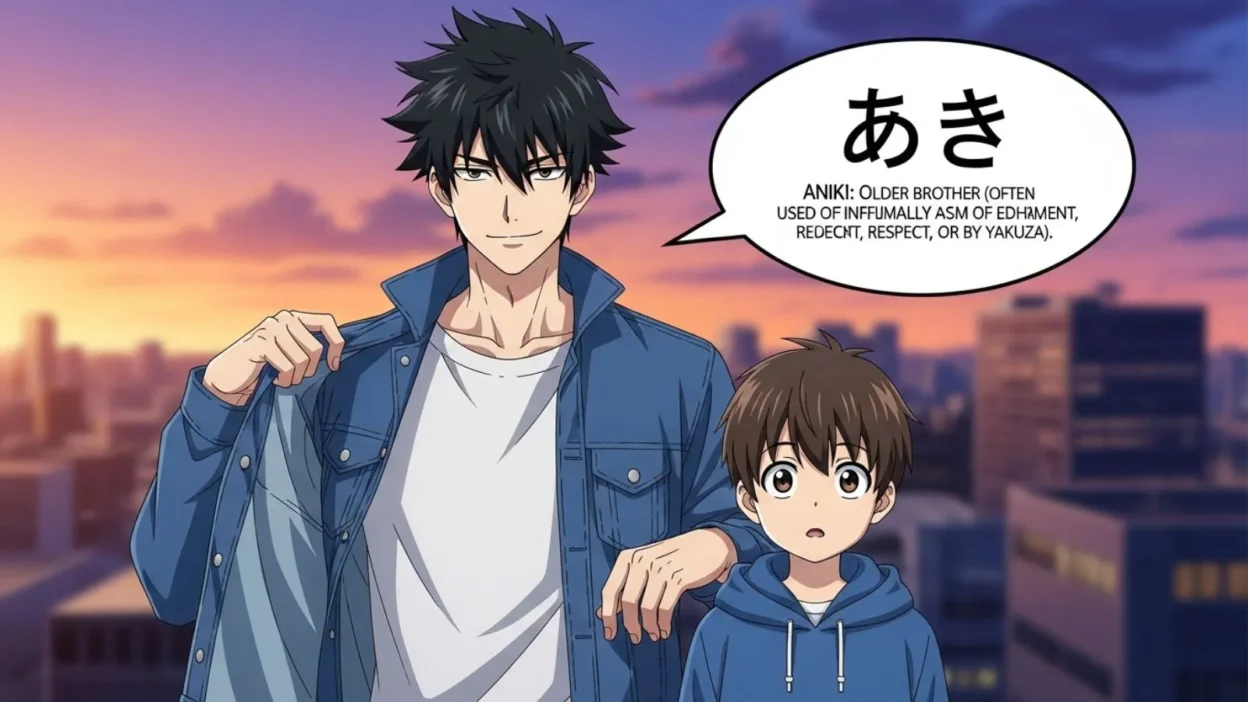
The word “Aniki” is one of the most popular Japanese terms that has spread globally through anime, manga, and online culture many people hear this word in shows or social media but are still unsure about its real meaning.
In Japanese,Aniki” (兄貴) literally refers to an older brother, but its usage goes far beyond family relationships. It is often used to show respect, loyalty, and admiration toward a senior male figure, leader, or someone considered strong and reliable.
In 2026, with the massive growth of anime fandom and Japanese pop culture worldwide, searches for “Aniki meaning” have increased significantly. People want to understand not just the translation, but also the cultural depth behind it.
This article will explain the true meaning of Aniki, how it is used in real life and anime, and why it carries such powerful emotional and social significance in Japanese language and culture.
🟡 What Does Aniki Mean in Japanese?
The word “Aniki” (兄貴) in Japanese is most commonly translated as “older brother.” However, its meaning is not limited to biological family relationships. In everyday usage, “Aniki” is a respectful and slightly informal term used to refer to an older male who is seen as strong, experienced, or in a leadership position. Unlike the more polite word “Oniisan,” which is used in formal or neutral situations, “Aniki” carries a deeper emotional tone of loyalty, trust, and brotherhood.
In Japanese culture, language often reflects social hierarchy, and “Aniki” is a perfect example of that system. It is frequently used among close-knit groups such as friends, sports teams, or traditional organizations where respect and seniority are important. The word can also express admiration for someone who protects or guides others, almost like a mentor or big-brother figure.
In anime and manga, “Aniki” is often used to highlight strong emotional bonds between characters. A younger character might call a respected senior “Aniki” to show loyalty or dependence. This usage has helped the word become popular worldwide, especially among anime fans.
Interestingly, “Aniki” can also appear in more intense settings, such as action dramas or yakuza-themed stories, where it may refer to a powerful leader or boss figure. Despite the different contexts, the core idea remains the same: respect for someone older, stronger, or more experienced.
Overall, “Aniki” is more than just a translation of “older brother”—it represents a cultural idea of respect, hierarchy, and emotional connection in Japanese society.
🟡 Origin of the Word “Aniki”
The word “Aniki” (兄貴) has deep roots in the Japanese language and culture. It is formed from two parts: “Ane / Ani (兄)”, which means older brother, and a suffix that adds a sense of familiarity and respect. Over time, the term evolved from a simple family reference into a broader expression used in social relationships beyond blood ties.
Historically, Japanese society has been strongly influenced by hierarchy and respect for seniority. Because of this structure, words like “Aniki” naturally developed to describe not just family members, but also respected individuals within groups or communities. It became a way to recognize someone who is older, more experienced, or holds a leadership position.
During earlier periods in Japan, especially in traditional communities and organized groups, younger members would use “Aniki” to address senior figures who guided or protected them. This usage created a strong emotional bond, similar to a mentor-student or big brother–little brother relationship.
As Japanese media expanded globally, especially through anime, manga, and films, the word “Aniki” gained international attention. Many viewers first encountered it in action or crime-related stories, where it was often used to address powerful or respected male characters. This exposure helped the term spread beyond Japan and become part of global pop culture vocabulary.
Today, “Aniki” carries both its traditional meaning and modern cultural significance. It reflects Japan’s linguistic emphasis on respect, hierarchy, and emotional connection between individuals.
🟡 “Aniki” in Anime and Manga Culture
In anime and manga, the word “Aniki” is widely used to show strong emotional bonds, respect, and loyalty between characters. It is especially common in stories that involve friendship groups, rivalries, or hierarchical teams where seniority plays an important role. When a younger character calls someone “Aniki,” it usually means they see that person as a trusted leader, protector, or big-brother figure rather than just an ordinary senior.
Anime has played a huge role in making this word popular worldwide. Many fans first hear “Aniki” in action, drama, or crime-themed series where characters live by codes of honor and loyalty. In such settings, “Aniki” is often used to address a strong and respected figure who leads others with confidence and authority. This usage gives the word a powerful emotional tone that goes beyond simple family meaning.
In some anime, “Aniki” is also used to show deep admiration and respect between close allies. It can express a sense of belonging, as if someone is part of a “brotherhood.” This makes the term feel more emotional and impactful for viewers, especially when characters rely on each other during difficult situations.
Because of anime culture, “Aniki” has now become part of global internet slang. Fans sometimes use it jokingly or seriously when referring to someone they admire or consider a “leader” in a group. However, its original meaning in Japanese culture is still rooted in respect, hierarchy, and strong personal connection, which is why it remains such a powerful and meaningful word today.
🟡 Is “Aniki” Only Used for Brothers?
Although “Aniki” (兄貴) literally means “older brother,” it is not limited to family relationships in real usage. In Japanese communication, the word has a much broader and more flexible meaning depending on context. While it can refer to a biological older brother, it is more commonly used to describe a respected senior male figure who holds authority, experience, or leadership within a group.
In many social settings, “Aniki” is used to show respect toward someone who is seen as a guide or protector. This could be a senior colleague, a mentor, or even a close friend who is more experienced and takes responsibility for others. The emotional tone behind the word is important—it reflects trust, admiration, and a sense of belonging, almost like calling someone a “big brother” in spirit rather than blood relation.
However, the usage of “Aniki” can also vary depending on the environment. In casual or close-knit groups, it expresses friendship and loyalty. In more intense contexts, such as certain action dramas or organized group settings in media, it can symbolize hierarchy and authority, where the “Aniki” is seen as a leader figure.
It is also important to understand that “Aniki” is not a formal polite term like “Oniisan.” Instead, it carries a more informal, emotional, and sometimes even masculine tone. Because of this, it is usually used among people who already share a close or familiar relationship.
Overall, “Aniki” goes far beyond the meaning of “brother.” It represents respect, experience, and emotional connection in Japanese culture.
🟡 Difference Between “Aniki” and “Oniisan”
In Japanese, both “Aniki” (兄貴) and “Oniisan” (お兄さん) are related to the idea of an older brother, but they are used in very different ways depending on tone, politeness, and social context. Understanding the difference is important for correctly interpreting Japanese language and culture.
“Oniisan” is the more formal and polite term. It is commonly used in everyday conversation when speaking about or addressing an older brother in a respectful and neutral way. It can also be used for any young man in a polite setting, such as a shop assistant or stranger. Because of its soft and polite tone, “Oniisan” is widely used in both family and public situations.
On the other hand, “Aniki” carries a more informal, emotional, and strong tone. It is not typically used in formal conversation. Instead, it is used within close relationships or hierarchical groups where respect is based on experience, strength, or leadership. “Aniki” often expresses loyalty, admiration, and brotherhood, making it feel more personal and powerful than “Oniisan.”
Another key difference is emotional intensity. While “Oniisan” is calm and respectful, “Aniki” feels more energetic and symbolic. In anime, for example, “Aniki” is often used when a character deeply respects a senior figure or leader, while “Oniisan” is used in everyday family dialogue.
In summary, “Oniisan” is polite and general, while “Aniki” is strong and emotional. Both words mean “older brother” in a basic sense, but their usage reflects different levels of closeness, respect, and social hierarchy in Japanese culture.
🟡 Is “Aniki” a Respectful Word?
The word “Aniki” (兄貴) is generally considered a respectful term in Japanese, but its level of respect depends heavily on the situation and relationship between the speakers. At its core, “Aniki” is used to show admiration, loyalty, and recognition of someone’s seniority or strength, especially in informal or close-knit environments.
In many cases, calling someone “Aniki” is a sign of deep respect and trust. It suggests that the person is viewed as a leader, protector, or mentor-like figure. This is why it is often used among friends, group members, or in storytelling contexts where emotional bonds are important. In anime and manga, the term is frequently used to highlight strong brotherhood-style relationships.
However, “Aniki” is not a formal polite expression like honorific titles used in official or professional settings. It has a more casual and masculine tone, which makes it unsuitable for formal conversations, workplaces, or interactions with strangers. Using it incorrectly in formal situations may sound unnatural or overly emotional.
The respect in “Aniki” also comes from context rather than grammar. For example, in organized groups or dramatic media settings, the word can carry a strong sense of hierarchy, where the “Aniki” is seen as a powerful and experienced leader. In such cases, it represents not just respect, but also loyalty and obedience.
Overall, “Aniki” is a respectful word, but only within the right context. It expresses emotional respect, trust, and admiration rather than formal politeness. Understanding when and how to use it is key to grasping its true meaning in Japanese culture.
🟡 Modern Internet Meaning of “Aniki” (2026 Trends)
In today’s digital world, especially in 2026, the word “Aniki” has taken on new life beyond its traditional Japanese meaning. While it still refers to an “older brother” or respected senior figure, internet culture has expanded its usage into memes, gaming communities, and social media slang.
On platforms like TikTok, Reddit, Discord, and anime fan forums, “Aniki” is often used in a playful or exaggerated way. People may call someone “Aniki” when they see them as a strong, confident, or “alpha” personality in a group. It is sometimes used humorously to praise someone who is skilled in gaming, leadership, or even just someone who takes charge in a funny situation.
In meme culture, “Aniki” is also used sarcastically or ironically. For example, fans might refer to a character or even a real person as “Aniki” to exaggerate respect in a comedic way. This has helped the term spread far beyond Japanese-speaking communities and become part of global internet slang.
Gaming culture has also contributed to its popularity. In multiplayer games, players sometimes call a skilled teammate “Aniki” to show respect and trust in their abilities. It creates a sense of teamwork and brotherhood within online communities.
Despite these modern adaptations, the core meaning still remains connected to respect, leadership, and seniority. However, the tone today can range from serious admiration to lighthearted humor depending on the context.
Overall, “Aniki” in modern internet culture reflects how traditional Japanese words evolve when they become part of global digital communication and meme-driven communities.
🟡 How to Use “Aniki” in Sentences
To understand the real meaning of “Aniki” (兄貴), it is important to see how it is used in actual sentences. In Japanese, this word is not used in formal writing or polite conversation, but rather in casual, emotional, or group-based communication where respect and hierarchy are involved.
In a simple family context, a person might say:
- “Aniki wa yasashii desu.” (兄貴は優しいです。)
This means: “My older brother is kind.”
Here, “Aniki” refers to a real older brother, but the tone feels more casual than “Oniisan.”
In a social or group context, it can be used to show respect:
- “Aniki ni tsuite ikimasu.”
This means: “I will follow my senior/leader.”
In this case, “Aniki” represents someone trusted and respected, not necessarily family.
In anime-style or emotional dialogue, it might appear like:
- “Aniki, tasukete kudasai!”
This means: “Big brother, please help me!”
This shows loyalty, dependence, and emotional connection.
It is important to note that “Aniki” should only be used in informal or familiar situations. Using it in professional or formal environments can sound strange or inappropriate in Japanese culture. Native speakers choose it carefully based on relationship and tone.
Overall, sentence usage shows that “Aniki” is more than just a word for “older brother.” It expresses respect, emotional bonding, and group loyalty, depending on how and where it is used. This flexibility is one reason why the term has become so popular in anime and internet culture worldwide.
🟡 Common Misunderstandings About “Aniki”
Many learners of Japanese and anime fans often misunderstand the true meaning of “Aniki” (兄貴) because of how it is used in different contexts. One of the most common mistakes is thinking that “Aniki” only means a biological older brother. While that is partially correct, in real usage it is much broader and often refers to a respected senior, leader, or mentor-like figure rather than just family.
Another misunderstanding is that “Aniki” is always a polite or formal word. In reality, it is informal and emotionally strong, not suitable for official or professional conversations. For example, you would not use “Aniki” in a business meeting or when speaking to strangers in a formal setting. Instead, it is used in close relationships or group environments where familiarity already exists.
Some people also assume that “Aniki” is commonly used in everyday modern Japan. However, in real life, younger generations more often use words like “Oniisan” for older brothers or polite references. “Aniki” is more commonly heard in specific contexts such as close friend groups, traditional associations, or media like anime and dramas.
Another misconception comes from anime influence. Because anime often shows dramatic or exaggerated use of the word, many viewers think it is always used in intense or gangster-style situations. While it can appear in such settings, its meaning is not limited to crime or action genres.
Overall, understanding “Aniki” requires knowing its context, tone, and relationship dynamics. It is a flexible word, but using it correctly depends on cultural awareness rather than just translation.
🟡 Cultural Importance of “Aniki” in Japan
The word “Aniki” (兄貴) holds deep cultural importance in Japan because it reflects key values such as respect, hierarchy, loyalty, and group belonging. Japanese society has traditionally placed strong emphasis on social structure, where age and experience often determine a person’s role within a group. In this system, terms like “Aniki” naturally developed to show respect toward someone who is older or more experienced.
In many traditional and modern groups, “Aniki” represents more than just an older brother—it symbolizes a protective and guiding figure. This could be someone who leads others, offers support, or takes responsibility within a team. Because of this, the word carries emotional weight, expressing trust and admiration rather than just age difference.
In cultural media such as anime, films, and dramas, “Aniki” is often used to highlight strong bonds between characters. These relationships are usually based on loyalty and mutual respect, which are important themes in Japanese storytelling. This has helped the word become widely recognized outside Japan as well.
In real-life Japanese culture, while “Aniki” is not as commonly used in everyday formal speech, it still appears in close social groups where relationships are more personal. It reflects a sense of brotherhood that goes beyond family ties and extends into friendship and mentorship.
Overall, “Aniki” is culturally significant because it represents the emotional side of hierarchy in Japanese society. It is not just a word, but a symbol of trust, respect, and strong human connection that continues to influence both language and popular culture today.
🟡 Related Japanese Terms You Should Know
To fully understand the meaning of “Aniki” (兄貴), it is helpful to learn some related Japanese terms that are often used in similar contexts. These words also express family relationships, respect, and social hierarchy in Japanese culture.
One of the most common terms is “Oniisan” (お兄さん), which also means “older brother.” Unlike “Aniki,” it is more polite and widely used in everyday conversation. It can refer to a real older brother or even a young man in a respectful, neutral way.
Another important word is “Senpai” (先輩), which means a senior or someone with more experience in school, work, or activities. This term is commonly used in schools, workplaces, and clubs to show respect toward someone who joined earlier or has more experience.
The word “Kouhai” (後輩) is the opposite of “Senpai.” It refers to a junior or someone with less experience. This relationship between senpai and kouhai is an important part of Japanese social structure.
“Otouto” (弟) is another related term, meaning “younger brother.” It is the direct opposite of “Ani (兄),” which means older brother. These words are strictly used in family contexts.
Another respectful term is “Shishou (師匠),” meaning master or teacher. It is often used in traditional arts, martial arts, or skilled professions to show deep respect for a mentor.
Together, these terms show how Japanese language is built around relationships, respect, and hierarchy. Understanding them alongside “Aniki” gives a clearer picture of how social connections are expressed in Japanese culture and communication.
🟡 FAQs About “Aniki Meaning”
❓ What does “Aniki” literally mean?
“Aniki” (兄貴) literally means older brother in Japanese. However, it is often used beyond family to show respect toward a senior, leader, or trusted male figure.
❓ Is “Aniki” only used in anime?
No, “Aniki” is not only an anime word. It exists in real Japanese language, but anime and manga have made it more popular worldwide.
❓ Is “Aniki” respectful or rude?
“Aniki” is generally respectful, but informal. It shows admiration, loyalty, or brother-like respect, depending on context. It is not used in formal situations.
❓ What is the difference between “Aniki” and “Oniisan”?
“Oniisan” is polite and commonly used in everyday speech, while “Aniki” is more emotional, casual, and used in close relationships or group settings.
❓ Can girls use the word “Aniki”?
Yes, but it is not very common. Girls may use it in anime culture or informal groups, but it is more traditionally used among males or in male-dominated settings.
❓ Why is “Aniki” popular in internet culture?
“Aniki” became popular online because of anime, memes, and gaming communities. People use it to jokingly or seriously refer to someone strong, skilled, or like a leader.
🟢 Conclusion
In conclusion, the word “Aniki” (兄貴) is much more than just a simple translation of “older brother.”
It represents a deep cultural idea in Japanese language that combines respect, loyalty, leadership, and emotional bonding.
While its literal meaning refers to an older brother, its real usage extends to trusted people, mentors, and strong figures within a group or community.
Throughout anime, manga, and modern internet culture, “Aniki” has gained global popularity and evolved into a symbol of brotherhood and admiration.
However, its usage still depends heavily on context, tone, and relationship between people. In formal situations, it is rarely used, but in close or emotional settings, it carries strong meaning and connection.