
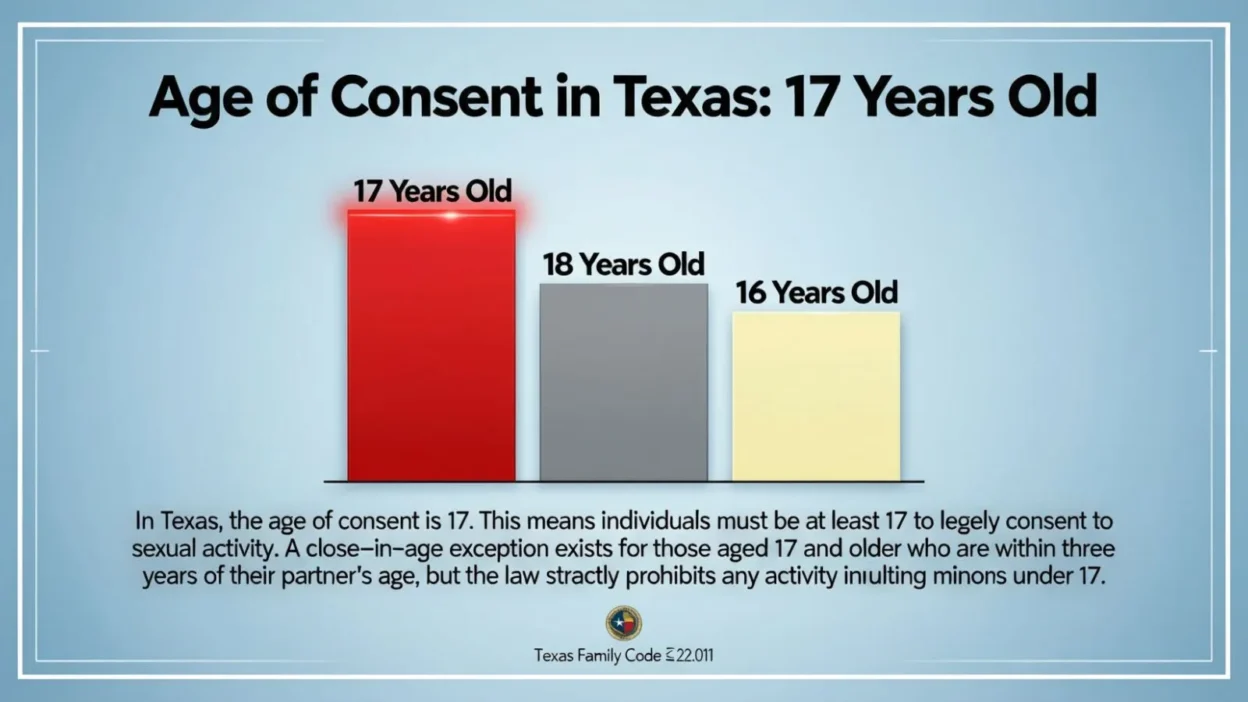
The age of consent is a critical legal concept that determines when an individual is legally able to engage in sexual activity.
In Texas, as in other states, the age of consent is designed to protect minors from exploitation and abuse while balancing the rights of young adults to engage in relationships.
Understanding the age of consent laws in Texas is essential not only for legal compliance but also for the safety and well-being of individuals involved.
In Texas, the legal age of consent is 17, but the state’s laws also include provisions for close-in-age exemptions, commonly known as the Romeo and Juliet law, to avoid criminal charges in certain situations.
This article will provide a comprehensive overview of the age of consent laws in Texas, explain related legal concepts, and clarify the consequences of violating these laws.
If you’re a Texas resident, legal professional, or just curious about the topic, this guide will cover everything you need to know.
What is the Age of Consent?
The “age of consent” refers to the minimum age at which an individual is legally considered capable of agreeing to sexual activity. This age varies across states, countries, and cultures, with laws designed to protect minors from exploitation and manipulation. The purpose of age of consent laws is to ensure that sexual relationships between minors and adults are not coercive or abusive, taking into account the emotional, mental, and physical maturity required to make such decisions.
In the United States, the age of consent typically ranges from 16 to 18, with individual states setting their own legal limits. In Texas, the legal age of consent is set at 17, meaning individuals under this age are not legally able to consent to sexual activity. However, this law is not absolute. In certain circumstances, such as close-in-age relationships, the law allows some exceptions to prevent criminal charges for both parties.
For instance, Texas has a “Romeo and Juliet” law that permits consensual sexual activity between minors who are close in age. This exemption prevents young people from being charged with statutory rape when they are in a relationship with another minor, as long as the age difference doesn’t exceed a certain threshold (generally, three years).
Understanding the legal age of consent is vital because violations can lead to severe legal consequences, including criminal charges and placement on the sex offender registry. This section will explore these laws in detail, addressing common questions and misconceptions.
Age of Consent in Texas
In Texas, the legal age of consent is set at 17 years old. This means that individuals aged 17 and older are legally able to engage in sexual activity without any criminal repercussions, provided the relationship is consensual. However, anyone under the age of 17 cannot legally consent to sex, regardless of the circumstances or the age of the other party involved.
One key aspect of Texas law is the inclusion of close-in-age exemptions, commonly referred to as the Romeo and Juliet Law. This law exists to prevent young people who are close in age from facing harsh legal penalties for engaging in consensual sexual activity. For example, if a 17-year-old engages in sexual activity with a 15-year-old, they would not be prosecuted under Texas statutory rape laws as long as the age difference is within a certain range. In Texas, this exemption generally applies when the age difference between the two individuals is no more than 3 years. However, if the older individual is 18 or older, they may still face criminal charges for engaging with someone underage, particularly if the relationship is deemed exploitative.
It’s important to note that while the Romeo and Juliet Law provides a safeguard for close-in-age couples, it does not apply to all cases. For instance, if there is significant coercion, manipulation, or a power imbalance (such as a teacher-student relationship), even with close ages, criminal charges may still apply. Understanding these nuances in Texas law is essential to ensure that individuals are informed and avoid serious legal consequences.
The Importance of Age of Consent Laws
Age of consent laws play a crucial role in safeguarding minors from sexual exploitation, coercion, and abuse. These laws are designed to ensure that individuals are mature enough to fully understand the emotional, mental, and physical implications of sexual activity. When a minor is too young to give informed, voluntary consent, the potential for manipulation or abuse increases, which is why age of consent laws are strictly enforced.
In Texas, the law establishes the age of 17 as the threshold, acknowledging that individuals under 17 may not have the cognitive, emotional, and psychological maturity needed to make such significant decisions. By protecting minors, the law helps prevent situations where an adult might take advantage of a young person who may not fully comprehend the consequences of their actions. This is especially important in a world where power dynamics—such as teacher-student relationships, employer-employee dynamics, or situations involving substance abuse—can complicate the ability to freely consent.
These laws also provide a clear framework for accountability. Knowing the legal boundaries helps individuals understand what is acceptable behavior and prevents confusion about what constitutes statutory rape or sexual assault. Without these protections, minors could find themselves in situations that cause lasting harm, including trauma, pregnancy, or sexually transmitted infections. Additionally, the consequences of violating age of consent laws can be severe, leading to criminal charges, imprisonment, and lifelong social and legal ramifications, such as being added to the sex offender registry.
Consequences of Violating Age of Consent Laws in Texas
Violating age of consent laws in Texas can result in severe criminal penalties, long-lasting legal consequences, and social stigma. The penalties vary depending on the specific circumstances of the case, such as the ages of the individuals involved and whether coercion, manipulation, or force was a factor. Individuals who violate the age of consent laws could face charges of statutory rape, sexual assault, or indecency with a child, all of which are serious criminal offenses under Texas law.
In Texas, statutory rape charges can result in felony convictions, with penalties ranging from several years to life in prison. If the perpetrator is found guilty of engaging in sexual activity with a minor who is under the legal age of consent, they could face up to 20 years in prison for a first-degree felony, depending on the circumstances. For less severe offenses, such as indecency with a child, the penalties may still be significant, including several years of imprisonment and substantial fines.
Additionally, a conviction can result in mandatory registration as a sex offender in Texas. This has long-term implications, affecting an individual’s ability to find employment, housing, and travel freely. Being on the sex offender registry can also lead to social isolation, public shame, and severe reputational damage.
Close in Age Exemption (Romeo and Juliet Law) in Texas
In recognition of the challenges young couples may face due to the strict age of consent laws, Texas has implemented a close-in-age exemption, commonly referred to as the Romeo and Juliet Law. This law is designed to prevent young individuals from facing criminal charges for consensual sexual activity with someone close in age, even if one party is below the legal age of consent.
Under Texas law, the Romeo and Juliet Law provides an important safeguard for individuals aged 14 to 17 involved in a relationship with someone who is up to three years older. For example, if a 16-year-old engages in consensual sexual activity with an 18-year-old, the older individual would not face prosecution under the state’s statutory rape laws, provided both parties are within the allowed age range. This exemption acknowledges that relationships between young people of similar ages are not necessarily exploitative or abusive, thus reducing the possibility of legal consequences in these situations.
However, the Romeo and Juliet Law only applies when both individuals are close in age, and there are limitations to its application. For example, if the older individual is 19 or older, the law may no longer apply, and they could face charges for engaging with someone underage. Additionally, the law does not protect individuals involved in relationships where significant power dynamics exist, such as teacher-student or employer-employee relationships, where one party may have undue influence over the other.
Consent and Power Dynamics in Relationships
Understanding consent is more than just a legal matter—it also involves the dynamics of power, influence, and emotional maturity in relationships. In situations where there is a significant age difference, especially between minors and adults, the issue of consent can become much more complex. Age of consent laws are not just about physical readiness but also about the ability to make informed, voluntary decisions about sexual activity. These laws take into account the psychological and emotional maturity required to understand the long-term consequences of such decisions.
In relationships with significant age differences, the balance of power can be skewed, making it harder for one individual to freely consent. For example, a 17-year-old may not have the same level of life experience, emotional intelligence, or understanding of relationships as a 30-year-old adult. This age gap can create a situation where the older individual may unintentionally or intentionally exert control or pressure over the younger party, undermining the concept of “true” consent.
In some cases, the younger person may feel compelled to comply with sexual advances because of their emotional attachment to the older individual or due to perceived authority. This is why the law treats relationships involving minors more strictly than those between consenting adults. Power dynamics are particularly problematic in teacher-student, employer-employee, or coach-athlete relationships, where one party holds authority over the other. These situations are considered by law to be coercive, regardless of whether the minor initially agreed to the sexual activity.
Legal Implications Beyond the Criminal Code
While age of consent laws primarily deal with criminal implications, their reach extends into other areas of law, particularly civil law and family law. The consequences of engaging in sexual activity with someone below the legal age of consent are not limited to criminal charges; they can also affect civil proceedings, child custody arrangements, and divorce settlements. A criminal conviction can carry significant ramifications, impacting an individual’s personal, social, and professional life. However, the broader implications often come into play when the legal system addresses the effects of sexual activity on minors.
In family law, for instance, engaging in sexual activity with a minor may influence custody battles or other family-related disputes. If a parent or guardian has been convicted of violating age of consent laws, it could affect their ability to gain custody of children or limit visitation rights. The legal system may consider the convicted individual’s history when determining whether they can be trusted to care for or supervise children, which could have a lasting impact on their family life.
In cases of teen pregnancy, the legal age of consent also comes into play. If a minor becomes pregnant due to consensual sex with someone older, the legal ramifications for both parties may involve criminal charges, child support obligations, or even custody issues if the minor’s parents seek legal intervention. Furthermore, sexual harassment and sexual abuse claims in workplaces or schools can also intersect with age of consent laws, as relationships with minors in positions of authority (teachers, coaches, employers) are considered coercive, regardless of the apparent consent given by the minor.
Common Misconceptions About the Age of Consent
There are several common misconceptions surrounding age of consent laws, particularly in Texas, that can lead to confusion and misunderstandings about what is legally permissible. One widespread myth is that as long as both parties agree to sexual activity, it is automatically considered consensual, regardless of age. In reality, consent under the law must meet certain criteria—particularly in terms of age and maturity. For example, a 16-year-old may feel emotionally or physically ready for sexual activity, but the law still prohibits such acts if the other party is older and the relationship violates the age of consent laws.
Another common misconception is that the Romeo and Juliet Law applies universally to all close-in-age relationships. Many assume that if two individuals are close in age, no legal consequences will apply, even if one is under the legal age of consent. While Texas’ close-in-age exemption does provide some protection for relationships where the age difference is small (up to three years), it does not apply to all situations. The law does not protect individuals who are 18 or older engaging in sexual activity with someone significantly younger (i.e., 13-14 years old), nor does it apply in cases involving coercion or manipulation.
Furthermore, some may believe that sexting between minors or sending explicit content via digital platforms does not have legal consequences. However, sexting between individuals under the age of consent can lead to serious charges, including child pornography offenses, even if both parties consented to the exchange. The legal system is particularly strict when it comes to protecting minors in these areas, and violators can face severe penalties.
Recent Legal Developments in Texas
Age of consent laws are not static; they evolve in response to societal changes, emerging legal challenges, and public advocacy. In Texas, recent discussions and legislative proposals have sought to address gaps or perceived injustices within the state’s existing laws regarding sexual consent, particularly as they pertain to minors. Although the legal age of consent in Texas remains at 17, the laws surrounding close-in-age exemptions, online interactions, and sexual assault have seen greater scrutiny in recent years.
One notable area of legal development is the increase in advocacy for revisiting the Romeo and Juliet Law. While the law provides an exemption for relationships where the age difference is minimal, many have argued that the law should be expanded or clarified to better protect young people involved in consensual relationships without the risk of criminal charges. Legislators are also exploring the possibility of reducing the minimum age of consent in specific circumstances, especially as conversations surrounding teenage autonomy and sexual rights gain traction.
Another area of concern is the rise of digital consent issues, particularly around sexting and cyber harassment. With the proliferation of social media and mobile communication, there have been calls to update the law to address issues like sexting between minors, which can lead to child pornography charges. Some have proposed reforms that would differentiate between consensual exchanges and exploitative ones, while others advocate for better education on digital consent to prevent legal consequences for minors sharing explicit content with peers.
Finally, public opinion and the #MeToo movement have placed greater emphasis on the need for better sexual education and protection for minors. Some lawmakers are exploring bills that would extend age of consent protections to college students or to other vulnerable groups, ensuring that young adults are better informed and better protected against predatory behavior.
Frequently Asked Questions (FAQs)
1. What is the legal age of consent in Texas?
The legal age of consent in Texas is 17 years old. This means individuals aged 17 and above can legally engage in consensual sexual activity. Anyone under the age of 17 cannot legally consent to sexual activity, regardless of the age of the other person involved.
2. What is the Romeo and Juliet Law in Texas?
The Romeo and Juliet Law in Texas provides a close-in-age exemption, allowing consensual sexual activity between minors who are close in age (typically within a 3-year age gap) without criminal penalties. For example, a 17-year-old can legally engage in sexual activity with a 15-year-old without facing statutory rape charges, provided the age difference doesn’t exceed three years.
3. Can a 16-year-old engage in sexual activity with someone older than 17?
No. If a 16-year-old engages in sexual activity with someone older than 17, it is considered a violation of Texas’ age of consent laws, as the 16-year-old is below the legal age of consent. Even if both parties agree, the law does not allow a minor to consent to sex under these circumstances.
4. Can sexting between minors lead to legal consequences in Texas?
Yes, sexting between minors can result in serious legal consequences in Texas. Sending explicit images or videos, even if both parties consent, can lead to charges related to child pornography, as Texas law treats sexually explicit material involving minors as illegal. This can result in criminal charges, including felony offenses.
5. Are there any exceptions for sexual activity between minors in Texas?
Yes, Texas has a close-in-age exemption (Romeo and Juliet Law), which allows minors close in age (typically no more than three years apart) to engage in consensual sexual activity without facing criminal charges.
Conclusion:
Understanding the age of consent laws in Texas is crucial for protecting both minors and adults from legal and personal consequences.
With the legal age of consent set at 17, Texas strives to ensure that individuals are emotionally and mentally mature enough to engage in sexual activity, while also providing safeguards like the Romeo and Juliet Law to prevent young people from facing harsh penalties in close in age relationships.
However, these laws are not without complexity, and violations if involving consensual activity between minors or sexting can lead to serious criminal charges, lifelong social stigma, and long-term legal consequences, including sex offender registration.
It’s important for all individuals to understand the nuances of consent, particularly in terms of power dynamics, maturity, and emotional readiness. Close in age exemptions, while offering some flexibility, do not eliminate the risks of exploitation or coercion, especially in relationships where there may be a significant power imbalance.

Jonathan Bishopson is the punmaster-in-chief at ThinkPun.com, where wordplay meets wit and every phrase gets a clever twist. Known for turning ordinary language into laugh-out-loud lines, Jonathan crafts puns that make readers groan, grin, and think twice. When he’s not busy bending words, he’s probably plotting his next “pun-derful” masterpiece or proving that humor really is the best re-word.